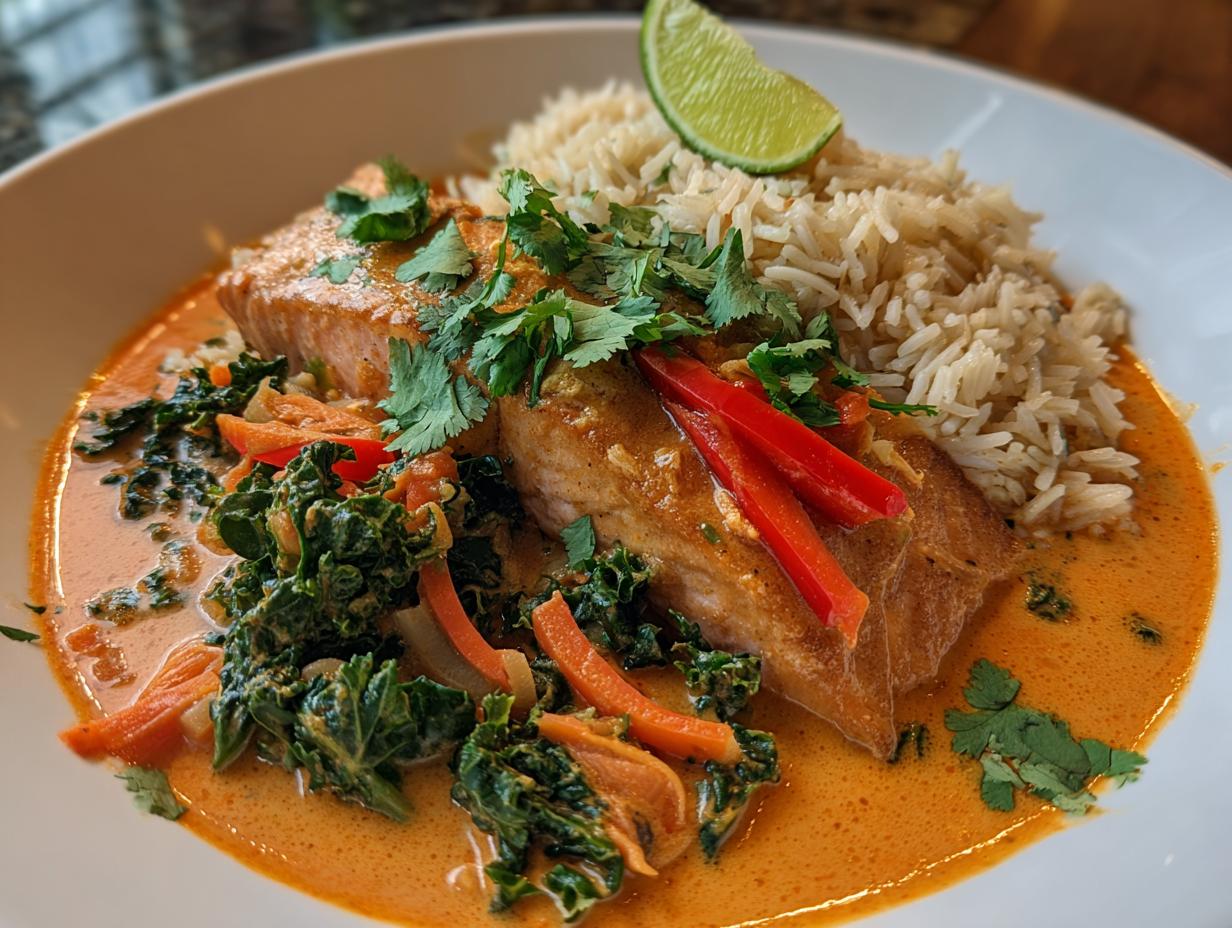
Hello there! I’m Jordan Bell, checking in from Asheville, North Carolina. If you followed my journey, you know I shed over 80 pounds by figuring out how to make comfort food clean and exciting again. My goal here at Easy Detox Recipes is proving that healthy eating doesn’t mean sacrificing flavor. I grew up on hearty Southern cooking, but now I focus on vibrant, clean meals that fuel you without weighing you down. That’s how we ended up with this incredibly fragrant and quick Thai Coconut Curry Salmon with Veggie Rice.
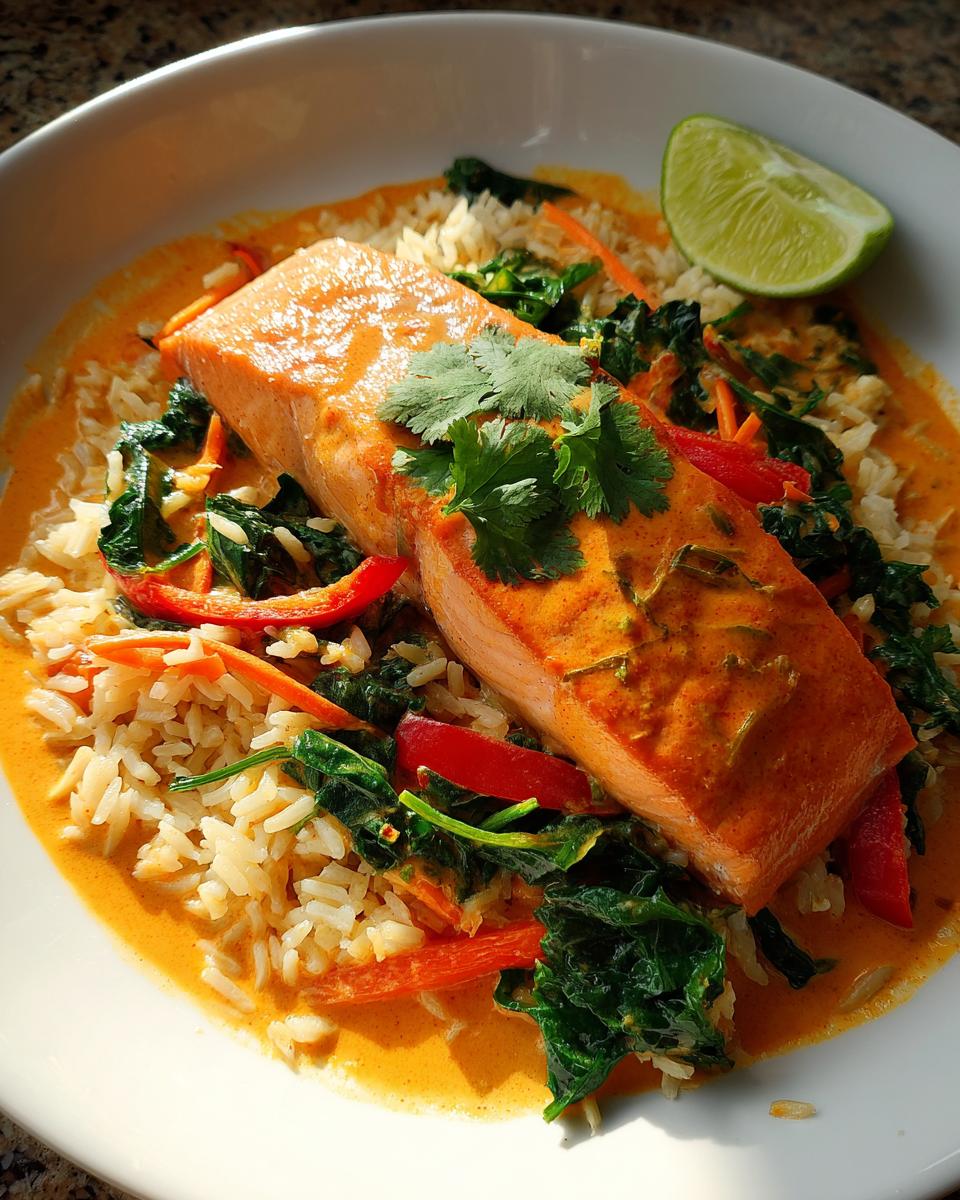
Why This Thai Coconut Curry Salmon with Veggie Rice Makes Weeknights Better
If your weeknights feel like a race against the clock, trust me, you need this recipe in your rotation. The best part? It’s mostly a one-pan wonder! You get this luxurious, silky sauce—that’s the full-fat coconut milk working its magic—that coats everything beautifully. It’s rich and decadent, but packed with good fats and lean protein. You get the vibrant kick from the ginger and lime balancing out the sweetness of that beautiful red curry paste.
You’re going to love how fast this comes together. We’re talking less than 30 minutes total, but the flavor profile tastes like you spent hours simmering something complex. This Thai Coconut Curry Salmon with Veggie Rice is proof that healthy eating can be fast, flavorful, and incredibly cozy. You deserve a dinner that tastes this good on a Tuesday night, and I promise you won’t miss the heavy starches when you see how much flavor we pack into that veggie rice.
Essential Ingredients for Thai Coconut Curry Salmon with Veggie Rice
Okay, let’s talk about what makes this Thai Coconut Curry Salmon with Veggie Rice sing! Since we aren’t relying on heavy creams or excess oils, the quality of these core components really shines through. Don’t skimp on the fresh aromatics; that’s where the depth comes from. We need good salmon, obviously, but the real secret weapon is the sauce base. Think bright, fragrant, and just a little bit spicy. I keep these staples stocked because they make weeknight cooking feel gourmet in minutes.
Components for the Creamy Curry Sauce
The sauce is everything here! You absolutely must use a can of **full fat coconut milk**—don’t grab the ‘lite’ version, or you’ll lose that essential silky mouthfeel. We’re using about 13 and a half ounces of it, balanced with half a cup of broth to keep it from getting too thick too fast. For the punch, we need 2 tablespoons of red curry paste. If you’re nervous about heat, start with 1 and a half tablespoons, but trust me, that amount gives you the perfect warmth. Don’t forget the fresh ginger and garlic; they need to be minced finely so they disappear into the sauce.
Preparing the Salmon and Vegetables
For the fish, we’re using **1 and one quarter pounds salmon fillets cut into 4 portions**. Try to make sure those pieces are roughly the same thickness so they cook evenly in that simmering sauce. For the vegetables, we aren’t looking for big chunks here; we want them thin so they cook fast and absorb flavor. Slice your red bell pepper thinly, and for the carrots, cut them into **thin matchsticks**. The spinach or kale just needs to be chopped up small enough to wilt right into the sauce at the end.
Quick Veggie Rice Options
Since we want this dinner fast, we have two ways to handle the rice base. Option one is using 3 cups of already cooked warm jasmine rice, where you simply fold in some lightly steamed greens. Option two is my favorite for keeping things lower carb: the riced cauliflower. For that, you sauté the riced cauliflower with a little olive oil, garlic, salt, pepper, and then toss in the spinach until it wilts. Both options are ready to go while the salmon finishes poaching!
Equipment Needed for Thai Coconut Curry Salmon with Veggie Rice
Because this is designed as a super-fast meal, we are sticking mostly to one main cooking vessel. You absolutely need a large, deep skillet. I mean it—deep! We need those high sides to hold all that glorious sauce without it splashing everywhere while we simmer. A good lid for that skillet is essential for poaching the salmon gently. Other than that, you’ll just need your cutting board, a sharp knife for prepping the ginger and veggies, and maybe a small bowl for seasoning the fish. Keeping the cleanup simple is key to making your Thai Coconut Curry Salmon with Veggie Rice a regular thing!
Step-by-Step Instructions for Thai Coconut Curry Salmon with Veggie Rice
This is where the magic happens, and I promise it moves fast! We are aiming for perfectly cooked salmon bathed in that heavenly sauce over fluffy veggie rice. Keep your rice components ready to go while you build the curry base. When you’re making this Thai Coconut Curry Salmon with Veggie Rice, timing is everything!
Building the Flavor Base
First things first, grab those salmon portions and season them with half of your salt and pepper. Set them aside for a minute. Now, heat that coconut oil in your large, deep skillet over medium heat. Toss in the diced onion and let it soften up for about 3 or 4 minutes until it looks kind of see-through. Next, add your minced garlic and ginger—be careful, they’ll sizzle! Stir those around for just about 30 seconds until you can really smell them; don’t let them burn! The crucial step here is adding the red curry paste. Stir it constantly for a full minute until it darkens slightly and smells toasty. This little bit of toasting wakes up all the spices!
Simmering the Sauce and Vegetables
Time for the liquids! Pour in the full can of coconut milk and the half cup of broth. Add your brown sugar, the rest of your salt and pepper, and the soy sauce. Whisk everything until it looks uniform and smooth. Bring this up to a gentle simmer—not a hard boil, please—and let it bubble softly for 4 to 5 minutes so those flavors really get to know each other. Once it’s pleasantly fragrant, toss in your sliced red bell pepper and carrot matchsticks. Let those simmer for another 3 to 4 minutes. We want them tender-crisp, not mushy, so they still have a little bite when you eat them.
Cooking the Salmon Perfectly
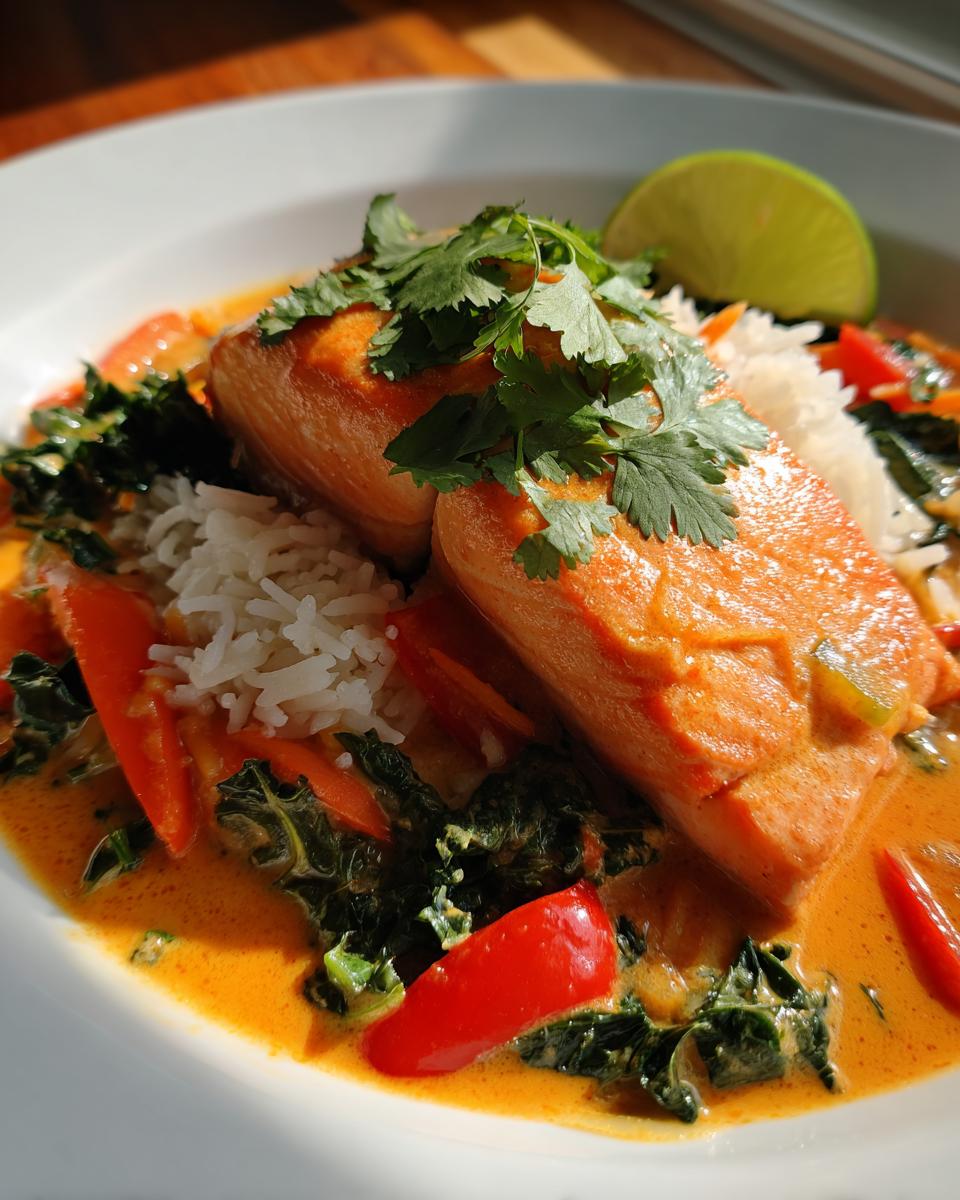
Now we introduce the star! Stir in the lime juice and the spinach or kale until the greens just wilt down into the sauce. Gently nestle your seasoned salmon pieces right into that simmering curry. Spoon a little bit of the sauce over the top of each piece. Reduce your heat way down to low, cover the skillet, and let it poach gently for 6 to 9 minutes. The key here is gentle heat! Check for doneness; it should flake easily, but for safety, make sure the thickest part hits 145 degrees Fahrenheit internally.
Final Touches and Assembly
While the salmon is finishing up, quickly prepare your veggie rice option—whether you’re mixing it with jasmine rice or sautéing the cauliflower rice. Once the salmon is done, give that sauce a quick taste test. Does it need a little extra pop of lime? Maybe a tiny splash more soy sauce? Once you’re happy, it’s time to plate! Spoon that warm veggie rice into your bowls, carefully place a salmon fillet on top, and then ladle that beautiful, creamy sauce and vegetables all over everything. Finish with a sprinkle of fresh cilantro and maybe a lime wedge on the side. Enjoy your Thai Coconut Curry Salmon with Veggie Rice!
Tips for Expert Thai Coconut Curry Salmon with Veggie Rice Results
Getting that perfect, velvety sauce is the difference between a good curry and an amazing one. This isn’t a soup; it’s a luxurious coating for the salmon and the rice. Trust me, a few simple tricks will elevate your Thai Coconut Curry Salmon with Veggie Rice instantly. A lot of people rush the simmering part, and that’s when things go wrong!
Controlling Heat and Simmering Technique
My biggest piece of advice, straight from my notes, is to keep that heat low and slow once the coconut milk is in. You absolutely must avoid boiling hard once the coconut milk is added. If you boil it rapidly, the sauce can separate, and you end up with oily spots instead of that beautiful, silky texture we’re after. When you nestle the salmon in, reduce that heat to low and just let it barely bubble under the lid. That gentle poaching ensures the fish stays tender and the sauce stays perfectly emulsified.
Ingredient Swaps for Dietary Needs
We all have different needs in the kitchen, and luckily, this recipe is pretty adaptable! If you need to keep your Thai Coconut Curry Salmon with Veggie Rice gluten-free, it’s super simple: just swap out the regular soy sauce for tamari. Tamari gives you that salty depth without any wheat. Also, if you find red curry paste is just too intense for your family, try swapping it out entirely for yellow curry paste. Yellow is milder and a little sweeter, which is a nice change of pace sometimes, though it will change the color profile a bit!
Storing and Reheating Your Thai Coconut Curry Salmon with Veggie Rice
We all know leftovers are the best part of a quick dinner, right? If you happen to have any Thai Coconut Curry Salmon with Veggie Rice remaining, storing it safely is key to enjoying it again tomorrow. Keep the leftover salmon and the sauce together in one airtight container in the fridge for up to two days. It’s important to store the rice separately—that keeps everything tasting fresh. When you’re ready to eat it again, resist the urge to blast it in the microwave on high! Reheat the curry gently on the stovetop over low heat, adding just a splash of water or broth to rehydrate the sauce and prevent separation. Give the rice a quick warm-up in the microwave covered, or in a skillet with a tiny bit of water until it’s fluffy again.
Frequently Asked Questions About Thai Coconut Curry Salmon with Veggie Rice
I get so many questions about making sure this recipe turns out perfect, especially since it relies on quick cooking times. Here are a few things people ask me most often when they’re making their first batch!
Can I use a different fish instead of salmon?
Oh yes, you absolutely can swap out the salmon! White fish like cod or tilapia work wonderfully because they are flaky and cook fast, just like salmon. You might need to reduce the simmering time slightly—maybe check them around the 5-minute mark—since they are usually thinner than salmon fillets.
How do I make the curry spicier or milder?
That’s all about the curry paste quantity! If you want it spicier, just add a little more red curry paste when you’re toasting it with the garlic and ginger—maybe an extra half tablespoon. If you need it milder, definitely start with just 1 tablespoon of paste, or try swapping the red paste for yellow curry paste, which is naturally sweeter and less fiery.
Is this recipe truly a one-pan meal?
It’s almost a one-pan meal, which is why I love it for busy nights! The main curry—where we build the sauce, cook the veggies, and poach the fish—is all done in one deep skillet. However, you do need a separate pot or skillet to prepare your veggie rice on the side while the salmon is simmering. It keeps the rice from getting soggy in the curry sauce, which is a trade-off I’m happy to make!
Sharing Your Thai Coconut Curry Salmon with Veggie Rice Experience
I truly hope this recipe brings some easy, flavorful joy to your dinner table this week! Once you’ve made this incredible Thai Coconut Curry Salmon with Veggie Rice, please come back and leave a rating. Did you use the jasmine or the cauliflower rice? I love hearing how you customize these clean comfort meals in your own kitchen! You can also see more of my healthy comfort food ideas over on Medium or save this recipe on Pinterest!
Print
Amazing 30-Minute Thai Coconut Curry Salmon
- Total Time: 35 minutes
- Yield: 4 servings 1x
- Diet: Low Fat
Description
Creamy Thai inspired coconut curry salmon simmered with ginger, garlic, and lime, served over veggie packed rice for a cozy weeknight dinner. This one-pan recipe delivers a fragrant, silky sauce that soaks beautifully into jasmine or cauliflower rice.
Ingredients
- 1 tablespoon coconut oil or olive oil
- 1 small yellow onion finely diced
- 3 cloves garlic minced
- 1 tablespoon fresh ginger minced or grated
- 2 tablespoons red curry paste
- 1 can full fat coconut milk about 13 and one half ounces
- One half cup low sodium chicken or vegetable broth
- 1 tablespoon soy sauce
- 1 teaspoon brown sugar or honey
- Juice of 1 lime plus extra lime wedges for serving
- One half red bell pepper thinly sliced
- 1 medium carrot cut into thin matchsticks
- 2 cups baby spinach or finely chopped kale
- 1 and one quarter pounds salmon fillets cut into 4 portions
- 1 teaspoon fine sea salt divided
- One half teaspoon black pepper divided
- Fresh cilantro leaves for garnish
- For Veggie Rice Option One: 3 cups cooked warm jasmine rice, 1 cup finely chopped kale or spinach lightly steamed or sautéed, Pinch salt
- For Veggie Rice Option Two: 3 cups riced cauliflower fresh or thawed, 1 tablespoon olive oil, 1 small clove garlic minced, One half teaspoon salt, One quarter teaspoon pepper, 1 cup finely chopped baby spinach or kale
Instructions
- Season the salmon portions with half of the salt and half of the black pepper and set aside while you start the curry base.
- Warm the coconut oil in a large deep skillet over medium heat, then add the onion and cook 3 to 4 minutes until softened and translucent.
- Stir in the garlic and ginger and cook about 30 seconds until fragrant, then add the red curry paste and cook 1 minute, stirring, until the paste darkens slightly and smells toasty.
- Pour in the coconut milk and broth, then add soy sauce, brown sugar, remaining salt, and remaining pepper, and stir until the sauce is smooth. Bring to a gentle simmer and cook 4 to 5 minutes so the flavors meld.
- Add the bell pepper and carrot and simmer another 3 to 4 minutes until the vegetables start to soften but still have some bite.
- Stir in the lime juice and baby spinach or kale until the greens just wilt into the sauce.
- Nestle the salmon pieces into the simmering curry, spooning some sauce over the tops, then reduce heat to low and cover. Simmer very gently for 6 to 9 minutes until the salmon is just opaque and flakes easily.
- For food safety, ensure the salmon reaches an internal temperature of 145 degrees Fahrenheit in the thickest part.
- While the salmon cooks, prepare the veggie rice. For jasmine rice with greens, fold the warm rice with steamed or sautéed chopped greens and a pinch of salt. For cauliflower veggie rice, sauté riced cauliflower in olive oil with garlic, salt, and pepper for 5 to 7 minutes, then stir in chopped spinach or kale until just wilted.
- Taste the curry and adjust with extra lime juice, soy sauce, or a pinch more sugar if you like more brightness, depth, or balance.
- Spoon veggie rice into bowls, top with a piece of salmon, ladle the coconut curry sauce and vegetables over the top, and garnish with fresh cilantro and extra lime wedges.
Notes
- Simmer the curry gently rather than boiling hard so the coconut milk stays silky and the salmon does not dry out.
- Cut salmon pieces to similar thickness so they cook evenly in the sauce.
- Taste the curry before adding the salmon and adjust the spice and salt so the sauce is balanced.
- Keep the veggie rice warm and ready so you can serve as soon as the salmon is perfectly cooked.
- Store leftover salmon and curry sauce together in an airtight container in the refrigerator for up to 2 days, and keep rice in a separate container.
- Reheat gently over low heat on the stovetop with a splash of water or broth until just warmed, avoiding a hard boil so the sauce does not separate.
- Reheat rice in a covered dish in the microwave or in a skillet with a splash of water until hot and fluffy.
- Freezing is possible but the texture of the salmon and coconut sauce is best when enjoyed fresh.
- Swap red curry paste for yellow curry paste for a milder, slightly sweeter flavor.
- Replace soy sauce with tamari for a gluten free friendly version.
- Prep Time: 15 minutes
- Cook Time: 20 minutes
- Category: Dinner
- Method: One Pan Simmering/Poaching
- Cuisine: Thai Inspired
Nutrition
- Serving Size: Approximate values using jasmine rice and coconut milk
- Calories: 540
- Sugar: N/A
- Sodium: N/A
- Fat: 29 grams
- Saturated Fat: N/A
- Unsaturated Fat: N/A
- Trans Fat: N/A
- Carbohydrates: 34 grams
- Fiber: N/A
- Protein: 34 grams
- Cholesterol: N/A