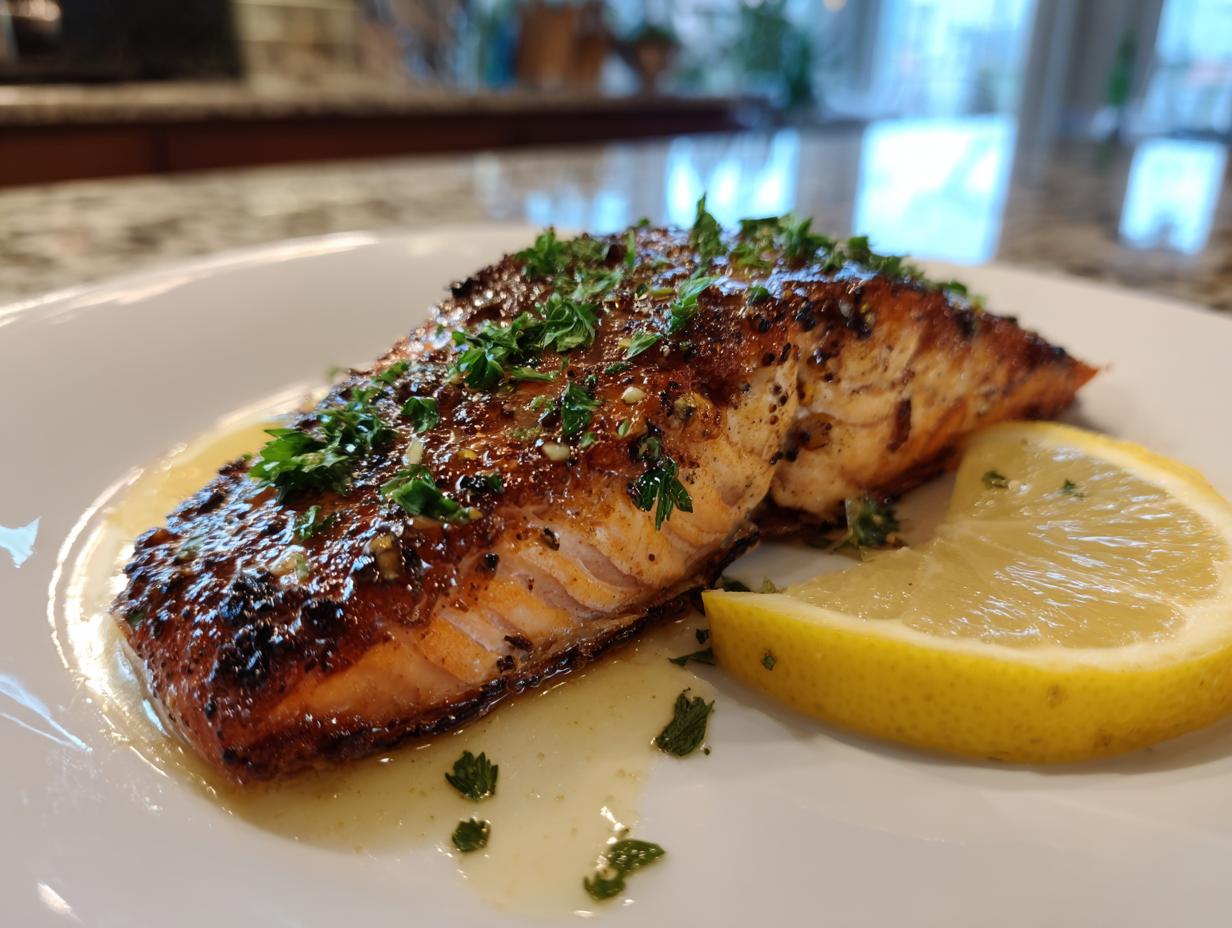
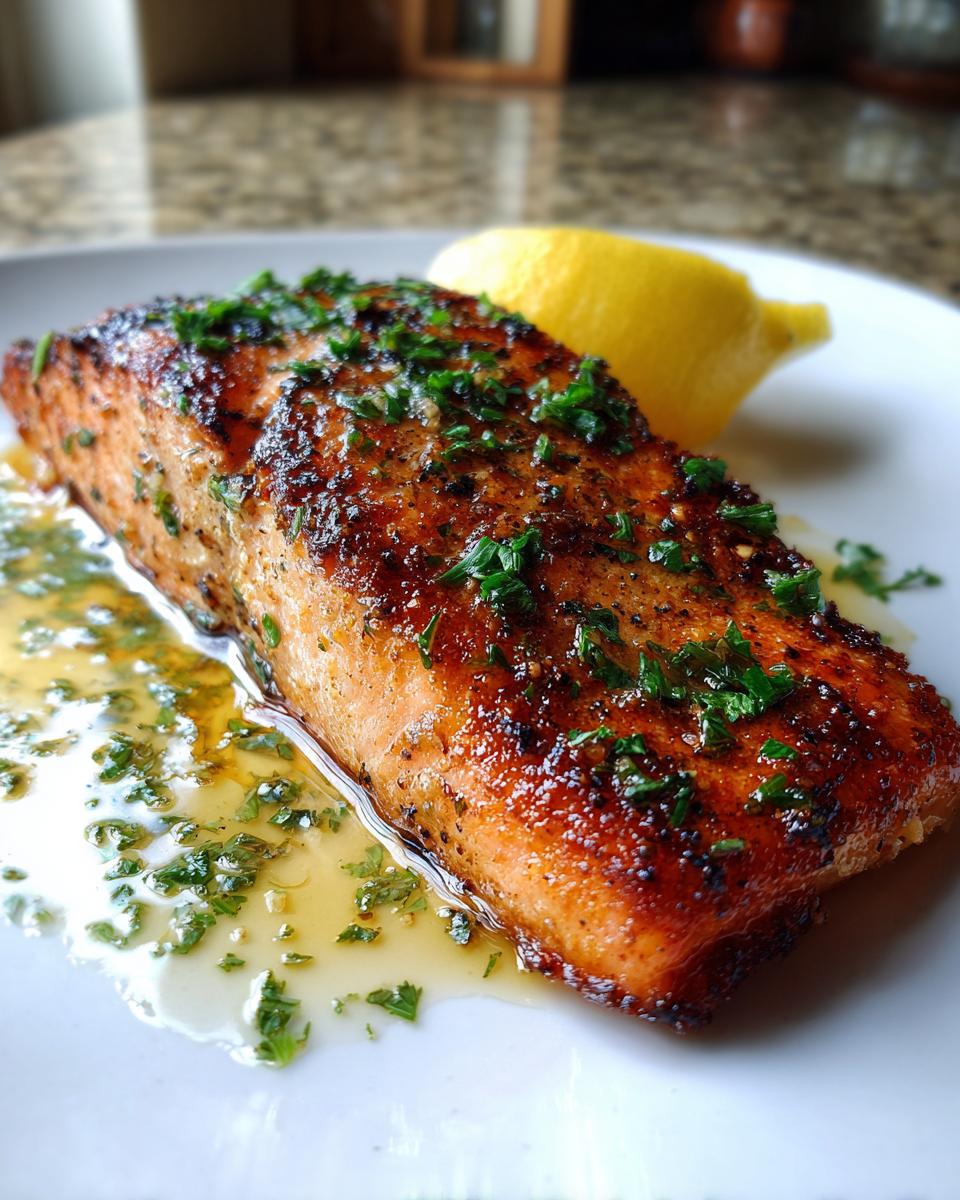
Forget those dry, sad fillets you sometimes get at chain restaurants. I’ve spent years chasing the perfect sear, and I finally nailed it. This recipe for steakhouse salmon delivers that incredible, thick, buttery crust you dream about, but you can have it on the table in under 25 minutes. Seriously! It’s all about how you treat the fish and how much butter you’re willing to use for basting.
The secret isn’t complicated equipment; it’s technique. We are aiming for skin that shatters when you cut it, while the inside stays rich and flaky. If you think cooking salmon perfectly is hard, trust me, once you see how we handle the heat and the herbs, you’ll be making this for every special weeknight dinner!
Gathering Your Ingredients for Perfect Steakhouse Salmon
Okay, let’s talk about what you need to get this amazing steakhouse salmon on your plate tonight. Don’t rush this part! The quality of your ingredients really shows through when you’re cooking something this simple. We need four decent-sized fillets—I like mine about an inch thick because they hold up better to that high-heat sear we’re aiming for.
Seasoning is minimal but mighty. We’re using smoked paprika because it gives that subtle, warm depth that makes it taste like it came from a fancy steakhouse kitchen. And for the love of flavor, make sure you have real, unsalted butter. Margarine just won’t give you the beautiful brown foam we need for basting!
Precise Ingredient List for Steakhouse Salmon
| Ingredient | Amount |
|---|---|
| Salmon Fillets (about 1 inch thick) | 4 (6 ounces each) |
| Salt | ¾ teaspoon |
| Black Pepper | ½ teaspoon |
| Smoked Paprika | ½ teaspoon |
| Olive Oil | 1 tablespoon |
| Unsalted Butter (for searing) | 2 tablespoons |
| Unsalted Butter (for basting) | 2 tablespoons |
| Garlic (smashed) | 3 cloves |
| Fresh Thyme or Rosemary | 3 sprigs |
| Lemon Juice | Juice of ½ lemon |
| Garnish | Chopped parsley and lemon wedges |
Essential Equipment for Your Steakhouse Salmon
You don’t need a whole suite of fancy gadgets for this recipe, but the right pan makes all the difference. My absolute favorite tool here is a heavy-bottomed skillet, preferably cast iron or stainless steel. Why? Because these materials hold heat so much better than non-stick.
That stable, consistent heat is what allows the salmon skin to crisp up perfectly instead of steaming. You’ll also need a small spoon or ladle for basting later on. Grab your paper towels too—drying the fish is non-negotiable for that beautiful crust we’re chasing!
Mastering the Technique: How to Prepare Steakhouse Salmon
This is where the magic happens, folks. We’re turning simple salmon into something worthy of a high-end steakhouse menu—and we’re doing it fast! Remember, speed is key here, but speed without technique means mushy fish. Pay close attention to the heat management; it’s everything when you are aiming for that perfect texture contrast.
Prepping the Fillets for the Best Sear on Your Steakhouse Salmon
Before anything hits the pan, you have to dry those fillets. I mean *bone dry*. Grab your paper towels and blot every single surface of the salmon. Any moisture left on the skin or flesh will turn into steam when it hits the hot oil, and steam is the enemy of crispiness. I learned this the hard way early on!
Once they are dry, it’s time to season. We are coating them lightly but evenly on all sides. Salt, pepper, and that beautiful smoked paprika. Don’t be shy with the salt, but make sure the spice is layered on uniformly. This seasoning blend is what gives our **steakhouse salmon** that signature flavor profile before we even turn on the stove.
Achieving a Golden Crust Before Basting
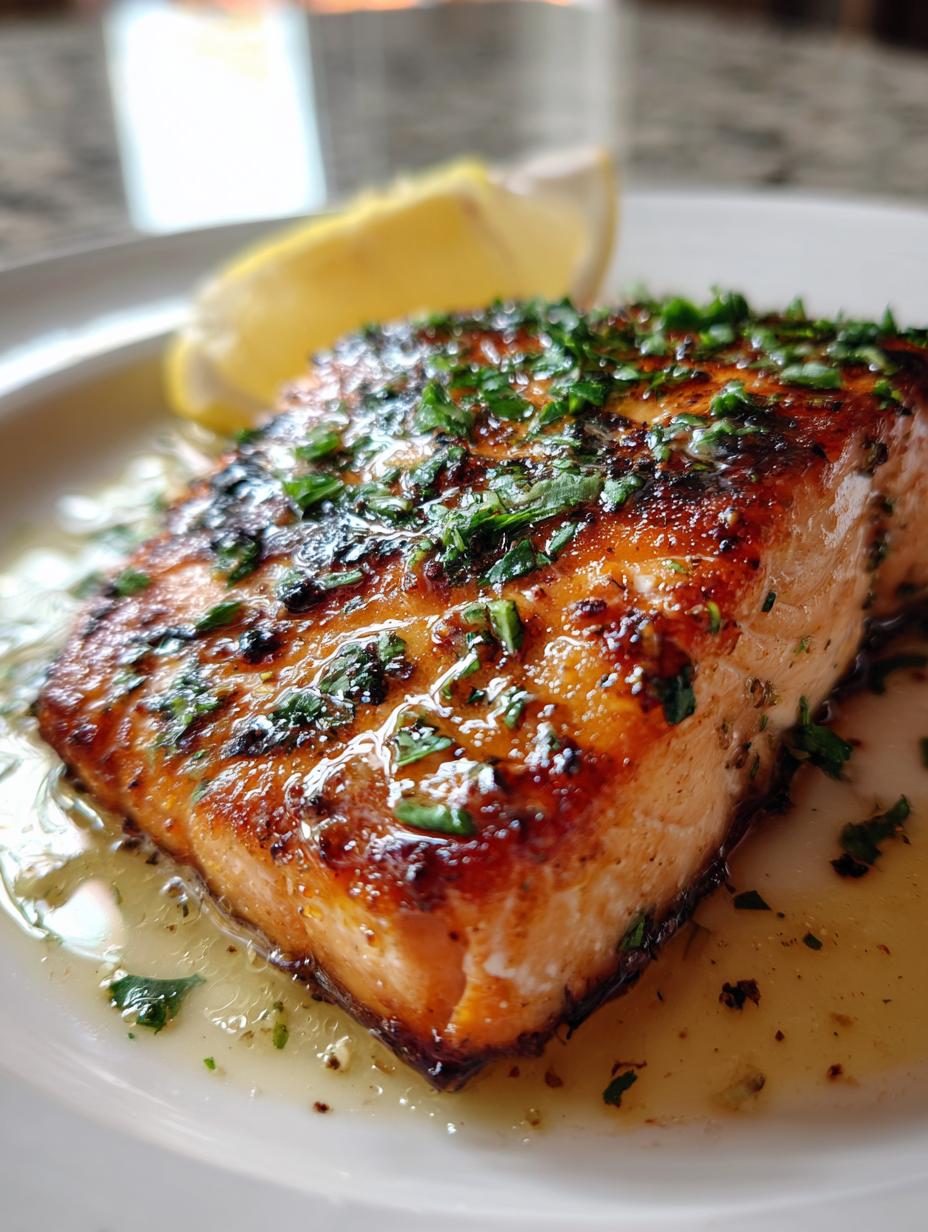
Now, crank that heat up! We want medium-high. Add your olive oil and the first batch of butter—two tablespoons. Wait until that butter melts, foams up, and you see those little brown flecks starting to appear. That slightly browned butter is pure gold for flavor.
Gently lay the fillets into that hot fat, skin-side up first. This is crucial for the initial sear! And here is the rule you cannot break: Do not touch them for three to four minutes. If you poke or prod them, you break the developing crust. Resist the urge! You want that skin to release naturally from the pan when it’s ready. That golden color is your sign that the crust is forming beautifully.
Flavor Infusion Basting for Tender Steakhouse Salmon
Once you have that gorgeous sear, flip them over carefully. Now, drop in the remaining two tablespoons of butter, those smashed garlic cloves, and your thyme or rosemary sprigs. The pan will instantly smell amazing, I promise! Tilt the pan slightly so the melted butter pools on one side.
Using a large spoon, continuously scoop that herby, garlicky butter mixture over the top of the salmon fillets. This is the basting step, and it cooks the top gently while infusing every layer with flavor. Keep basting for about two to three minutes. You are looking for an internal temperature of 145°F. If you don’t have a thermometer, the center should flake easily when gently pressed with a fork. Overcooked salmon is a tragedy, so pull it off right at that point! A final squeeze of fresh lemon juice right in the pan wakes everything up before you plate this incredible **steakhouse salmon**.
Tips for Achieving Expert Steakhouse Salmon Results
You’ve got the technique down, but a few insider tricks can elevate this from great to absolutely legendary. Everyone wants that perfect, melt-in-your-mouth center when they make steakhouse salmon. Don’t worry if your first attempt isn’t textbook; cooking is all about learning the quirks of your stove and your fish!
The biggest difference between home-cooked and restaurant-quality salmon usually comes down to two things: the cut of fish you choose and how you manage the heat right at the end. Stick with these tips, and you’ll be impressing everyone.
Choosing the Right Salmon Fillets
For this recipe, thinner fillets (under 3/4 inch) cook too quickly, and you’ll never get that crust before the inside turns dry. Aim for fillets that are at least an inch thick—they give you a much wider window for basting without overcooking. Skin-on is highly recommended! The skin protects the delicate flesh from the direct heat and, frankly, it’s the source of that amazing crispiness we love.
When you’re shopping, look for bright, firm flesh. If you can find wild-caught Sockeye or Coho, great, but farm-raised Atlantic salmon works wonderfully because it has a higher fat content, which keeps it juicy during the sear. Just make sure whatever you buy is good quality!
Temperature Control: The Key to Flawless Cooking
I know I mentioned the fork test, but if you want true restaurant precision, you need a good instant-read thermometer. It takes the guesswork out completely. Remember, the salmon will continue to cook for a few minutes after you take it off the heat—that’s called carryover cooking.
So, pull the fish off the heat when the internal temperature reads about 140°F. The residual heat will push it up to that perfect 145°F target. If you wait until it hits 145°F in the pan, you’ll end up with dry fish on the plate. Trust the thermometer, and you’ll never have to worry about undercooked or overcooked salmon again!
Serving Suggestions for Your Steakhouse Salmon Dinner
This rich, buttery salmon deserves sides that can stand up to all that flavor without competing with it. Since the main dish is so decadent, I like to keep the vegetables bright and simple. If you’re looking for something hearty, definitely go for creamy mashed potatoes, just like the note mentioned! That velvety texture is the perfect bed for soaking up any leftover lemon-butter sauce. If you are looking for other quick dinner ideas, check out this simple healthy orzo weeknight meal.
For a lighter, greener touch, roasted asparagus is unbeatable. Toss it with a little olive oil, salt, and pepper, and roast it right alongside your salmon prep time. It gets tender-crisp and offers a nice bitterness to cut through the richness. You could also try some quick-sautéed green beans with slivered almonds tossed in at the end. Seriously, any side that’s fast and fresh works beautifully with this meal!
Storing and Reheating Leftover Steakhouse Salmon
It’s rare that I have leftovers because this salmon disappears so fast, but when I do, I treat it carefully! You never want to microwave leftover fish; it just turns rubbery, and we worked so hard for that tender texture. The best way to revive your **steakhouse salmon** is to bring back that sear!
Store the salmon in an airtight container in the fridge. It’s good for about two days, tops. When you’re ready to eat it, heat up a tiny bit of butter or olive oil in that same skillet you used before. Just warm it gently over medium-low heat and place the fillet in for maybe two minutes per side. It’s fast, and it revives that beautiful crust without drying out the inside.
Table of Storage and Reheating Guidelines
| Item | Duration | Best Reheating Method |
|---|---|---|
| Storage | Up to 2 days in airtight container | Pan-sear in butter (Low-Medium Heat) |
| Safety Note | Reheat only once | Internal temperature should reach 145°F |
Frequently Asked Questions About Steakhouse Salmon
I get so many questions about this recipe, which tells me you all love a good, fast dinner! Most folks worry about the timing or if they can swap out ingredients. Don’t stress if you don’t have everything exactly on hand. We can usually work around small issues when making this steakhouse salmon.
The main goal is always that crispy outside and flaky inside. If you nail the drying step and don’t move the fish during the initial sear, you’re 90% of the way there! Here are a few things I hear most often. For more recipe ideas, feel free to check out my posts on Medium.
Can I use frozen salmon fillets for this steakhouse salmon recipe?
Yes, you absolutely can, but you have to thaw them completely first. Do not try to sear them straight from the freezer; they will never cook evenly, and you’ll end up with raw centers and tough edges. The best way to thaw them is slowly in the refrigerator overnight. Once they are fully thawed, pat them down aggressively with paper towels—even more so than fresh fish—because they will release a lot of water when they thaw. Then, proceed with the seasoning and searing.
What if I don’t have fresh thyme or rosemary?
If you’re fresh out of those lovely herbs, don’t panic! You can substitute dried herbs, but you need to be much lighter-handed, especially since we are adding them during the butter basting. Use about one-third of the amount you would use fresh. For example, use just a tiny pinch of dried thyme instead of a full sprig. Also, fresh dill works beautifully with salmon if you have that on hand instead!
Share Your Experience Making This Steakhouse Salmon
I really hope you loved making this incredible steakhouse salmon as much as I love eating it! Tell me how it turned out for you. Did you get that perfect crust? Drop a comment below and let me know your favorite side dish pairing, and don’t forget to give the recipe a star rating when you get a chance! You can also see more inspiration on my Pinterest page.
Print
Amazing steakhouse salmon in 25 minutes
- Total Time: 22 minutes
- Yield: 4 servings 1x
- Diet: Low Fat
Description
Juicy salmon fillets seared in butter and herbs for a restaurant-quality dinner in under 25 minutes. Crispy outside, tender inside, and full of flavor.
Ingredients
- 4 salmon fillets (6 ounces each, about 1 inch thick)
- ¾ teaspoon salt
- ½ teaspoon black pepper
- ½ teaspoon smoked paprika
- 1 tablespoon olive oil
- 2 tablespoons unsalted butter
- 2 tablespoons unsalted butter (for baste)
- 3 cloves garlic, smashed
- 3 sprigs fresh thyme or rosemary
- Juice of ½ lemon
- Lemon wedges (for serving)
- Chopped parsley (for garnish)
Instructions
- Pat salmon fillets dry with paper towels. Season both sides with salt, pepper, and smoked paprika.
- Heat olive oil and 2 tablespoons butter in a large stainless-steel or cast-iron skillet over medium-high heat until the butter is foamy and just starting to brown.
- Place salmon fillets skin side up in the skillet. Sear for 3–4 minutes without moving them until golden and crisp.
- Flip the fillets skin side down. Add 2 more tablespoons of butter, garlic, and thyme to the pan.
- Tilt the pan slightly and spoon the melted butter over the tops of the fillets continuously for 2–3 minutes. Cook until the internal temperature reaches 145°F and the salmon flakes easily with a fork.
- Remove from heat and squeeze fresh lemon juice over the salmon.
- Transfer to plates and garnish with parsley and lemon wedges.
Notes
- For extra richness, serve over mashed potatoes or alongside roasted asparagus.
- Prep Time: 10 minutes
- Cook Time: 12 minutes
- Category: Main Dish
- Method: Pan-Seared
- Cuisine: American
Nutrition
- Serving Size: 1 fillet
- Calories: 440
- Sugar: N/A
- Sodium: N/A
- Fat: 30g
- Saturated Fat: N/A
- Unsaturated Fat: N/A
- Trans Fat: N/A
- Carbohydrates: 2g
- Fiber: N/A
- Protein: 38g
- Cholesterol: N/A