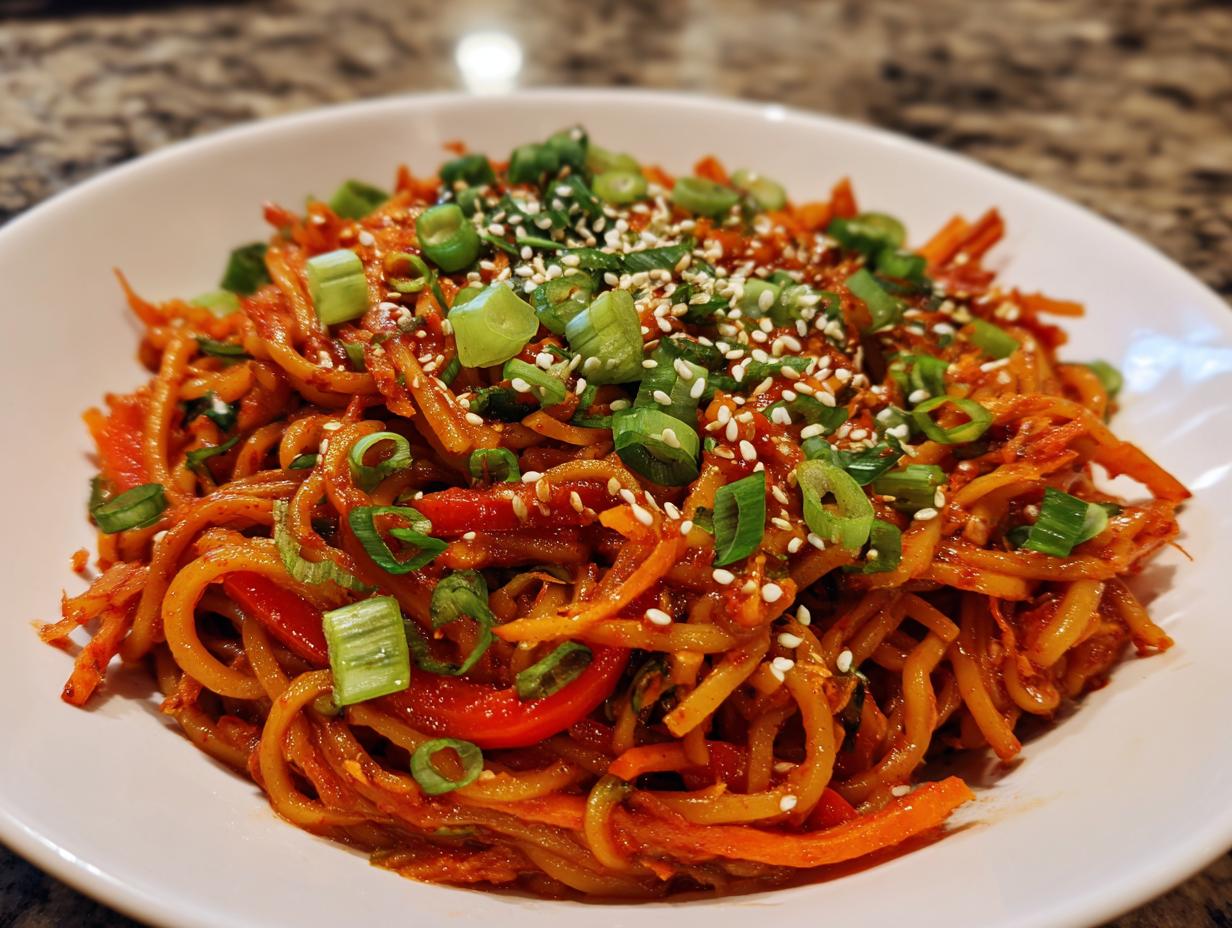
If you’re like me, weeknights demand something fast but still totally satisfying. That’s why I spent ages perfecting these spicy gochujang noodles. Seriously, this recipe delivers such a bold, savory punch, and it comes together faster than ordering takeout!
I’m telling you, the secret here isn’t just piling on the heat; it’s balancing that fiery Korean chili paste with just the right amount of sweet and tangy notes. I’ve tested this sauce combination dozens of times to make sure it hits that perfect flavor profile every single time. You need something quick, but you don’t want to sacrifice real flavor, right? This recipe is my answer for those busy evenings.
Essential Ingredients for Spicy Gochujang Noodles
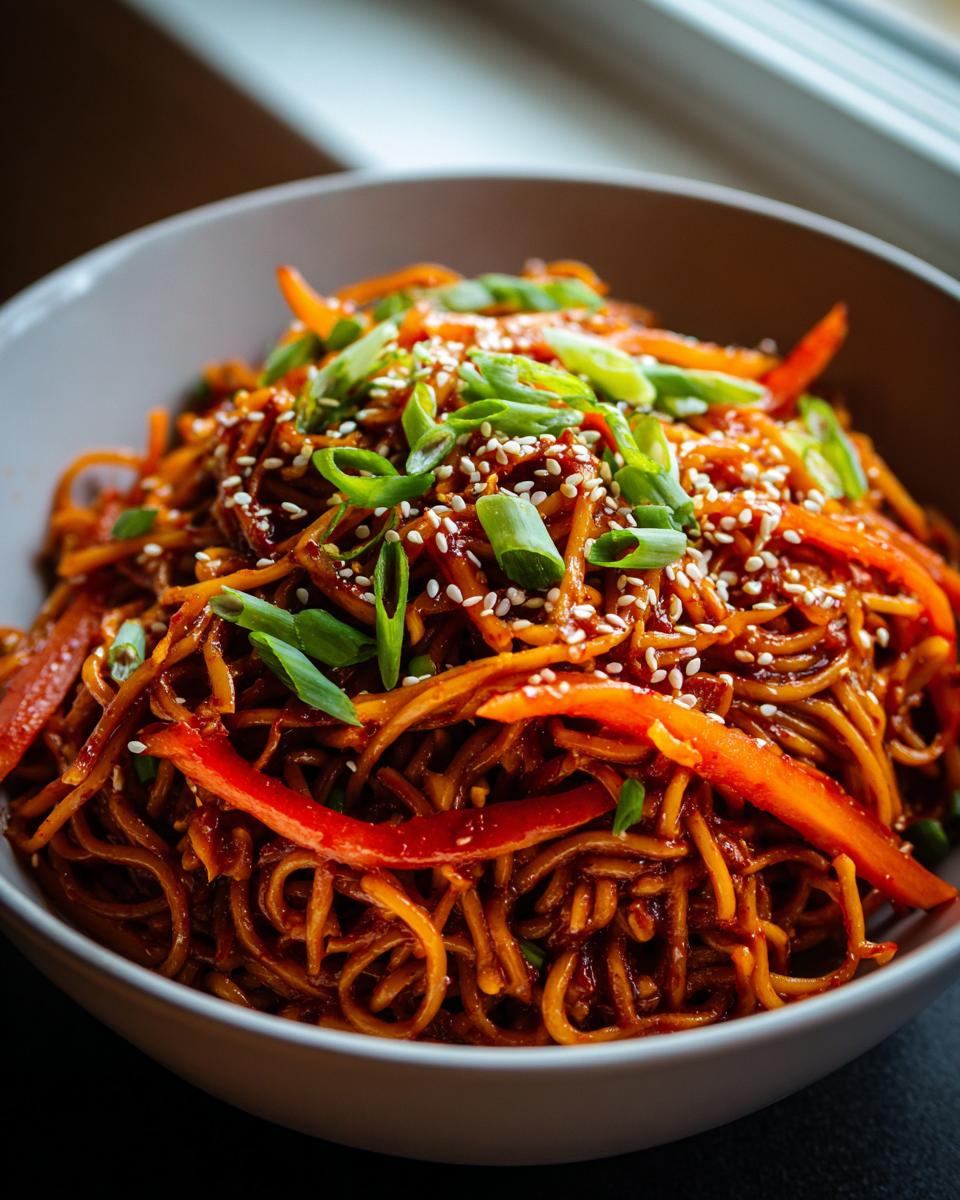
Okay, now we talk about what actually goes into this magic bowl. You don’t need a million fancy things, but the quality of a few key players really makes these spicy gochujang noodles sing. I always say if you’re making a simple dish, your ingredients have to be top-notch—otherwise, you’re just eating spicy paste and noodles!
I’ve tried cutting corners before, and trust me, it’s not worth it. Getting these few things right ensures you get that deep, savory flavor I promised you earlier. It’s all about that balance!
Noodle Selection and Preparation
First up: the noodles! You have options here, which is great because you can use whatever you have on hand. I love using thick udon noodles because they really grab onto that thick sauce, but ramen or even rice noodles work beautifully. The main thing is that you cook them exactly according to the package directions. Don’t overcook them! They finish cooking in the sauce later, so pull them out when they are just shy of perfect. Drain them well and set them aside; moisture is the enemy right now!
Crafting the Signature Spicy Gochujang Noodles Sauce
This is where the flavor lives, folks. The star, naturally, is the gochujang. You need that real Korean chili paste—it’s fermented, so it has depth, not just raw heat. Don’t substitute it if you can help it! Whisk that aggressively with the soy sauce (or tamari if you need gluten-free), the sesame oil for nuttiness, the rice vinegar for that essential tang, and the honey or maple syrup to round out the spice. Finally, minced garlic and fresh ginger—don’t skimp on the fresh stuff here; it makes the sauce smell incredible when it hits the hot pan!
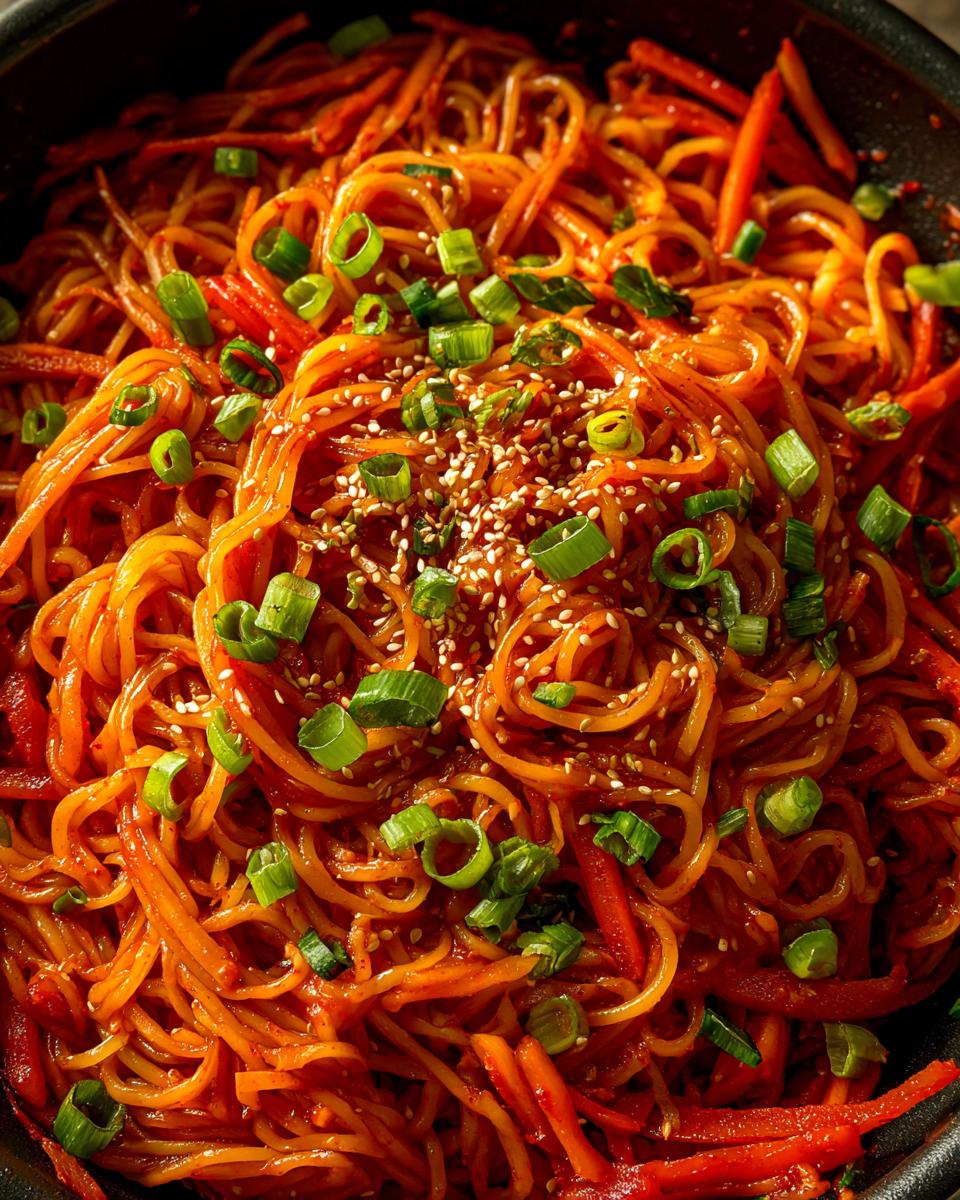
Equipment Needed for Your Spicy Gochujang Noodles
Before we even think about turning on the stove, let’s get your tools ready. Since this is a super fast stir-fry, having everything in one place is key. You don’t want to be scrambling mid-cook!
- A medium saucepan for boiling the noodles.
- A small bowl for whisking up that amazing sauce.
- A large skillet or wok—this is where the action happens!
- A good whisk or fork for mixing the sauce ingredients smoothly.
Step-by-Step Instructions for Spicy Gochujang Noodles
Alright, now that we have our ingredients lined up and our tools ready, let’s get cooking! Remember, total time is only about 20 minutes, so move with purpose but don’t rush the flavor building. This is a fast assembly job!
Cooking the Noodles
First things first, get a pot of water boiling for your noodles. You’ll want to cook them according to the package directions—this usually takes about 5 to 8 minutes depending on if you chose ramen or udon. Here’s my big tip: taste them! Pull them out about 30 seconds before they look totally done. They should still have a little bite left in them. Drain them really well in a colander. If you leave too much water clinging to them, it will dilute our beautiful sauce later on. Set them aside right near your stovetop.
Preparing the Vegetables and Protein
While the water is heating up or the noodles are boiling, get your veggies ready. We want them tender-crisp, not mushy! Heat up your large skillet or wok over medium heat. A little splash of neutral oil works fine here, or you can just use a bit of the sesame oil if you’re feeling bold. Toss in your shredded carrots and thinly sliced bell peppers. You only need to sauté these for about 3 to 4 minutes. You want them to soften just slightly so they aren’t raw, but they still need a little snap when you bite into them. If you are using cooked chicken, tofu, or shrimp, you can toss that in during the last minute just to warm it through, but since this is a quick meal, many people add pre-cooked protein right at the end.
Combining and Finishing the Spicy Gochujang Noodles
This is the exciting part where everything comes together! Once the vegetables are tender-crisp, turn the heat down just a touch to medium-low. Dump those drained noodles right into the skillet with the veggies. Now, pour that glorious, vibrant sauce you whisked up earlier all over the noodles. Use tongs and toss everything together quickly and vigorously! You need to coat every single strand evenly. Keep tossing for about 1 to 2 minutes until the sauce thickens up slightly and clings beautifully to the noodles and vegetables. Don’t let it sit too long, or the noodles might get gummy!
Once everything is coated and hot, turn the heat off. Seriously, turn it off! Stir in your sliced green onions—we want their fresh bite, not cooked-down onion flavor. Give it one final toss. Now, plate it up right away and finish with a generous sprinkle of sesame seeds for texture and that nutty aroma. That’s it! Dinner is served in minutes!
Tips for Perfect Spicy Gochujang Noodles Success
Look, making these spicy gochujang noodles is easy, but making them *amazing* takes a couple of little tricks I’ve picked up over the years. It’s not just about following the steps; it’s about tasting and adjusting along the way. Don’t be afraid to tweak things slightly based on what you have or what your taste buds are telling you that day! My biggest piece of advice is to always taste your sauce components before you even turn the heat on. Seriously, stir the sauce ingredients and dip a tiny spoon in. Does it need more tang? A splash more vinegar. Too savory? Maybe a tiny bit more honey. Getting the base right means the final dish is guaranteed to be delicious. If you want to see more tips on flavor balancing, check out our thoughts on flavor profiles.
Controlling the Heat Level
You know I love a good kick, but I also know not everyone wants their mouth on fire! The gochujang is where all the heat comes from, so you are totally in control here. If you are nervous, start with just one and a half tablespoons instead of the full two. You can always add more heat later, but you can’t really take it out once it’s mixed in!
If you find the finished noodles are still too spicy for your liking, don’t panic. A tiny drizzle of extra sesame oil or a touch more honey stirred in right at the end can help mellow out the aggressive spice without ruining the flavor profile. It’s all about finding that sweet spot.
Achieving Even Sauce Coating
This is crucial for texture. When you add the noodles and the sauce to the skillet, the heat needs to be medium-low. If it’s too high, the sauce burns onto the bottom of the pan before the noodles are coated, and you end up with dry spots. Use tongs—not a spoon—to toss everything. Tongs allow you to lift and turn the noodles over and over, making sure every single strand gets a nice, even blanket of that savory sauce. Work quickly but gently; we want coated noodles, not broken noodles!
Ingredient Substitutions for Spicy Gochujang Noodles
Sometimes you open the pantry and realize you’re missing that one crucial thing. Don’t let that stop you from making these amazing spicy gochujang noodles! We can swap things out while keeping that essential sweet, savory, and spicy base intact.
For the noodles, if you don’t have ramen or udon, just use whatever dried pasta you have—even spaghetti works in a pinch, just cook it al dente! For the sweetener, if honey isn’t your thing, pure maple syrup is a perfect one-to-one swap, or if you’re really out, a teaspoon of regular white sugar mixed with a tiny bit of hot water will dissolve nicely into the sauce.
Veggies are totally flexible! Broccoli florets, sliced mushrooms, or even shredded cabbage are fantastic additions if you want more bulk. Just remember to cook heartier veggies, like broccoli stems, a little longer before adding the peppers and carrots. The key is keeping the sauce components—the gochujang, soy sauce, and acid—the same for that signature flavor! If you are looking for other quick dinner ideas, check out our dinner recipes section.
Serving Suggestions for Your Spicy Gochujang Noodles
These spicy gochujang noodles are hearty enough to stand alone, but wow, don’t they get even better with a few friends on the plate! Since the noodles pack such a savory punch, I love pairing them with something cool and fresh to cut through the richness and the spice. It’s all about balance, remember?
A quick, crunchy cucumber salad dressed simply with a little rice vinegar and salt is my absolute favorite side. It’s refreshing and so easy to whip up while the noodles are cooking. If you want more texture, try adding some crispy fried shallots right on top—they add a lovely crunch that goes beyond the sesame seeds.
And don’t forget the garnishes! Beyond the green onions we tossed in, I always keep extra toasted sesame seeds and sometimes a drizzle of chili oil on the table. That way, everyone can customize their bowl. If you’re adding protein like tofu, make sure you crisp that up separately so it stays crunchy when you mix it in! For more inspiration on quick sides, see what we are pinning on Pinterest.
Storing and Reheating Leftover Spicy Gochujang Noodles
It’s rare we have leftovers of these spicy gochujang noodles because they disappear so fast, but if you’re lucky enough to have some hiding in the fridge, you absolutely have to handle them right. You don’t want sad, gummy noodles tomorrow, do you? We need to treat these leftovers gently so they taste almost as good as fresh.
Storage Guidelines
Pop any leftovers into a really good, airtight container. I find glass containers work best because they don’t absorb smells, but any tight lid will do. You can safely keep these in the refrigerator for up to two days. Any longer than that, and the noodles start to get a little too soft for my liking. Make sure they are cooled down before you seal them up tight!
Reheating Method
Never, ever microwave these straight from the fridge! They will turn into a dry, chewy mess. The trick is moisture. When you reheat them in a skillet over medium-low heat, add a tiny splash of water—maybe a teaspoon or two per serving. This steam helps loosen up that thick sauce and brings the noodles back to life without drying them out. Toss constantly until they are hot all the way through. This usually only takes 3 or 4 minutes! If you are interested in other quick meal hacks, check out our TikTok ramen hacks.
| Guideline | Detail |
|---|---|
| Storage Duration | Up to 2 days in an airtight container in the fridge. |
| Reheating Method | Gently reheat in a skillet over medium-low heat with a splash of water to loosen the sauce. |
Frequently Asked Questions About Spicy Gochujang Noodles
I get so many questions about these quick meals, and honestly, I love hearing from you! People always want to tweak things for dietary needs or time constraints. Here are the most common things folks ask when they are whipping up these delicious spicy gochujang noodles.
Can I make this recipe gluten-free?
Absolutely! It’s super easy to make these gluten-free spicy gochujang noodles. The main substitution is the soy sauce; swap that out for tamari, which is naturally gluten-free. For the noodles, just make sure you pick rice noodles or a certified gluten-free ramen or wheat-free pasta. The rest of the sauce ingredients are usually fine!
What if I don’t have fresh ginger?
Fresh ginger is always better in the sauce because it has a brighter flavor, but life happens! If you only have ground ginger, you can definitely use it. The rule of thumb is that dried spices are much more concentrated than fresh. I would start with just half a teaspoon of ground ginger when you mix your sauce ingredients. You can always add a tiny pinch more if you feel it needs it, but start small so you don’t overpower that lovely gochujang flavor.
How long does it take to cook this dish?
That’s the best part! These are seriously fast. If you get organized while the water boils, you can be sitting down to eat in about 20 minutes total. The prep time is only about 10 minutes, and the actual cooking—the stir-frying—takes maybe another 10 minutes. It’s the perfect quick meal when you’re starving! For more quick meals, check out our full recipe index.
Share Your Spicy Gochujang Noodles Creations
I’ve shared all my secrets for getting these spicy gochujang noodles just right, and now I want to see what you do with them! Did you add extra shiitake mushrooms? Did you crank up the heat level? Don’t be shy!
Please leave a rating below and tell me how your quick meal turned out. Sharing your successes—or even your little kitchen oopsies—helps everyone learn. I read every single comment, so let me know if you try this recipe!
Print
5 Minute Spicy gochujang noodles Amazing
- Total Time: 20 minutes
- Yield: 3-4 servings 1x
- Diet: N/A
Description
Make spicy gochujang noodles with a bold, savory sauce for a quick, tasty meal that’s packed with flavor and perfect for weeknights. This dish delivers a vibrant and comforting meal with the rich heat of Korean chili paste.
Ingredients
- 8 oz noodles (ramen, udon, or rice noodles)
- 2 tablespoons gochujang (Korean chili paste)
- 2 tablespoons soy sauce or tamari
- 1 tablespoon sesame oil
- 1 tablespoon rice vinegar
- 1 tablespoon honey or maple syrup
- 2 cloves garlic, minced
- 1 teaspoon grated ginger
- 1/2 cup shredded carrots
- 1/2 cup thinly sliced bell peppers
- 2 green onions, sliced
- 1 teaspoon sesame seeds
- Optional: cooked chicken, tofu, or shrimp for protein
Instructions
- Cook noodles according to package instructions; drain and set aside.
- In a small bowl, whisk together gochujang, soy sauce, sesame oil, rice vinegar, honey, garlic, and ginger.
- In a large skillet or pan, sauté carrots and bell peppers over medium heat for 3-4 minutes until tender-crisp.
- Add cooked noodles to the pan and pour the sauce over; toss well to combine and heat through.
- Stir in sliced green onions and cook for 1 more minute.
- Remove from heat and sprinkle with sesame seeds.
- Serve hot, optionally topped with cooked protein of choice.
Notes
- Mix sauce ingredients well to balance spicy, sweet, and sour flavors.
- Do not overcook vegetables to keep texture.
- Toss noodles quickly to coat evenly with sauce.
- Garnish liberally with green onions and sesame seeds for freshness.
- Adjust gochujang quantity to control spice level.
- Store leftovers in an airtight container in the fridge for up to 2 days.
- Reheat gently in a pan with a splash of water to loosen sauce.
- Prep Time: 10 minutes
- Cook Time: 10 minutes
- Category: Main Dish
- Method: Stir-fry
- Cuisine: Korean
Nutrition
- Serving Size: 1 serving (approx.)
- Calories: 320
- Sugar: N/A
- Sodium: N/A
- Fat: 8g
- Saturated Fat: N/A
- Unsaturated Fat: N/A
- Trans Fat: N/A
- Carbohydrates: 50g
- Fiber: N/A
- Protein: 12g (with added protein)
- Cholesterol: N/A