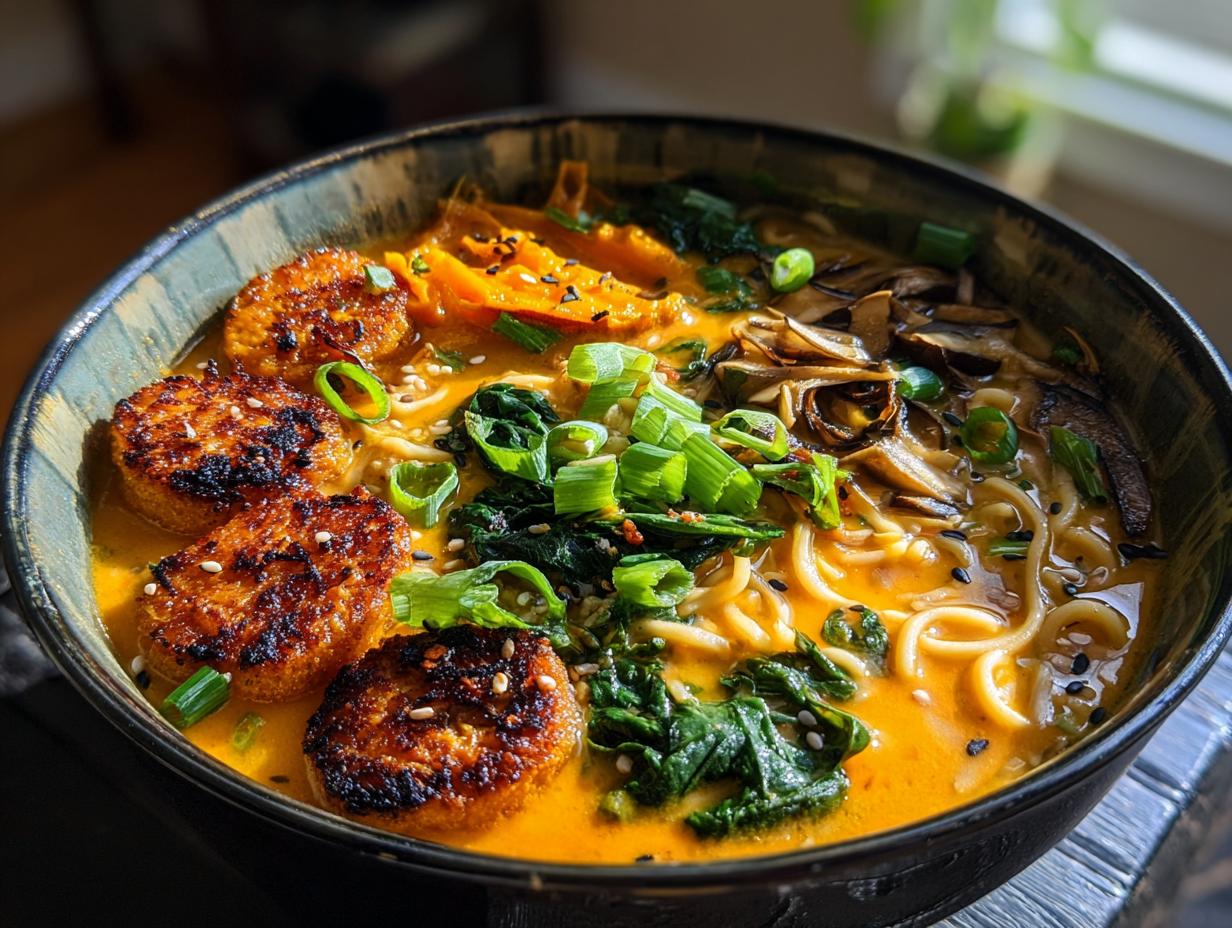
Are you craving something intensely cozy but still want to keep things light? Then you absolutely need this Pumpkin Miso Ramen in your life. Forget heavy, gut-busting holiday meals; this soup delivers that rich, creamy satisfaction without weighing you down.
I’m Jordan Bell, broadcasting from Asheville, NC, and I get it. After my own 80-pound weight loss journey, I learned that “detox” doesn’t have to mean boring salads. Here on my Easy Detox Recipes blog, my mission is making Southern comfort food clean—and this ramen is proof you can have deep, savory flavor while feeling fantastic.
We’re blending sweet roasted pumpkin with umami-packed miso paste to create a broth that tastes like it simmered all day. Trust me, this vegetarian ramen is the perfect weeknight hug in a bowl.
Gathering What You Need for Pumpkin Miso Ramen
Okay, let’s get organized. The beauty of this Pumpkin Miso Ramen is that most of the heavy lifting happens while the broth simmers. We need a few key players for the base, and then we need some fresh elements to give us that amazing texture contrast. Don’t worry if you don’t have roasted pumpkin on hand; the puree does most of the work!
I always lay everything out first so I don’t scramble later. Grab your biggest pot for the broth, and make sure you have a separate pan ready for those crispy mushrooms. Here’s the rundown of what you’ll need for four hearty servings:
| Ingredient | Quantity | Notes |
|---|---|---|
| Sesame Oil | 1 tablespoon | For sautéing the aromatics. |
| Garlic & Ginger | 3 cloves / 1 tablespoon | Freshly minced and grated is non-negotiable here! |
| Pumpkin Puree | 1 1/2 cups | Canned or homemade mashed roasted pumpkin. |
| Vegetable Broth | 4 cups | Use a good quality, low-sodium broth. |
| White Miso Paste | 1/4 cup | This is the umami powerhouse. |
| Soy Milk/Coconut Milk | 1 cup | For that dreamy creaminess. |
| Ramen Noodles | 12 ounces | Your favorite kind! |
| Mushrooms | 8 ounces | Shiitake or cremini work great. |
| Spinach & Scallions | 2 cups / 4 sliced | Fresh greens for the end. |
Essential Ingredients for the Creamy Pumpkin Miso Ramen Broth
The magic in our Pumpkin Miso Ramen broth comes from the sweet and salty balance. You absolutely need that pumpkin puree—it’s what makes it that gorgeous, velvety orange color. Then we layer in the white miso paste, which gives us that deep, savory backbone that vegetarian soups sometimes lack. Don’t skimp on the broth quality; it forms the foundation for everything!
Components for Toppings and Noodles
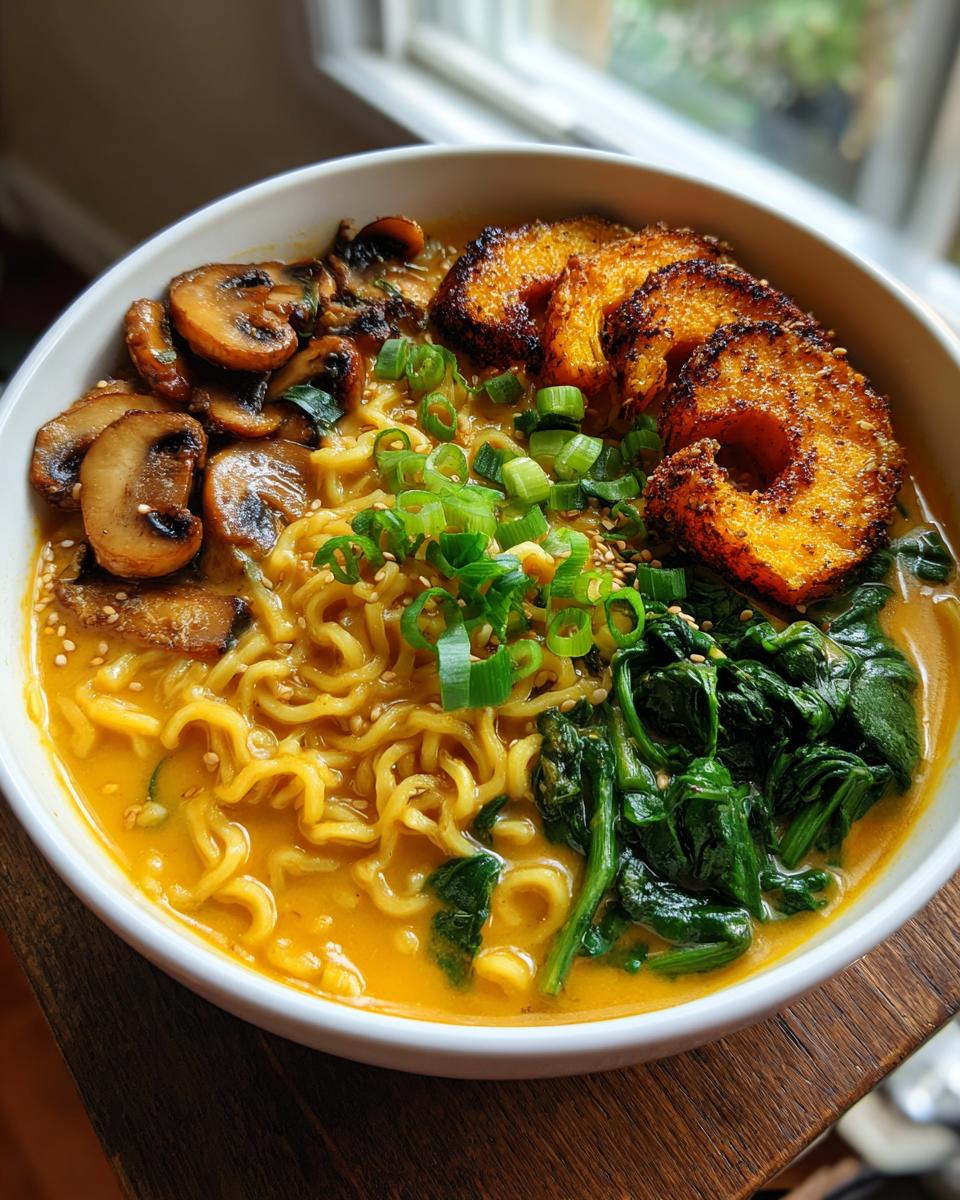
Texture is everything in ramen, right? So, we need those chewy noodles cooked perfectly al dente. We’re tossing the mushrooms in cornstarch and sesame seeds before frying them until they’re almost shatteringly crisp—that crunch against the soft broth is divine. Also, make sure you have your baby spinach ready to wilt right into the bowl at the very end!
Preparing the Flavorful Elements of Pumpkin Miso Ramen
Before we even think about heating up the broth for our Pumpkin Miso Ramen, we need to prep the elements that give this soup its fantastic texture. I find it’s much easier to roast and crisp things up first, so they are ready to go right when the broth finishes simmering. This workflow keeps everything hot and prevents you from getting stuck trying to fry mushrooms while your broth is cooling down!
We are aiming for maximum flavor concentration here. The optional roasted pumpkin gets an extra boost from a little miso glaze itself, concentrating the sweetness beautifully. Then, we tackle the mushrooms, which need that starchy coating to get super crunchy.
Roasting the Miso-Glazed Pumpkin Topping (Optional Step)
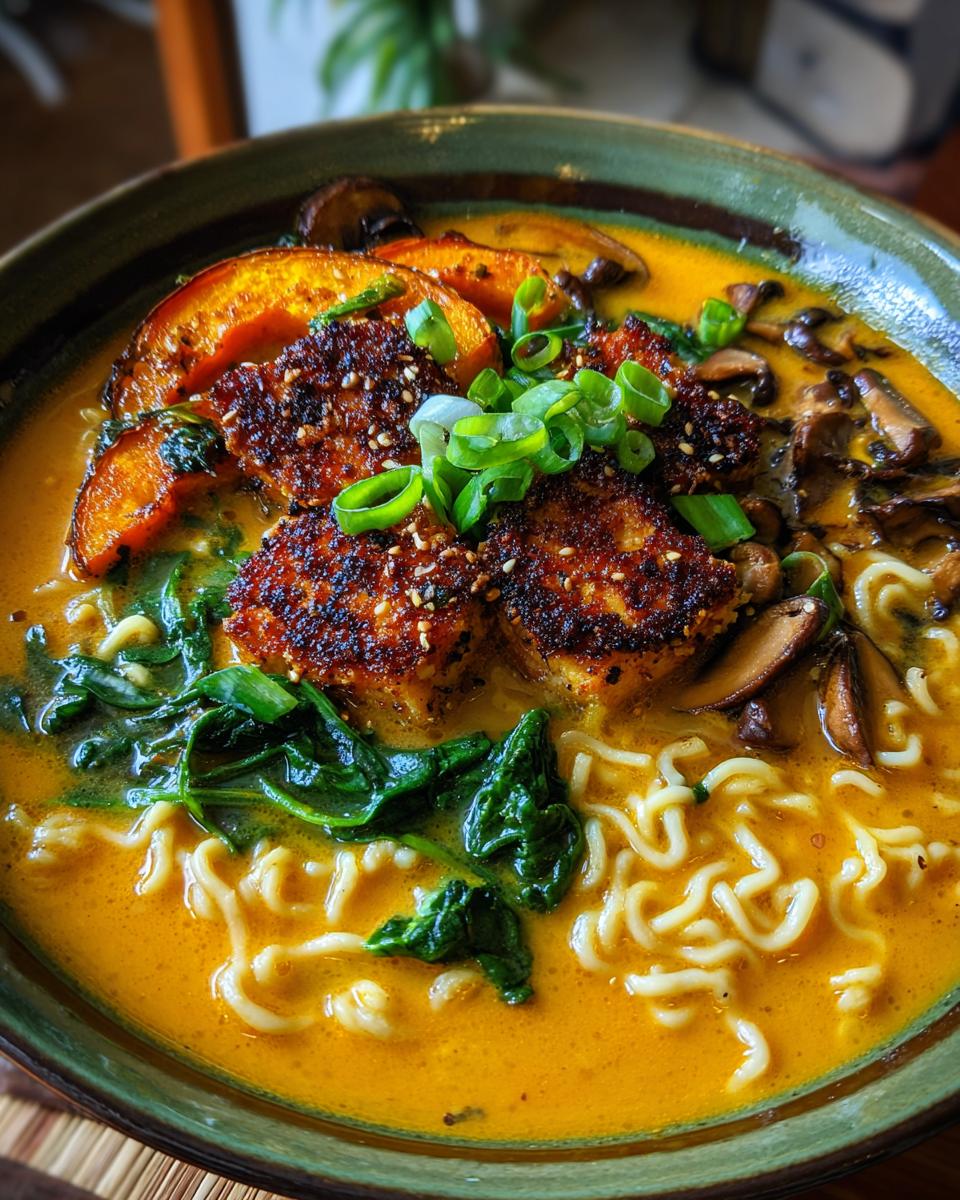
If you’re using those extra pumpkin wedges, this step is worth the time, I promise! In a small bowl, whisk together one tablespoon of white miso, a splash of soy sauce, a bit of oil, and a tiny bit of brown sugar—it makes a sticky, savory glaze. Toss your pumpkin pieces in that mixture until they are nicely coated. Roast them hot and fast at 400°F (200°C) for about 30 minutes. You want them tender inside but with those beautiful, slightly charred edges. They look amazing sitting on top of the finished ramen!
Creating Crispy Sesame Mushrooms
For the mushrooms, texture is everything. Take your sliced shiitakes or creminis and toss them really well with cornstarch, sesame seeds, and just a whisper of salt. The cornstarch is the secret weapon here—it creates that wonderful little crust when they hit the hot oil. Pan-fry them in a thin layer over medium-high heat. You need to let them sit undisturbed for a few minutes until they are golden brown and crisp. Scoop them out onto a paper towel immediately so they don’t steam themselves soggy. Set them aside!
Building the Rich Pumpkin Miso Ramen Broth
Now for the main event: the broth that makes this Pumpkin Miso Ramen so unbelievably comforting. We are building layers of flavor, starting with a quick sauté that wakes everything up. Get your main pot over medium heat and add that tablespoon of sesame oil. It should start smelling nutty almost instantly!
Toss in your minced garlic and grated ginger. You only need to cook these until they are fragrant—maybe 60 seconds. If you let them burn, the whole batch tastes bitter, so keep an eye on them! Once they smell amazing, stir in the pumpkin puree. Let that mingle with the aromatics for just a minute.
Next, we incorporate the miso and the broth. Add your white miso paste, soy sauce, and the vegetable broth. Whisk it all together until that miso is completely dissolved and incorporated. Bring this mixture up to a gentle simmer and let it hang out for about 10 minutes. This simmering time is crucial; it lets the sweetness of the pumpkin really marry up with the salty depth of the miso. Don’t rush this part!
Sautéing Aromatics and Combining Base Flavors
That initial sauté of garlic and ginger in sesame oil is what sets the stage for the best Pumpkin Miso Ramen you’ve ever had. When you add the puree, make sure you scrape the bottom of the pot well so nothing sticks. When I first tried this recipe, I added the miso right into the cold broth, and it clumped up! Lesson learned: add the miso *after* the puree and *before* the rest of the liquid, whisking constantly. It smooths out so much better that way. You can find more great recipe ideas on our Medium page.
Achieving Creaminess in Your Pumpkin Miso Ramen
Once your base has simmered and the flavors are cozying up, it’s time for the creamy element. You can use soy milk or coconut milk—I prefer coconut milk when I want it extra rich, but soy milk keeps it a bit lighter. Pour your cup of milk into the broth and stir it in gently. Here’s the most important rule for this step: do not let it boil after adding the milk! If it boils, the texture can get weird, and sometimes the miso can separate. Just heat it until it’s steaming hot and perfectly creamy. Taste it now and adjust your soy sauce if you need more saltiness!
Assembling Your Perfect Bowl of Pumpkin Miso Ramen
We’re so close to slurping heaven! Once your broth is hot and perfectly seasoned, assembly is fast. Start by dividing your cooked ramen noodles among your four bowls. Then, toss the baby spinach right into the hot bowls over the noodles. Ladle that gorgeous, hot Pumpkin Miso Ramen broth over the spinach—the heat wilts those greens instantly. Next, pile on your crispy sesame mushrooms and any optional roasted pumpkin wedges you made. Finish with a shower of fresh scallions. Don’t forget that lime wedge; a squeeze of fresh acid brightens up the whole bowl!
Tips for Success with Your Pumpkin Miso Ramen Recipe
This recipe is pretty forgiving, which is why I love it for busy nights, but a few small choices really elevate your Pumpkin Miso Ramen from good to unforgettable. Getting the texture of the broth right is key to nailing that velvety consistency we talked about.
The biggest tip I can give you relates to the main star: the pumpkin. The type of squash you use makes a real difference in the final texture of your vegetarian ramen. Also, remember that miso paste is salty, so taste before you add extra soy sauce! If you are looking for other comforting soup ideas, check out our recipe for comforting loaded baked potato soup.
Selecting the Best Pumpkin Puree for Your Broth
If you are making your own puree, trust me and use Kabocha squash if you can find it. Kabocha is naturally sweeter and has a wonderfully velvety texture that just melts into the soup base. Sugar pumpkins work great too, but Kabocha gives you that restaurant-quality mouthfeel. If you’re using store-bought puree, just make sure it’s 100% pumpkin, not a pie mix!
Adjusting Seasoning and Heat Levels
Miso pastes vary wildly in saltiness depending on how long they’ve been fermented. Start with less soy sauce than the recipe calls for, taste the broth after the milk goes in, and then add more soy sauce as needed. If you want heat in your Pumpkin Miso Ramen, chili oil is fantastic because it floats beautifully on top, but gochujang adds a nice fermented depth that works well with the miso if you prefer that flavor profile!
Storage and Reheating Instructions for Leftover Pumpkin Miso Ramen
If you happen to have any leftover Pumpkin Miso Ramen—which is rare in my house—you absolutely must separate the components before storing them. The noodles will turn into a sticky clump if you leave them soaking in the creamy broth overnight. Store the broth in an airtight container in the fridge for up to three days. Keep the noodles, crispy mushrooms, and any fresh toppings separate.
When reheating, gently warm the broth on the stove, adding a splash of water or extra milk if it seems too thick. Cook a fresh batch of noodles or soak the leftover ones in hot water for a minute just to loosen them up before serving everything together. For more recipe inspiration, see our Pinterest boards.
| Component | Storage Duration | Reheating Tip |
|---|---|---|
| Broth | Up to 3 days | Gently reheat on the stovetop; do not boil. |
| Cooked Noodles | 1 day | Quickly dunk in hot water to loosen before serving. |
| Crispy Mushrooms | 1 day | Reheat briefly in a dry pan to restore crispness. |
Frequently Asked Questions About This Vegetarian Ramen
I get a lot of questions about how to customize this creamy soup, especially since it’s such a great base for clean eating. People always ask about substituting ingredients in this Pumpkin Miso Ramen, and honestly, it’s very adaptable!
For instance, if you need a gluten-free ramen option, just swap out the wheat noodles for rice noodles or even sweet potato glass noodles. They cook up beautifully and absorb that rich miso broth perfectly. If you’re worried about the fat content, you can certainly skip the optional roasted pumpkin topping, but I wouldn’t recommend cutting the fat in the broth itself—that’s where a lot of the satisfaction comes from! If you enjoy creamy soups, you might also like our creamiest chicken Florentine soup.
Can you use red miso instead of white? Yes, you can, but be warned that red miso is much stronger and saltier, so you’ll need less of it and perhaps less added soy sauce. You might also want to use a little less pumpkin to balance the flavor profile. It’s still delicious, just a bolder, earthier vegetarian ramen experience!
Q1. Can I make this recipe vegan?
Absolutely! Since we are already using vegetable broth and soy milk or coconut milk, this recipe is easily vegan. Just ensure your miso paste doesn’t contain any hidden fish-based ingredients, though most standard white miso is naturally vegan.
Q2. What kind of pumpkin puree is best?
Homemade puree from Kabocha squash provides the best flavor and texture for our creamy pumpkin miso ramen, but high-quality canned pumpkin works great for a quick weeknight meal.
Q3. My broth separated a bit when I added the milk, what went wrong?
This usually happens if the broth was boiling rapidly when you added the milk. Make sure the broth is only simmering gently; high heat can cause the proteins in the milk to curdle slightly when mixed with the acidic broth components.
Sharing Your Delicious Pumpkin Miso Ramen Experience
I poured my heart into making this recipe easy and delicious for you. If you made this creamy soup, please leave a rating below and let me know how your crispy mushrooms turned out! I love seeing your bowls.
Assembling Your Perfect Bowl of Pumpkin Miso Ramen
We’re so close to slurping heaven! Once your broth is hot and perfectly seasoned, assembly is fast. Start by dividing your cooked ramen noodles among your four bowls. Then, toss the baby spinach right into the hot bowls over the noodles. Ladle that gorgeous, hot Pumpkin Miso Ramen broth over the spinach—the heat wilts those greens instantly. Next, pile on your crispy sesame mushrooms and any optional roasted pumpkin wedges you made. Finish with a shower of fresh scallions. Don’t forget that lime wedge; a squeeze of fresh acid brightens up the whole bowl!
Tips for Success with Your Pumpkin Miso Ramen Recipe
This recipe is pretty forgiving, which is why I love it for busy nights, but a few small choices really elevate your Pumpkin Miso Ramen from good to unforgettable. Getting the texture of the broth right is key to nailing that velvety consistency we talked about.
The biggest tip I can give you relates to the main star: the pumpkin. The type of squash you use makes a real difference in the final texture of your vegetarian ramen. Also, remember that miso paste is salty, so taste before you add extra soy sauce! For another cozy option, consider our delicious white chicken lasagna soup.
Selecting the Best Pumpkin Puree for Your Broth
If you are making your own puree, trust me and use Kabocha squash if you can find it. Kabocha is naturally sweeter and has a wonderfully velvety texture that just melts into the soup base. Sugar pumpkins work great too, but Kabocha gives you that restaurant-quality mouthfeel. If you’re using store-bought puree, just make sure it’s 100% pumpkin, not a pie mix!
Adjusting Seasoning and Heat Levels
Miso pastes vary wildly in saltiness depending on how long they’ve been fermented. Start with less soy sauce than the recipe calls for, taste the broth after the milk goes in, and then add more soy sauce as needed. If you want heat in your Pumpkin Miso Ramen, chili oil is fantastic because it floats beautifully on top, but gochujang adds a nice fermented depth that works well with the miso if you prefer that flavor profile!
Storage and Reheating Instructions for Leftover Pumpkin Miso Ramen
If you happen to have any leftover Pumpkin Miso Ramen—which is rare in my house—you absolutely must separate the components before storing them. The noodles will turn into a sticky clump if you leave them soaking in the creamy broth overnight. Store the broth in an airtight container in the fridge for up to three days. Keep the noodles, crispy mushrooms, and any fresh toppings separate.
When reheating, gently warm the broth on the stove, adding a splash of water or extra milk if it seems too thick. Cook a fresh batch of noodles or soak the leftover ones in hot water for a minute just to loosen them up before serving everything together.
| Component | Storage Duration | Reheating Tip |
|---|---|---|
| Broth | Up to 3 days | Gently reheat on the stovetop; do not boil. |
| Cooked Noodles | 1 day | Quickly dunk in hot water to loosen before serving. |
| Crispy Mushrooms | 1 day | Reheat briefly in a dry pan to restore crispness. |
Frequently Asked Questions About This Vegetarian Ramen
I get a lot of questions about how to customize this creamy soup, especially since it’s such a great base for clean eating. People always ask about substituting ingredients in this Pumpkin Miso Ramen, and honestly, it’s very adaptable!
For instance, if you need a gluten-free ramen option, just swap out the wheat noodles for rice noodles or even sweet potato glass noodles. They cook up beautifully and absorb that rich miso broth perfectly. If you’re worried about the fat content, you can certainly skip the optional roasted pumpkin topping, but I wouldn’t recommend cutting the fat in the broth itself—that’s where a lot of the satisfaction comes from! If you’re interested in other clean eating recipes, check out our pumpkin banana bread with cinnamon.
Can you use red miso instead of white? Yes, you can, but be warned that red miso is much stronger and saltier, so you’ll need less of it and perhaps less added soy sauce. You might also want to use a little less pumpkin to balance the flavor profile. It’s still delicious, just a bolder, earthier vegetarian ramen experience!
Q1. Can I make this recipe vegan?
Absolutely! Since we are already using vegetable broth and soy milk or coconut milk, this recipe is easily vegan. Just ensure your miso paste doesn’t contain any hidden fish-based ingredients, though most standard white miso is naturally vegetarian.
Q2. What kind of pumpkin puree is best for the broth?
Homemade puree from Kabocha squash provides the best flavor and texture for our creamy pumpkin miso ramen, but high-quality canned pumpkin works great for a quick weeknight meal.
Q3. My broth separated a bit when I added the milk, what went wrong?
This usually happens if the broth was boiling rapidly when you added the milk. Make sure the broth is only simmering gently; high heat can cause the proteins in the milk to curdle slightly when mixed with the acidic broth components.
Q4. Can I use a different type of miso paste?
You sure can! If you use a darker miso like red or brown miso, start with just half the amount called for, as they pack a much stronger umami punch than white miso in your Pumpkin Miso Ramen.
Sharing Your Delicious Pumpkin Miso Ramen Experience
I poured my heart into making this recipe easy and delicious for you. If you made this creamy soup, please leave a rating below and let me know how your crispy mushrooms turned out! I love seeing your bowls.
Print
Secret 4-Ingredient Pumpkin Miso Ramen Joy
- Total Time: 45 minutes
- Yield: 4 servings 1x
- Diet: Vegetarian
Description
Pumpkin Miso Ramen delivers a rich, creamy, and savory vegetarian noodle soup experience perfect for cool evenings. The sweet pumpkin puree blends with umami-packed miso for a deeply satisfying broth.
Ingredients
- 1 tablespoon sesame oil
- 3 cloves garlic, minced
- 1 tablespoon grated fresh ginger
- 1 1/2 cups pumpkin puree (or mashed roasted pumpkin)
- 4 cups vegetable broth
- 1/4 cup white miso paste
- 1–2 tablespoons soy sauce, to taste
- 1 cup unsweetened soy milk or 1 cup coconut milk
- 12 ounces ramen noodles
- 8 ounces mushrooms (shiitake or cremini), sliced
- 1 tablespoon cornstarch
- 1 tablespoon sesame seeds
- 2 cups baby spinach
- 2 cups roasted pumpkin wedges or cubes (optional topping)
- 4 scallions, thinly sliced
- Lime wedges, for serving
- Chili oil or gochujang, optional for heat
Instructions
- For optional roasted pumpkin: whisk 1 tablespoon white miso with 1 tablespoon soy sauce, 1 tablespoon oil, and 1 teaspoon brown sugar. Toss over pumpkin wedges and roast at 200°C/400°F for about 30 minutes until tender and charred in spots.
- For crispy mushrooms: toss sliced mushrooms with cornstarch, sesame seeds, and a pinch of salt. Pan-fry in a thin layer of oil over medium-high heat until golden and crisp. Set aside.
- Make the broth: warm sesame oil in a pot over medium heat. Sauté garlic and ginger until fragrant. Stir in pumpkin puree, miso, soy sauce, and vegetable broth. Simmer for 10 minutes to meld flavors.
- Stir in soy milk or coconut milk. Heat gently without boiling until the broth is creamy and steamy hot.
- Cook ramen noodles according to package directions. Drain well and divide among bowls.
- Assemble: add spinach to the bowls. Ladle hot pumpkin-miso broth over the spinach to wilt the greens. Top with crispy mushrooms, roasted pumpkin, and scallions. Finish with lime and a drizzle of chili oil or gochujang if you want heat.
Notes
- Roasting squash with miso deeply concentrates sweetness and umami for a richer vegetarian ramen base.
- Kabocha or sugar pumpkin work well; kabocha provides a naturally sweet, velvety texture to the broth.
- This recipe takes about 30 minutes, fitting well into a busy weeknight schedule.
- Prep Time: 15 minutes
- Cook Time: 30 minutes
- Category: Soup
- Method: Stovetop
- Cuisine: Asian Fusion
Nutrition
- Serving Size: 1 bowl
- Calories: Estimate not provided
- Sugar: Estimate not provided
- Sodium: Estimate not provided
- Fat: Estimate not provided
- Saturated Fat: Estimate not provided
- Unsaturated Fat: Estimate not provided
- Trans Fat: Estimate not provided
- Carbohydrates: Estimate not provided
- Fiber: Estimate not provided
- Protein: Estimate not provided
- Cholesterol: Estimate not provided