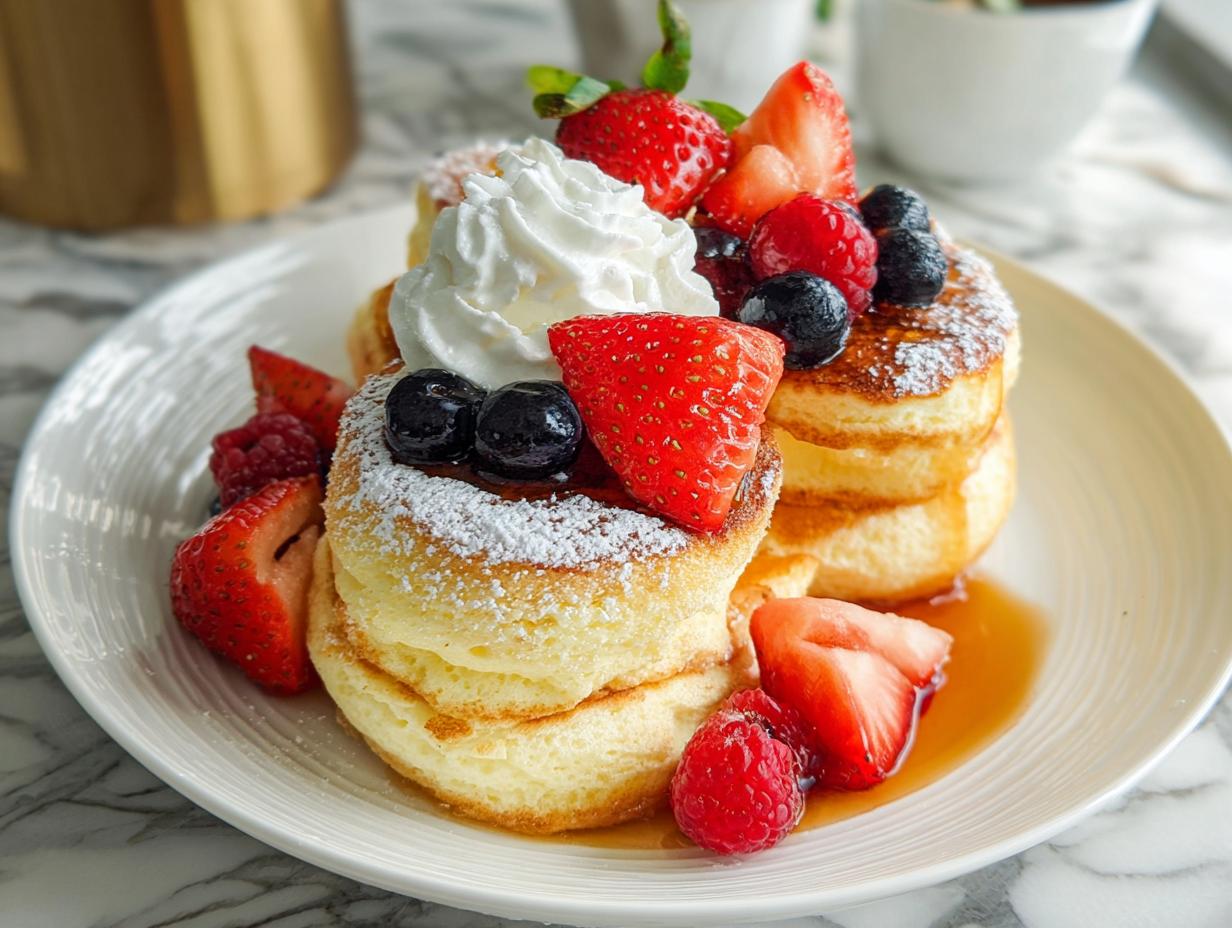
Okay, listen up. If you think pancakes are just flat, sad disks you eat drowning in syrup, you haven’t lived until you’ve tried these Japanese Soufflé Pancakes. Seriously, these things defy gravity! They are so airy, so light, they practically float off the plate. I spent way too many mornings staring at sad, deflated puddles before I cracked the code.
The secret, and I cannot stress this enough, is all in how you handle those egg whites. When I first started, I treated the meringue like regular cake batter—I mixed it too hard! Oops! You have to fold that fluffy cloud mixture into the yolks with the delicacy of handling a newborn bird. Trust me, mastering that gentle folding technique is what turns a good breakfast into the most dreamy, cloud-like experience. These homemade Japanese Soufflé Pancakes are totally worth the focused effort, and you’ll be amazed you made them at home!
Gathering Your Ingredients for Japanese Soufflé Pancakes
Making the fluffiest pancakes ever starts with being super honest about your measurements. These aren’t the kind of pancakes where you can just eyeball the flour and hope for the best! Because we are relying on the structure of the egg whites, every little bit of flour and leavening counts towards that incredible height. Don’t substitute anything major here, especially when you are first starting out. Trust me, precision pays off!
Here is what you’ll need to gather before you even think about cracking an egg:
| Item | Amount |
|---|---|
| Large Eggs (separated) | 2 |
| Whole Milk | 1½ tablespoons |
| Vanilla Extract | &fracxbc; teaspoon |
| Cake Flour | &fracxbc; cup |
| Baking Powder | &fracxbd; teaspoon |
| Sugar (for batter) | 2 tablespoons |
Essential Components for Fluffy Japanese Soufflé Pancakes
The eggs are the backbone of this whole operation, so make sure they are separated cleanly! You want absolutely zero yolk in those whites, or they won’t whip up right. We use cake flour specifically because it has lower protein than all-purpose flour, which keeps the final pancake tender and light, not chewy. And please, sift that cake flour along with your baking powder! Sifting gets rid of any lumps and aerates the dry ingredients, which helps them blend perfectly into the yolk base without needing heavy mixing.
Recommended Toppings and Servings
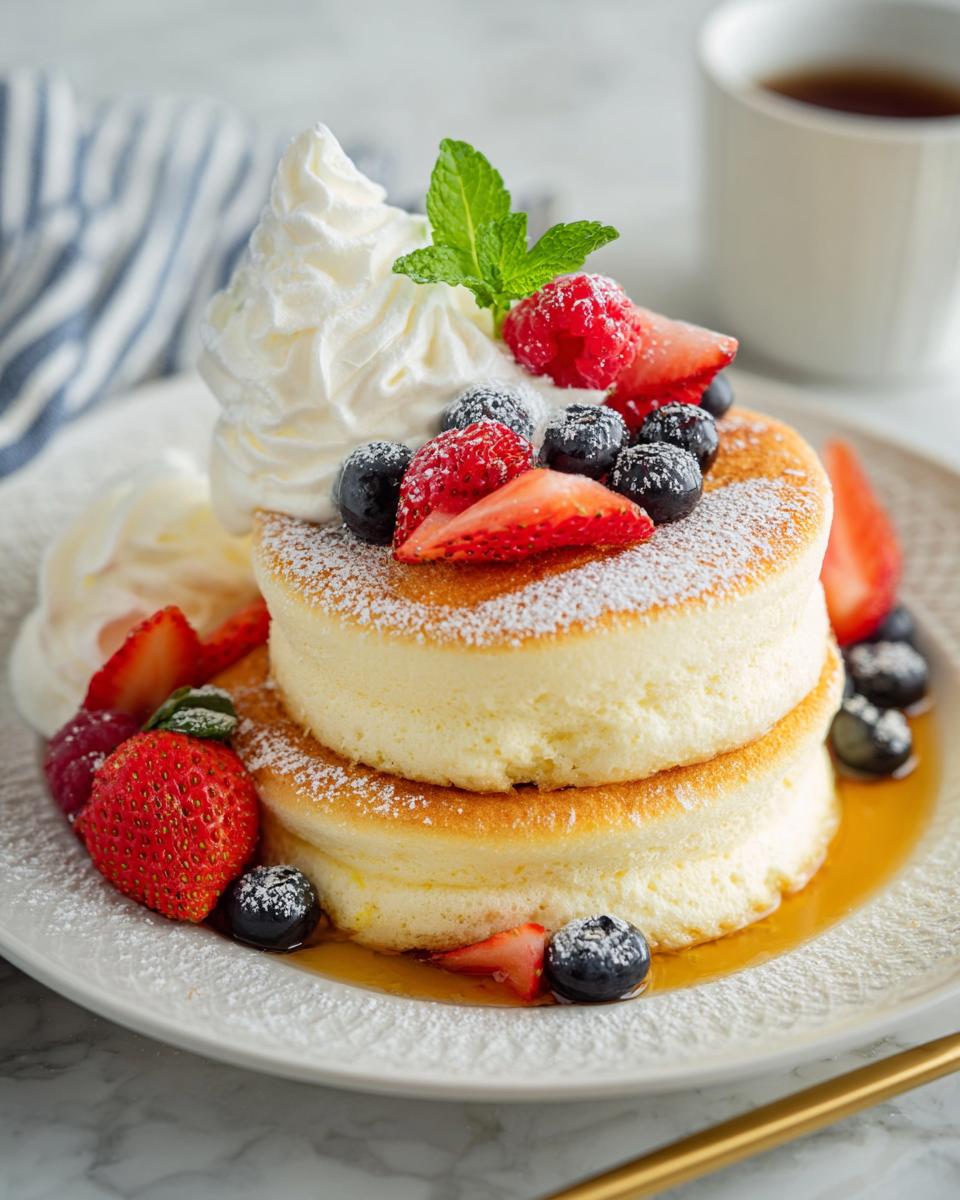
Once you have your stack of fluffy clouds ready, you need the right finish! We are making a quick, lightly sweetened whipped cream. You’ll need &fracxbd; cup of heavy cream and 1½ tablespoons of sugar for that. Don’t forget the final dust of confectioners’ sugar for that classic look, plus some fresh berries and, naturally, good maple syrup. That’s perfect for one lucky person—this recipe makes just three pancakes!
Equipment Needed for Your Japanese Soufflé Pancakes
You don’t need a million fancy gadgets for these, thankfully! The right tools just make the process smoother. You definitely need two separate mixing bowls—one for the yolks and one for the meringue. Grab your whisk, of course, and a hand whisk or a sturdy spatula for the folding part. The most important piece here is a really good, clean nonstick frying pan. Make sure it has a tight-fitting lid too, because that lid traps the steam we need to cook them through!
Step-by-Step Instructions for Making Japanese Soufflé Pancakes
Now for the fun part! Don’t rush these steps, especially when dealing with the eggs. Time and gentle handling are your best friends here if you want those tall, wobbly stacks of perfection. Follow these steps closely, and you’ll nail these Japanese Soufflé Pancakes on your first try!
Preparing the Yolk Base and Chilling Egg Whites
First things first, separate those eggs! Put the whites in a big, clean bowl—make sure that bowl is totally grease-free. Pop that bowl of whites straight into the freezer for about 15 minutes. Chilling them just a little bit helps them whip up much higher later on. While those are chilling, take your yolks and whisk them up with the milk and vanilla until the mixture looks thick and a little frothy. Then, sift in your cake flour and baking powder right over the top. Whisk that gently until it’s smooth. Don’t beat it into submission, just smooth!
Creating the Perfect Meringue for Japanese Soufflé Pancakes
This is where the magic happens for our airy structure. Take those chilled egg whites out and start beating them on medium speed until they look foamy. Now, start adding your 2 tablespoons of sugar slowly, maybe a teaspoon at a time, while you keep beating. You need to keep going until you reach stiff, glossy peaks. When you lift the whisk, the peak should stand straight up without flopping over. If you can hold the bowl upside down and nothing moves, you’ve nailed the meringue for your Japanese Soufflé Pancakes!
Gently Folding the Batter
Okay, this is the moment you have to channel your inner zen master. Take about a third of that beautiful meringue and whisk it right into your yolk mixture. Yes, whisk that first bit—it loosens up the heavy yolk base. Now, take the rest of the meringue and gently, gently fold it in using a spatula. Think of cutting down the middle and sweeping the batter up and over. You want to combine everything, but stop as soon as you don’t see big streaks of white meringue anymore. If you overmix here, you deflate all that air you just worked so hard to create—and then you end up with sad, flat pancakes!
The Low-and-Slow Cooking Method
Heat your nonstick pan over the absolute lowest setting you can manage, maybe around 300°F if your stove has a number scale. Brush it lightly with oil, then use a paper towel to wipe off any excess oil so it’s just barely coated. Scoop your batter onto the pan in tall mounds—we are going for height! Stack a second scoop right on top of each mound to help them stay tall. Immediately pour 1 tablespoon of water into the empty spaces of the pan and cover it with the lid. Cook like this for 6 to 7 minutes. Then, add one more scoop to the top of each cake for extra height, gently flip them using your spatula, add another tablespoon of water, cover again, and cook for 4 to 5 more minutes until they are golden brown on both sides.
Whipping Cream and Final Assembly
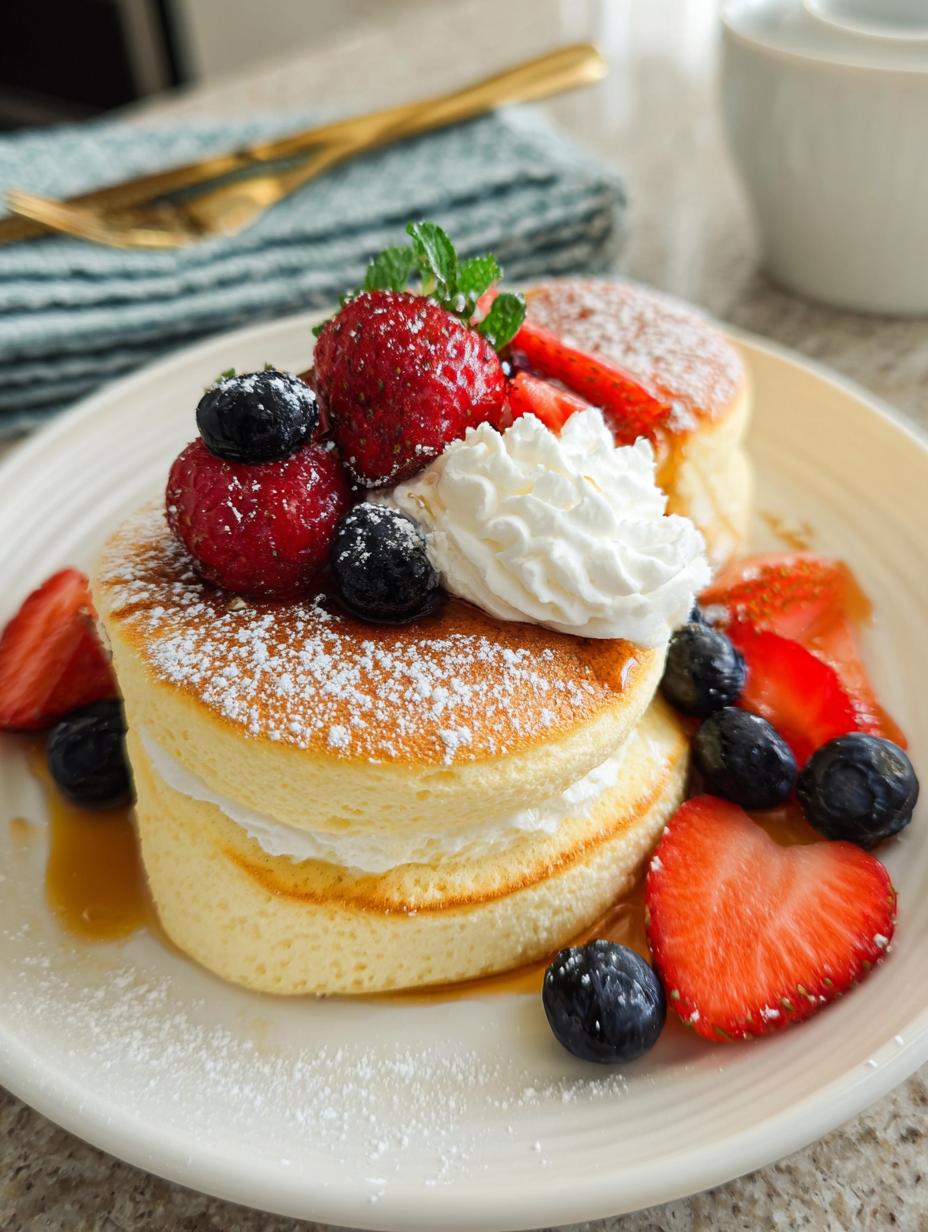
While those last few minutes are ticking down, whip your heavy cream and the topping sugar together until you get soft peaks—nothing too stiff for this topping. Once the pancakes are done, transfer them right away to your serving plates. Give them a light dusting of confectioners’ sugar. Then, pile on that lovely whipped cream, scatter on some fresh berries, and drizzle generously with maple syrup. Serve them immediately while they are still warm and jiggly!
Tips for Success with Your Japanese Soufflé Pancakes
Even with the recipe right there, sometimes these tall wonders need a little extra TLC. Don’t worry if your first batch isn’t perfect; mine certainly weren’t! These little pointers, pulled straight from my own trial-and-error sessions, will help you achieve those unbelievably fluffy Japanese Soufflé Pancakes every single time. It’s all about respecting the air we captured in those egg whites!
Heat Control is Key
I cannot stress this enough: your heat needs to be ridiculously low. If your pan is too hot, the outside will burn to a crisp before that enormous stack of batter has time to cook through to the middle. You want that gentle, slow warmth—think barely-on low. If you see any browning happening too fast, immediately take the pan off the burner for 30 seconds before putting it back. We need patience here; slow cooking ensures the inside is tender, not raw!
Mastering the Fold
When you are combining the meringue and the yolk base, you must be gentle. Remember how I said you need to stop folding when you still see a few tiny streaks of white? That’s okay! Those remaining streaks will disappear as the pancake cooks, and it’s better than mixing out all the air. Overmixing is the number one killer of fluffy pancakes. Treat that batter like it’s spun glass; keep it light, keep it airy, and your pancakes will thank you by soaring!
Ingredient Notes and Simple Substitutions
When it comes to the dry ingredients, please try to stick to cake flour if you can. It really makes a difference in texture because it’s so finely milled and low in protein. If you absolutely don’t have cake flour on hand, you can make a quick substitute: take &fracxbc; cup of all-purpose flour and whisk out 2 teaspoons of that flour, then replace those 2 teaspoons with cornstarch. Whisk it really well before using it in the recipe!
For the oil, use something neutral like canola or vegetable oil. Don’t try swapping in olive oil because the strong flavor will definitely clash with the delicate vanilla and egg notes.
Storing and Reheating Your Light Japanese Soufflé Pancakes
These pancakes are definitely best eaten right away while they are still wobbly and warm, but sometimes you just can’t finish three clouds in one sitting! If you have leftovers, don’t just toss them. You can store them in an airtight container at room temperature for about a day, but honestly, they lose some height pretty fast. If you are looking for other quick breakfast ideas, check out these pancake mini-muffins recipe!
The microwave is your best friend for reheating, but you have to be careful not to steam them into sogginess. A quick blast is all they need to spring back to life a bit.
| Storage Method | Duration |
|---|---|
| Airtight Container (Room Temp) | Up to 1 Day |
| Airtight Container (Fridge) | Up to 2 Days |
To reheat, I zap mine for just 10 to 15 seconds. This usually brings back enough of that wonderful fluff without turning them tough. If you want to get really fancy, you can warm them briefly in a dry, covered skillet over very low heat!
Common Questions About Japanese Soufflé Pancakes
It’s totally normal to have questions when you’re tackling these towering treats! Everyone wants that perfect wobbly stack. I’ve compiled the ones I get asked the most about making incredible Japanese Soufflé Pancakes at home. Hopefully, this clears up any confusion so your next batch is a total success! For more recipe inspiration, feel free to check out my Pinterest page.
Why are my pancakes dense instead of fluffy?
Nine times out of ten, density comes from deflating your meringue. You either didn’t whip the egg whites stiff enough, or—and this is the biggest culprit—you overmixed when you folded the meringue into the yolk batter. Remember, we want to gently coax everything together, not beat it into submission. If you mix too much, you knock all the air out, and poof, no more lift!
Can I make the batter ahead of time?
Sadly, no, you really can’t. The beauty of these pancakes relies entirely on the freshly whipped meringue structure. As soon as you fold the egg whites into the yolks, the carbon dioxide bubbles start to slowly deflate. If you let the batter sit for more than five minutes, you’ll notice it starts to look a little sadder. You really need to mix the batter right before the pan is hot and ready to go!
What is the best pan to use for Japanese Soufflé Pancakes?
A really good, heavy-bottomed nonstick frying pan is your absolute best friend here. You need a pan that can hold a steady, very low heat across the whole surface. Uneven heating means one pancake cooks faster than the other, and then you get leaning towers of pancakes! Make sure the surface is completely clean and well-oiled before you start scooping your batter. You can read more about my cooking adventures on Medium.
Sharing Your Fluffy Japanese Soufflé Pancakes Experience
I absolutely love seeing your attempts at this recipe! Honestly, watching them wobble on your plates makes my day. If you made these dreamy stacks, please come back and tell me how they turned out! Did you manage those stiff peaks? Let me know your cooking time in the comments below, or snap a picture and share it so we can all admire your beautiful, airy breakfast creations!
Print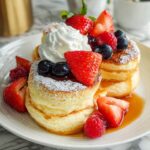
Amazing 3 Japanese Soufflé Pancakes Win
- Total Time: 30 minutes
- Yield: 3 pancakes (1 serving) 1x
- Diet: Vegetarian
Description
These Japanese soufflé pancakes are ultra-fluffy, airy, and light as clouds — a dreamy brunch treat made easily at home with simple ingredients.
Ingredients
- 2 large eggs, separated
- 1½ tablespoons whole milk
- ¼ teaspoon vanilla extract
- ¼ cup cake flour
- ½ teaspoon baking powder
- 2 tablespoons sugar
- 1 tablespoon neutral oil (for greasing pan)
- 2 tablespoons water (for steaming)
- ½ cup heavy cream (for topping)
- 1½ tablespoons sugar (for topping)
- 1 tablespoon confectioners’ sugar (for dusting)
- Fresh berries (for topping)
- Maple syrup (for topping)
Instructions
- Separate the egg whites and yolks into two bowls. Place the bowl of egg whites in the freezer for 15 minutes to chill slightly.
- Whisk egg yolks with milk and vanilla until thick and frothy. Sift in cake flour and baking powder and whisk just until smooth.
- Beat chilled egg whites on medium speed until frothy. Gradually add sugar in three additions while beating until stiff, glossy peaks form.
- Add one-third of the meringue to the yolk mixture and whisk gently. Add the remaining meringue and fold in carefully using a hand whisk or spatula until just combined. Do not overmix.
- Heat a nonstick frying pan over the lowest setting (about 300°F). Brush lightly with oil and remove any visible excess with a paper towel.
- Scoop the batter into the pan in tall mounds, about 2–3 tablespoons per scoop. Stack an additional scoop on top of each to create height.
- Add 1 tablespoon of water to the empty parts of the pan and cover with a lid. Cook for 6–7 minutes.
- Add one more scoop of batter to each pancake. Using an offset spatula, gently flip the pancakes. Add another tablespoon of water and cover. Cook for another 4–5 minutes, until both sides are golden brown.
- To make whipped cream: Whisk heavy cream and sugar together in a chilled bowl until soft peaks form.
- Transfer pancakes to plates, dust with confectioners’ sugar, and top with whipped cream, berries, and maple syrup.
Notes
- Cook on the lowest heat setting possible to prevent burning before the inside cooks.
- Use precise measurements for the flour and baking powder for best results in fluffiness.
- Folding the meringue gently is key to maintaining the airy texture.
- Prep Time: 15 minutes
- Cook Time: 15 minutes
- Category: Breakfast
- Method: Pan-fried
- Cuisine: Japanese
Nutrition
- Serving Size: 1 serving (3 pancakes)
- Calories: 168
- Sugar: Not specified
- Sodium: Not specified
- Fat: 8g
- Saturated Fat: Not specified
- Unsaturated Fat: Not specified
- Trans Fat: Not specified
- Carbohydrates: 18g
- Fiber: Not specified
- Protein: 6g
- Cholesterol: Not specified