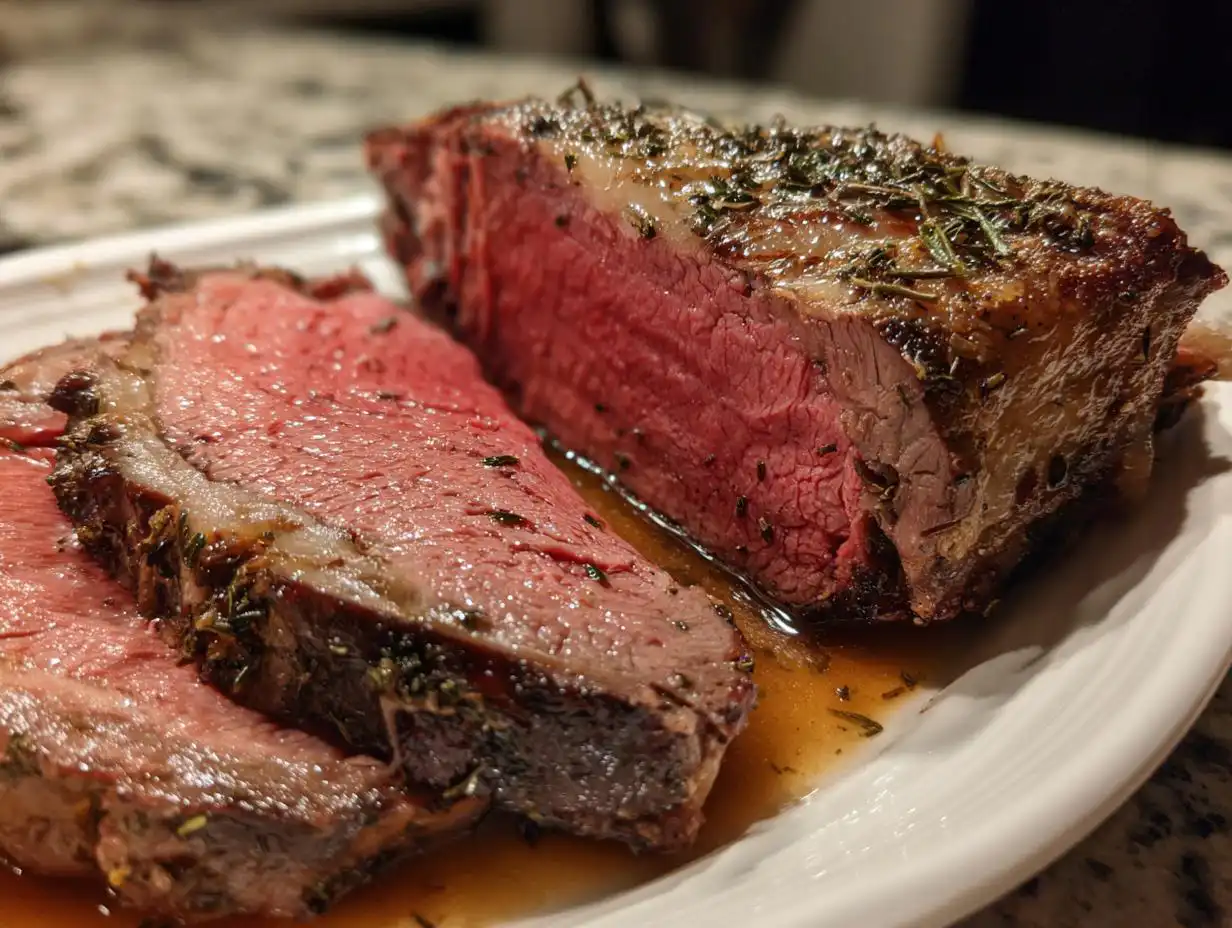
If you’ve ever thought that melt-in-your-mouth, perfectly pink prime rib was only achievable at a fancy steakhouse, you are in for a glorious surprise! I’m going to show you exactly how to make a beautiful Texas Roadhouse Prime Rib right in your own kitchen, and honestly, it’s easier than you think. Forget those dry, gray roasts you might have made before; we’re aiming for that incredible, savory crust and tender center that makes people ask for seconds.
I’ve spent years testing roast times, and the biggest secret isn’t just the oven temperature—it’s the prep work. We’re going to dry-brine this beauty overnight. Trust me on this one; that step pulls out surface moisture, ensuring you get that fantastic, seasoned crust while the inside stays unbelievably juicy. It’s a game-changer for any large cut of beef, especially when we’re trying to nail that restaurant-quality flavor profile!
We’ll use a simple but powerful blend of herbs and garlic powder for that classic flavor, then finish it off with a rich, homemade au jus that tastes like it simmered all day. Get ready to impress everyone at your next dinner!
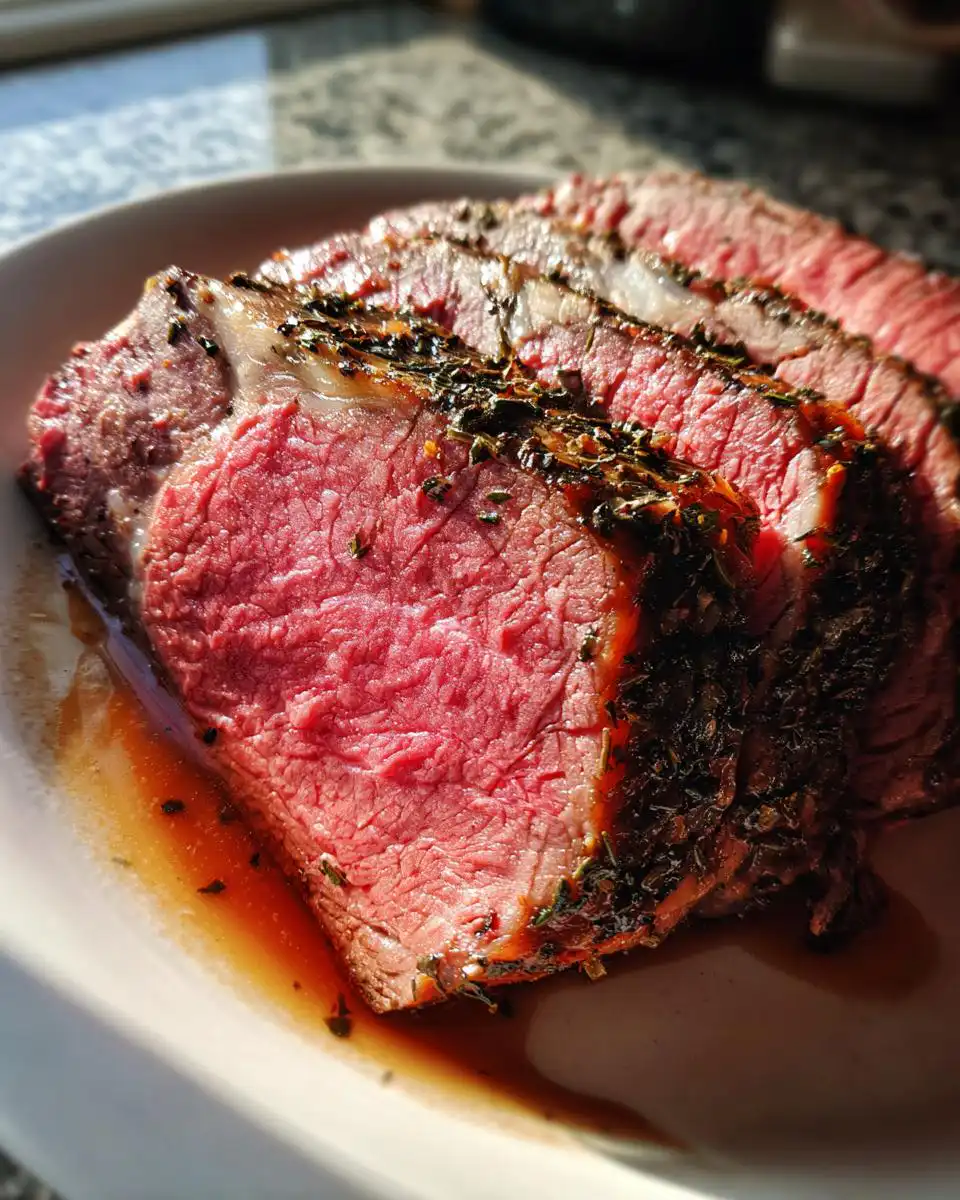
Essential Components for Perfect Texas Roadhouse Prime Rib
Okay, before we even think about turning on the oven, we need to talk about what makes this roast sing. You can’t get that deep, savory flavor without the right starting lineup. Don’t skip the marination time; that’s where the real magic happens for the crust!
Ingredient List for Texas Roadhouse Prime Rib
Here is everything you need to gather up. Make sure your roast is bone-in, that really helps with even cooking and flavor!
- 5-pound bone-in beef rib roast
- 3 teaspoons kosher salt
- 2 teaspoons black pepper
- 1 tablespoon garlic powder
- 1 tablespoon onion powder
- 2 teaspoons dried thyme
- 2 teaspoons paprika
- 3 tablespoons olive oil
- 4 cups low-sodium beef broth
- 1 medium onion, roughly chopped
- 1 celery stalk, chopped
- 1 medium carrot, chopped
- 2 garlic cloves, smashed
- Bones trimmed from the roast (if available)
- Creamy horseradish sauce (optional)
Required Equipment for Your Texas Roadhouse Prime Rib
You’ll need a few key tools to manage this big piece of meat. Having a good rack and a pan that can handle the drippings is crucial. And please, please use that instant-read thermometer!
- Roasting pan with a rack
- Instant-read meat thermometer
- Small saucepan for the au jus
- Small bowl for mixing the spice paste
Step-by-Step Guide to Preparing Texas Roadhouse Prime Rib
This is where we turn that gorgeous chunk of beef into a showstopper. Following these steps exactly will guarantee you get that incredible texture we talked about earlier. Don’t rush the seasoning or the resting—those are non-negotiables if you want true Texas Roadhouse Prime Rib quality!
Preparing and Seasoning the Beef Roast
First things first, we need a dry surface. Take your roast and pat it down really well with paper towels. I mean *really* well. Moisture is the enemy of a good crust!
Next, let’s make our flavor bomb. In a small bowl, mix up that salt, pepper, garlic powder, onion powder, thyme, and paprika. Now, drizzle in the olive oil and mix it until you have a thick, fragrant paste. It should smell amazing already!
Take that paste and rub it all over the entire surface of your rib roast. Get into every little nook and cranny. Once it’s coated, you have to be patient. Place the roast uncovered on the rack in your roasting pan and tuck it into the refrigerator for a solid 12 to 24 hours. This dry brining process is critical; it seasons the meat deep down and helps dry the exterior for that crust.
The final crucial step before it hits the heat: take the roast out of the fridge about one hour before you preheat your oven. It needs to come up to room temperature so it cooks evenly. If you skip this, the outside will be overdone by the time the middle is warm.
Achieving the Ideal Cook Temperature for Texas Roadhouse Prime Rib
Time to cook! Preheat your oven to a blazing 450 degrees Fahrenheit. Put that roast on its rack in the pan and let it sear for exactly 15 minutes. That initial burst of high heat sets that beautiful herb crust.
After 15 minutes, you need to drop the temperature immediately down to 325 degrees Fahrenheit. This is the slow-roast phase. Now, this is where your thermometer earns its keep. You are roasting for about 2 ½ to 3 hours, but you must rely on the internal temperature, not just the clock.
For that perfect medium-rare, you’re looking for 130 degrees Fahrenheit when you check the thickest part of the meat, avoiding the bone. If you like it a little more done, pull it at 140 degrees for medium. Pull it out right when it hits the target temperature, because it keeps climbing while it rests!
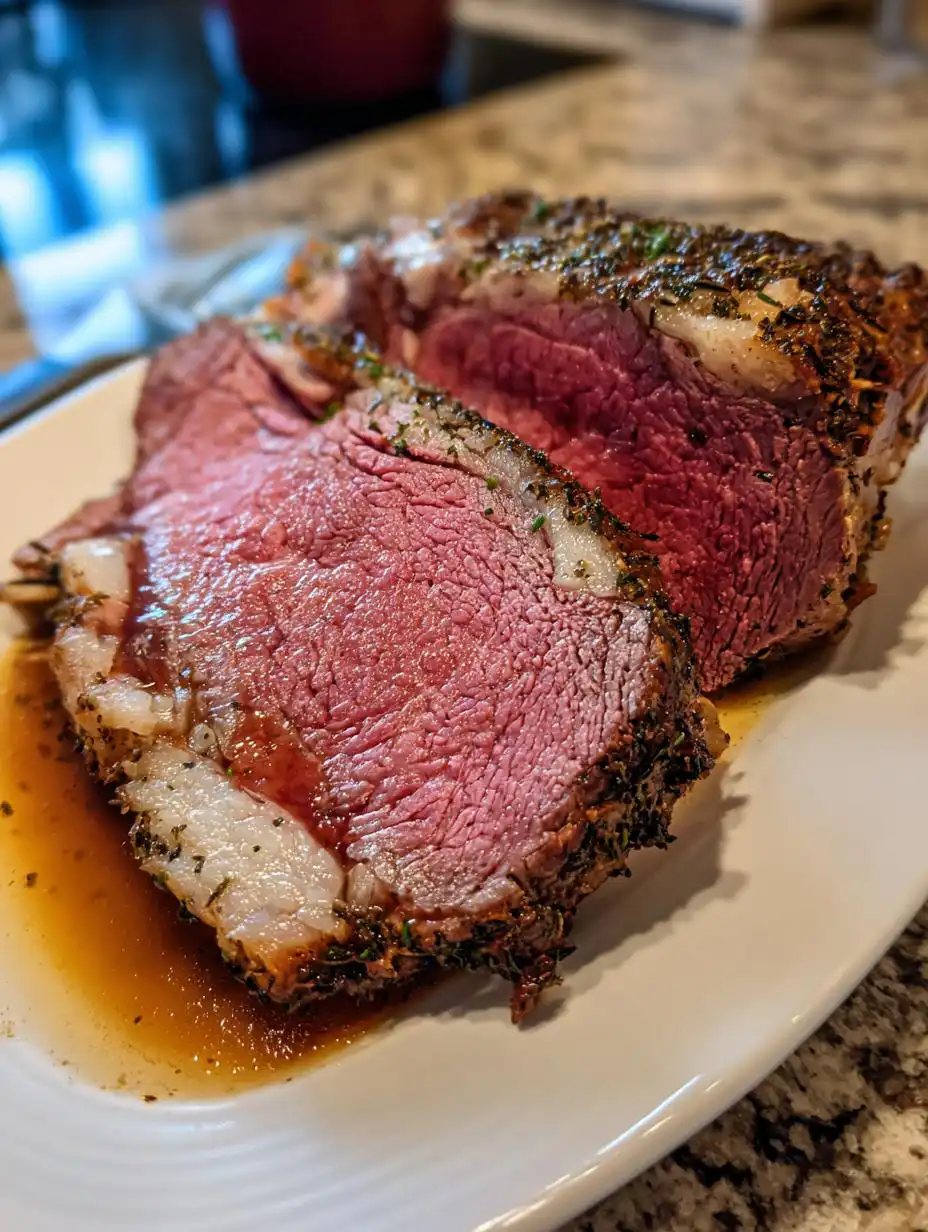
Making the Savory Beef Au Jus
While the roast is doing its thing slowly, we make the sauce that brings it all together. Grab a saucepan and combine your low-sodium beef broth, the roughly chopped onion, celery, carrot, smashed garlic cloves, and any bones you trimmed off the roast—those bones add so much flavor!
Bring that mixture up to a rolling boil, then immediately turn the heat down to a simmer. We want this to reduce, concentrating all those savory notes. Let it bubble gently for about an hour and a half. You want it reduced by about half. Once it’s rich and flavorful, just strain out all those vegetables and bones. Keep that beautiful au jus warm until slicing time!
Tips for Success When Making Texas Roadhouse Prime Rib
Even with the best recipe, a few small things can make or break your big roast night. The most important thing I want you to remember about your Texas Roadhouse Prime Rib is that you absolutely cannot skip the resting period. I know everyone is hungry, and the smell is driving you crazy, but if you slice it too soon, all those beautiful juices we worked so hard to keep inside will just run out onto the cutting board.
Let that roast sit, tented loosely with foil, for at least 20 to 30 minutes after it comes out of the oven. This allows the muscle fibers to relax and redistribute the moisture throughout the meat. Seriously, use this time to finish your side dishes! If you are looking for some great side dish ideas, check out this simple healthy orzo weeknight meal.
Also, be very careful when taking the temperature reading. You need to insert that instant-read meat thermometer into the thickest part of the roast, making sure you aren’t touching the bone at all. The bone heats up faster and will give you a false high reading. Accuracy here means the difference between perfect medium-rare and just slightly overdone. Trust your thermometer, but follow the resting rule, and you’ll have a perfect roast every time.
Flavor Variations for Your Texas Roadhouse Prime Rib
The classic herb blend in this recipe is fantastic, but sometimes you want to jazz things up a little bit! You don’t need to change much to get a totally different vibe on your roast. If you’re feeling adventurous, ditch the thyme and try swapping in some rosemary. Rosemary and beef are old friends, and it gives the crust a beautiful, piney aroma.
Another great twist is leaning into the garlic. Instead of just the powder in the paste, try adding 2 tablespoons of fresh, minced garlic right into that olive oil mixture. Wow, the smell alone is worth it! For a little smokiness, which plays so well with a good sear, substitute the paprika with smoked paprika. It deepens the savory profile without overpowering that wonderful beef flavor. Keep the salt and pepper the same; those are the foundation for any great roast. For more inspiration on savory dishes, you might enjoy this healthy sausage dinner plate.
Serving Suggestions for Your Texas Roadhouse Prime Rib
A roast this magnificent deserves sides that can stand up to its richness! You want things that soak up that amazing au jus, but nothing too heavy that competes with the beef. Roasted root vegetables are my go-to—think carrots, parsnips, and maybe some shallots tossed simply with olive oil and salt.
If you’re going for comfort, you absolutely need something creamy. My favorite pairing is ultra-creamy mashed potatoes; they are the perfect vehicle for all that savory jus. A simple green vegetable, like blanched asparagus or creamed spinach, adds a nice pop of color and cuts through the richness perfectly. Keep the sides simple so the prime rib stays the star! You can find more dinner ideas on our dinner recipes page.
Storing and Reheating Leftover Texas Roadhouse Prime Rib
Don’t be sad when the prime rib is mostly gone, because leftovers are honestly just as good the next day if you treat them right! You want to get the meat into the fridge pretty quickly, ideally within two hours of carving. Wrap those slices up tightly in plastic wrap or store them in an airtight container. They should stay perfectly good in the refrigerator for about three days.
The trick to reheating is moisture, moisture, moisture! Never just toss slices into the microwave; that’s a recipe for tough, dry beef. Instead, use a very low oven—maybe 275 degrees Fahrenheit. Place your slices in a shallow baking dish and pour just a little bit of that leftover au jus, or even some beef broth, over the bottom of the dish. Cover it tightly with foil and let it warm up slowly. This steams the meat gently and keeps it tender. It takes patience, but it keeps that delicious roast quality intact! For more recipe ideas, follow us on Pinterest.
Here is a quick reference so you don’t forget:
| Storage/Reheating Guide | Details |
| Refrigeration Time | Up to 3 days |
| Reheating Method | Low oven temperature with broth |
Frequently Asked Questions About Texas Roadhouse Prime Rib
I know you probably have a few lingering questions now that you’ve seen how simple it is to create this amazing roast. People always ask me about temperature and timing because that’s the scariest part of cooking a big piece of beef like this Texas Roadhouse Prime Rib. You want perfection, and I get it!
Here are the common things I hear in my kitchen:
What internal temperature is considered medium-rare for this Texas Roadhouse Prime Rib?
For that perfect, rosy pink center that makes this roast so famous, you want to pull your roast out of the oven when the very center hits 130 degrees Fahrenheit. Remember, it will keep cooking for a while after you take it out, so stopping right at 130°F ensures it settles perfectly at medium-rare after resting!
Can I skip the overnight marination step?
Oh, I really, really advise against skipping that! That long, uncovered rest in the fridge is what we call dry brining. It does two huge things: it seasons the meat all the way through, and it dries out the surface so you can develop that incredible, flavorful herb crust when you sear it. If you skip it, your roast will still taste good, but it will lack that signature crust and the deep seasoning we get from a proper overnight treatment. You can read more about our cooking philosophy on Medium.
Another quick one: Yes, you can use a boneless roast, but the bone acts like a little insulator, helping the meat cook more evenly. If you use boneless, you might need to shave about 30 minutes off the total cooking time, so definitely rely on that thermometer!
Sharing Your Texas Roadhouse Prime Rib Experience
Now that you’ve mastered this incredible roast, I want to see it! Seriously, tag me in your photos on social media or stop by and leave a comment below telling me how it went. Did your family love the au jus? How close did you get to that perfect medium-rare center?
Let me know what you thought by giving this recipe a star rating. Your feedback helps other home cooks feel confident trying this showstopper!
Understanding the Nutritional Profile
When you’re cooking a big, beautiful rib roast like this, the final nutritional breakdown can change quite a bit depending on the specific cut of beef you buy and what brands of broth or oil you use. Because of all those variables, the exact calorie and fat content isn’t provided here exactly.
Think of this dish as a special occasion meal! Cooking with high-quality ingredients always tastes better, and that’s what matters most in my kitchen.
Understanding the Nutritional Profile
When you’re cooking a big, beautiful rib roast like this, the final nutritional breakdown can change quite a bit depending on the specific cut of beef you buy and what brands of broth or oil you use. Because of all those variables, the exact calorie and fat content isn’t provided here exactly.
Think of this dish as a special occasion meal! Cooking with high-quality ingredients always tastes better, and that’s what matters most in my kitchen.
Print
Stunning Texas Roadhouse Prime Rib 130°F
- Total Time: 3 hours 20 minutes
- Yield: 8 servings
Description
Make tender Texas Roadhouse-style Prime Rib at home with rich herb seasoning and savory beef jus. Perfectly pink, flavorful, and restaurant-quality.
Ingredients
- 5-pound bone-in beef rib roast
- 3 teaspoons kosher salt
- 2 teaspoons black pepper
- 1 tablespoon garlic powder
- 1 tablespoon onion powder
- 2 teaspoons dried thyme
- 2 teaspoons paprika
- 3 tablespoons olive oil
- 4 cups low-sodium beef broth
- 1 medium onion, roughly chopped
- 1 celery stalk, chopped
- 1 medium carrot, chopped
- 2 garlic cloves, smashed
- Bones trimmed from the roast (if available)
- Creamy horseradish sauce (optional)
Instructions
- Pat the rib roast dry with paper towels.
- Mix salt, pepper, garlic powder, onion powder, thyme, paprika, and olive oil into a paste.
- Rub the paste evenly all over the roast.
- Place roast uncovered in the refrigerator for 12–24 hours to marinate.
- Let the roast sit at room temperature for 1 hour before cooking.
- Preheat oven to 450°F.
- Place roast on a rack in a roasting pan and cook for 15 minutes.
- Reduce oven temperature to 325°F.
- Roast for 2½–3 hours, or until an instant-read thermometer reads 130°F for medium-rare.
- While the roast cooks, combine beef broth, onion, celery, carrot, garlic, and reserved bones in a saucepan.
- Bring the au jus mixture to a boil, then reduce heat and simmer for 1½ hours until reduced by half.
- Strain the au jus and keep it warm.
- Remove the roast from the oven and tent loosely with foil.
- Let the roast rest 20–30 minutes before slicing.
- Slice into thick pieces and serve with warm au jus and optional creamy horseradish sauce.
Notes
- For perfect doneness, aim for internal temperatures: medium-rare 130°F, medium 140°F.
- Rest the roast at least 20 minutes before carving.
- Prep Time: 20 minutes (plus marinating time)
- Cook Time: 3 hours