Oh my gosh, you have to try these! Seriously, these Protein Bagels are my absolute go-to when I need a breakfast that tastes like I spent all morning at the bakery but only took about 40 minutes total. I was so tired of those gritty, chalky protein bars, you know? But these? They are soft, they are chewy, and they are packed with 11 grams of protein each!
The best part is that there’s no yeast involved, so forget about waiting hours for a rise. We’re using simple pantry staples and a blender to whip up these high-protein breakfast heroes. Trust me, once you make these easy bagels, they’ll become part of your weekly meal prep routine. They just work!
Essential Ingredients for Your Protein Bagels
When we talk about making these Protein Bagels work without yeast, it all comes down to the perfect balance between the wet and dry stuff. It’s not complicated, which is why I love them so much for busy mornings. Every ingredient plays a specific role in getting that classic chewy bagel texture without the massive carb load of traditional dough.
We aren’t using complicated protein powders here; we’re relying on some sneaky dairy magic to get the job done. Keep your ingredients measured out, and you’ll be whipping up a batch in no time!
Dry Components
For the structure, we keep things basic but precise. You need 2 cups of all-purpose flour—that’s the backbone. Then we rely on the chemical reaction for lift, which is why we use 2 1/2 teaspoons of baking powder. Don’t skimp on that; it’s how these bagels puff up nicely in the oven! A quick pinch of salt (about 3/4 teaspoon) cuts through the richness and makes all the flavors pop.
Wet Components for Richness
This is where the protein boost sneaks in! You need 1 cup of full-fat cottage cheese. I know, cottage cheese in a bagel sounds weird, but trust me on this one—it makes them soft! Make sure it’s full-fat; the lower fat ones can sometimes result in a slightly grainier final texture. We pair that with 1 large egg. Remember, this egg goes into the blender to get completely pulverized with the cheese. That blending step is non-negotiable for smooth dough!
Equipment Needed for Making Protein Bagels
You don’t need a fancy stand mixer or a proofing drawer for these quick Protein Bagels. Honestly, the equipment list is super short, which is why I call them my emergency breakfast fix! We rely on a couple of key things to make sure the texture is perfect and cleanup is easy.
Baking Essentials
First things first, grab your blender or a food processor. You absolutely must blend the cottage cheese until it’s totally silky smooth, so make sure that appliance is ready to go. You’ll also need a large mixing bowl for combining everything. And finally, grab a standard baking sheet. Lining it with parchment paper is a huge time-saver for cleanup later!
Step-by-Step Instructions to Bake Perfect Protein Bagels
Okay, let’s get baking! Following these steps means you’ll have beautiful, golden Protein Bagels ready for your high-protein breakfast spread. It moves fast, so have everything set up before you start mixing.
Preparing the Wet Mixture
First thing: get that oven heated up to 375°F and line a baking sheet with parchment paper. That’s your prep work done. Now, for the wet ingredients, grab your blender. Toss in that 1 cup of cottage cheese and 1 large egg. You need to blend this until it looks like baby food—totally smooth, no lumps allowed! If you see little white clumps when you pour it out, stop and blend for another 30 seconds. Lumps right here equal tiny pockets of weird texture in your finished bagel, and we want perfect chewiness!
Combining Dough and Gentle Kneading
In your big bowl, whisk together your dry ingredients—the flour, baking powder, and salt. Give it a good mix so the leavening agent is evenly distributed. Now, pour that silky smooth cottage cheese mixture right into the dry stuff. Start stirring with a wooden spoon or spatula. It’s going to look shaggy and weird at first, but keep mixing until it just comes together into a soft, slightly sticky mass. Don’t panic if it looks a little messy!
Turn the dough out onto a surface you’ve lightly dusted with flour. Here’s the most important part for texture: you only knead gently for about 1 to 2 minutes. I mean it—gentle! You’re just trying to smooth it out and make it cohesive. Over-kneading is the enemy here; it develops too much gluten, and you’ll end up with tough, rubbery bagels instead of soft ones. Stop as soon as it looks uniformly smooth.
Shaping and Seasoning Your Protein Bagels
Divide that dough into 6 equal pieces. I usually eyeball it or use a kitchen scale if I’m feeling extra precise, but close enough is fine! Take one piece and roll it out between your palms until you have a rope about 7 inches long. Bring the ends together and pinch them really firmly to seal them into a circle. Make sure that seam is tight, or it might pop open while baking. Lay your shaped bagels on that parchment-lined tray, leaving a little space between them so they can breathe.
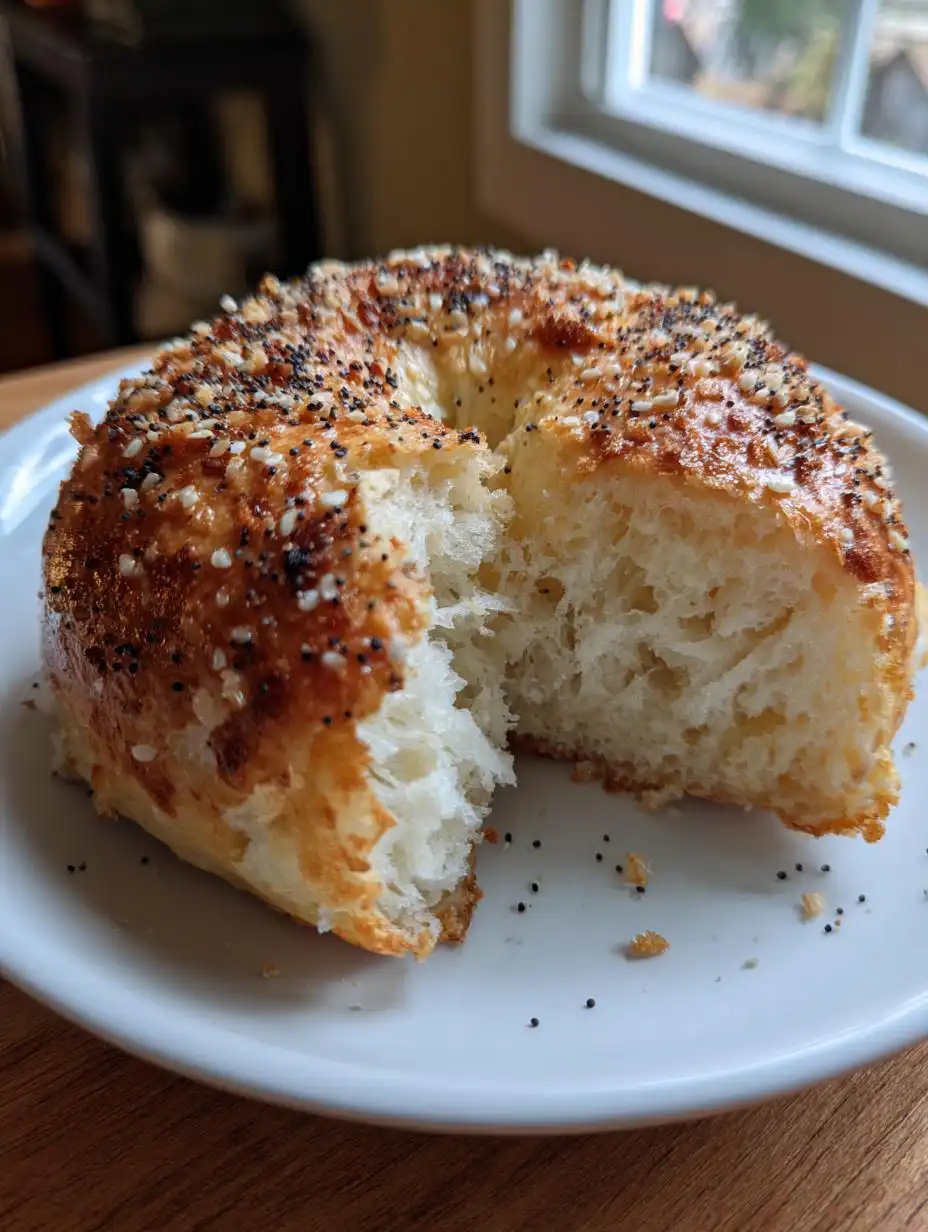
Now for the fun part! Lightly beat that extra egg you saved and brush it lightly over the tops of the bagels. This helps the topping stick and gives them that beautiful golden shine. Then, sprinkle them generously with your everything bagel seasoning. Be liberal with it; they look and taste best when they are fully covered.
Baking Time and Cooling
Slide those beauties into your 375°F oven. They bake for about 24 to 27 minutes. You’re looking for them to be beautifully puffed up and golden brown all over. When they look done, pull them out. Resist the urge to slice into them immediately! They need to cool on the pan for at least 10 minutes. If you cut them piping hot, the steam escapes too fast, and they can get a little dense right away. Give them that cooling time, and they’ll set up perfectly chewy.
Tips for Making Amazing Protein Bagels Every Time
Even though these Protein Bagels are incredibly simple, there are two little secrets I always stick to that guarantee a perfect chewiness every single time. Honestly, mastering these two points is the difference between a good bagel and a great one. It’s all about respecting the dough and the dairy!
Avoiding Tough Texture
I mentioned it before, but I’m saying it again because it’s that crucial: do not over-knead! When you mix the flour with the wet ingredients, you’re creating gluten, which is what gives bread its structure. Traditional bagels need tons of kneading, but because we aren’t using yeast, we want minimal gluten development here. Just knead until the dough looks smooth enough to handle, maybe a minute or two max. If you work it too hard, those soft, chewy bites turn into something you could use as a doorstop. Keep it gentle!
Achieving Maximum Protein Absorption
The second tip relates to the cottage cheese. You absolutely have to blend it until it is completely smooth and creamy. I mean, liquid smooth. If you just stir it in, you end up with little pockets of cheese curds that don’t fully incorporate into the dough structure. When it’s blended perfectly, the protein and moisture integrate smoothly, leading to that fantastic texture and ensuring you get the maximum benefit from every bite of your Protein Bagels.
Ingredient Notes and Simple Substitutions
When you’re making these quick Protein Bagels, sticking close to the listed ingredients really helps nail that signature texture. Since this recipe is so simple, the ingredients we do use really have to pull their weight! But I know sometimes you need to make a quick swap when you’re grabbing things from the pantry.
I’ve tested a couple of things, and while I always recommend sticking to the original list for the absolute best results, these small adjustments usually work out just fine without ruining the whole batch.
Flour Options
For this recipe, I strongly suggest sticking with all-purpose flour. It has the right amount of gluten structure needed to hold up to the cottage cheese mixture without requiring that lengthy kneading process. I haven’t had much luck swapping it out for whole wheat flour; it tends to absorb too much moisture and makes the dough stiff right away. If you must substitute, maybe try 50/50 AP flour and bread flour, but that’s about as far as I’d go! If you’re looking for other high-protein breakfast ideas, check out my high-protein cottage cheese ice cream.
Cottage Cheese Selection
This is another non-negotiable, if you can help it. You absolutely need full-fat cottage cheese here. The fat content is essential for richness and keeping the final product from tasting dry or too intensely “cheesy.” Low-fat or non-fat versions just don’t provide the necessary moisture and density. Plus, the lower fat version tends to be icier when blended, which is never good for dough texture. Use the full-fat kind, blend it smooth, and you’ll be so happy with the results! For more ways to use cottage cheese, see my recipe for cottage cheese tuna salad.
Storing and Reheating Your Protein Bagels
These Protein Bagels are seriously a meal prepper’s dream! Since they bake up so quickly, I usually make a double batch just so I have breakfast sorted for the whole week. They hold up really well, but how you store them makes a big difference in maintaining that fresh, chewy texture we worked so hard to achieve.
Proper Storage Methods
If you plan on eating them within a couple of days, keeping them in an airtight container on the counter is fine, but I always prefer the fridge for anything longer than 24 hours. They stay fresh for about 4 days in the refrigerator. For longer-term storage, freezing is your best friend! Make sure they are completely cooled—I mean stone cold—before wrapping them individually in plastic wrap, and then tuck them into a freezer-safe bag. They freeze beautifully for up to three months.
When it’s time to eat a frozen one, just let it thaw on the counter for an hour, or you can pop it straight into the toaster for a few minutes. It comes right back to life! If you want to see more of my meal prep favorites, check out my cottage cheese egg bites.
| Storage Method | Duration | Reheating Tip |
|---|---|---|
| Countertop | Up to 1 day | Quick toast |
| Refrigerator | Up to 4 days | Toast or microwave for 15 seconds |
| Freezer | Up to 3 months | Thaw on counter, then toast |
Frequently Asked Questions About Protein Bagels
I get so many questions about these simple Protein Bagels because people can’t believe how easy they are! Here are the top three things folks ask me when they’re getting ready to bake their first batch. Hopefully, this clears up any last-minute doubts!
Can I make these Protein Bagels without baking powder?
Oh, honey, please don’t try to skip the baking powder! That’s the main rising agent we have since we aren’t using yeast. If you leave it out, you’ll end up with dense, flat discs instead of puffy bagels. We need that chemical reaction with the acid in the cottage cheese to get some lift. If you’re out of baking powder, you could try baking soda mixed with a little vinegar, but honestly, just run to the store for the powder. It’s worth it for the texture!
How much protein is actually in these easy bagels?
This is the best news! Based on my calculations, each one of these easy bagels packs about 11 grams of protein. That’s fantastic for a quick breakfast, especially when you load it up with a little cream cheese or a slice of turkey. They really help keep you full until lunch, which is exactly what I need! For more high-protein inspiration, follow my Pinterest board.
What is the best topping besides everything seasoning?
Everything seasoning is my favorite because it’s so flavorful, but if you’re keeping things simple, you can’t go wrong with a sprinkle of sesame seeds or poppy seeds before you brush on that egg wash. For a savory twist, try a little garlic powder mixed with some dried onion flakes. If you want a slightly sweeter, but still high-protein, topping, just dust them lightly with cinnamon sugar after they cool down. They are so versatile! You can read more about my recipe development process on Medium.
Estimated Nutritional Data for Protein Bagels
Since everyone’s ingredients vary slightly, these numbers are just an estimate, but they give you a great idea of why I rely on these Protein Bagels for my meal prep! We are looking at a really solid macronutrient breakdown here, especially for the protein content. It’s amazing what cottage cheese can do!
| Metric | Amount |
|---|---|
| Calories | 210 |
| Protein | 11 g |
| Carbohydrates | 34 g |
| Fat | 4 g |

Amazing 11g Protein Bagels in 40 Mins
- Total Time: 40 minutes
- Yield: 6 bagels
Description
These easy protein bagels are soft, chewy, and packed with protein using simple pantry ingredients. They are perfect for quick breakfasts or meal prep. You get a satisfying, bakery-style bagel without using yeast or long rise times.
Ingredients
- 1 cup full-fat cottage cheese
- 1 large egg
- 2 cups all-purpose flour
- 2½ teaspoons baking powder
- ¾ teaspoon salt
- 1 large egg, beaten (for topping)
- 2 tablespoons everything bagel seasoning
Instructions
- Preheat your oven to 375°F and line a baking sheet with parchment paper.
- Add cottage cheese and 1 egg to a blender and blend until completely smooth.
- In a large bowl, whisk together flour, baking powder, and salt.
- Pour the blended cottage cheese mixture into the dry ingredients and stir until a soft dough forms.
- Transfer dough to a lightly floured surface and knead gently for 1 to 2 minutes until smooth.
- Divide dough into 6 equal portions.
- Roll each portion into a rope about 7 inches long and shape into a circle, pinching the ends together.
- Arrange bagels on the prepared baking sheet with space between each.
- Brush tops with the beaten egg and sprinkle evenly with everything bagel seasoning.
- Bake for 24 to 27 minutes until puffed and golden brown.
- Cool for at least 10 minutes before slicing.
Notes
- Blending the cottage cheese until completely smooth is key for the best texture.
- Knead the dough just until smooth; over-kneading can make the bagels tough.
- These bagels freeze well for future meals.
- Prep Time: 15 minutes
- Cook Time: 25 minutes