When you’re feeling run down, there is simply nothing better than a bowl of this amazing Italian Penicillin Soup. Forget everything you think you know about basic chicken noodle; this is different. It’s deeply restorative, brightened up with lemon, and tastes like someone is giving you a warm hug from the inside out. I promise you, this recipe for Italian Penicillin Soup is the cure-all you need sitting right on your stovetop.
This isn’t just soup; it’s tradition! We’re using bone-in chicken for the richest broth possible, and a little splash of lemon at the end just wakes everything up. I never write an introduction with a heading for this part because I want you to feel like we’re just chatting right here in my kitchen before we even pull out the cutting boards.
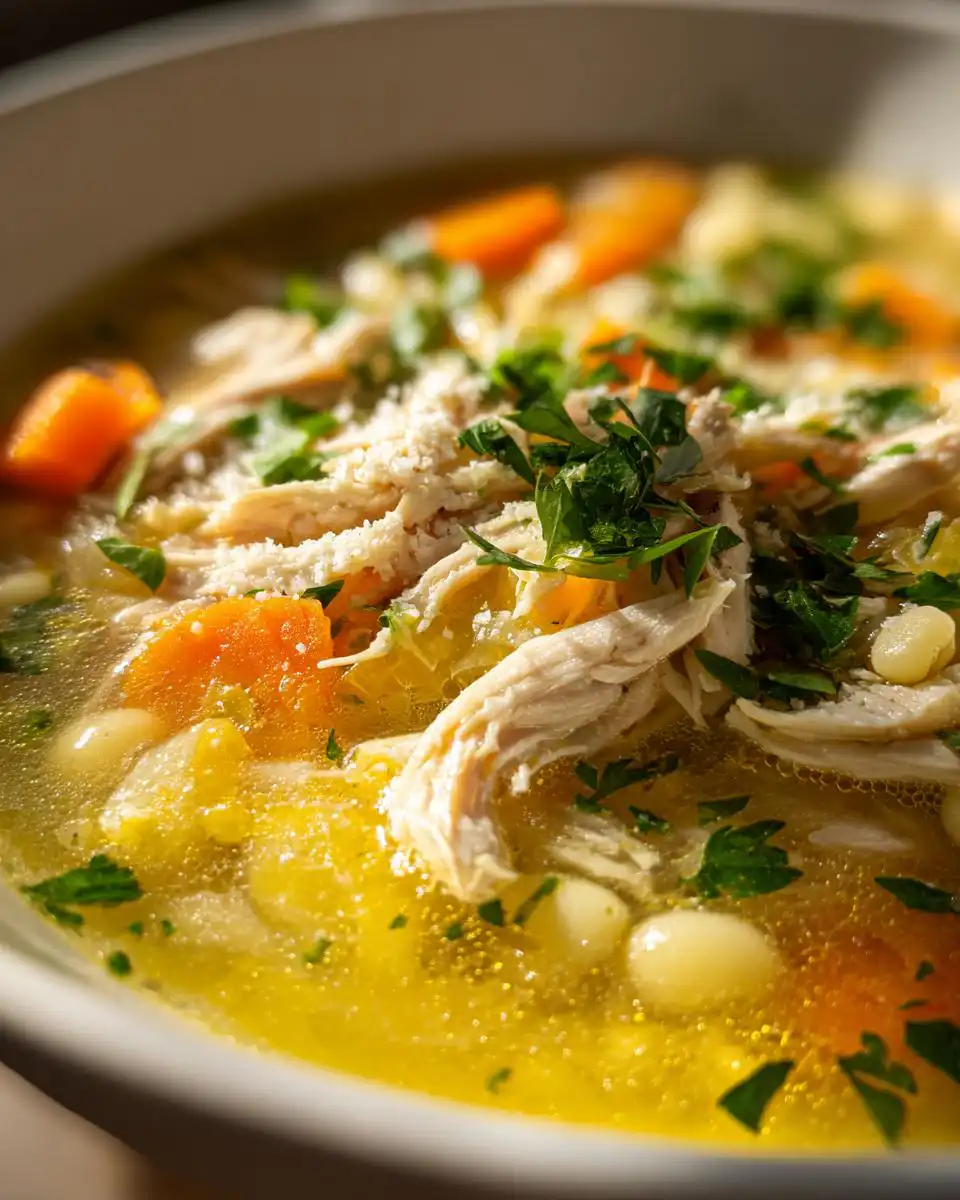
Essential Ingredients for Authentic Italian Penicillin Soup
To make this truly restorative Italian Penicillin Soup, you can’t skimp on the quality of your base ingredients. I always lay everything out before I start heating the oil—it just makes the whole process flow so much smoother. Trust me, the flavor payoff is huge when you use fresh ingredients here.
We are using simple things, but they all have a specific job to do. You’ll need a good amount of fresh vegetables, quality broth, and, crucially, bone-in chicken. That bone and skin are where all the richness comes from!
Gathering Ingredients for the Broth Base
For the aromatic start, grab one large yellow onion, diced up. Then you need three large carrots, peeled and sliced right into pretty rounds—that’s important for presentation! Three celery stalks chopped up join them in the pot. Next, you absolutely must mince four cloves of garlic; don’t even think about using the jarred stuff here, the flavor is night and day.
For the liquid, use eight cups of low-sodium chicken broth. And for the heart of the soup, use a good pound and a half of bone-in, skin-on chicken breasts. This is my non-negotiable tip for maximizing broth flavor! We season it simply with two dried bay leaves, a teaspoon of dried oregano, a half teaspoon of thyme, and just a tiny pinch of red pepper flakes for warmth. Don’t forget the salt and pepper!
Selecting Pasta and Finishing Touches for Italian Penicillin Soup
When it comes to the pasta, you want small shapes that soak up the broth beautifully. I always reach for one cup of uncooked ditalini pasta. If you don’t have ditalini, tiny stars or alphabet shapes work too, but ditalini gives this Italian Penicillin Soup that classic texture.
The finishing touches are what make this soup sing! You’ll need two tablespoons of fresh lemon juice, which you stir in right at the end—don’t cook the lemon! Also, grab a quarter cup of fresh parsley, chopped, and a half cup of grated Parmesan cheese to serve on top. That Parmesan melting into the hot, lemony broth? Perfection.
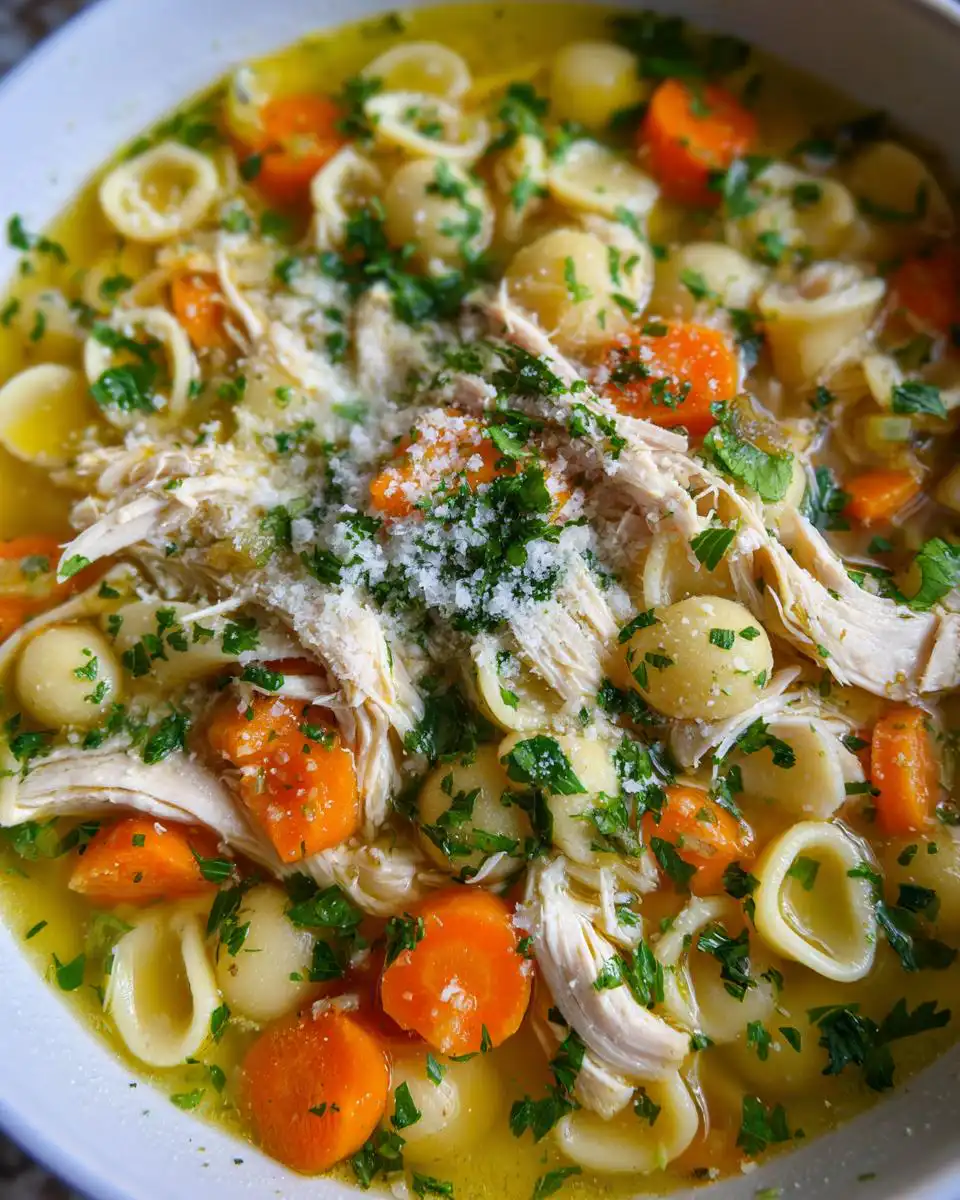
Equipment Needed for Making Italian Penicillin Soup
You don’t need a million fancy gadgets for this Italian Penicillin Soup, but a few key items make the process smooth. First, grab your largest, heaviest pot—I swear by my Dutch oven for even heat distribution. You’ll also need a cutting board and sharp knife, obviously! Make sure you have a reliable meat thermometer to check that chicken properly. That’s really it—simple tools for maximum comfort!
Step-by-Step Instructions for Italian Penicillin Soup
Okay, now for the fun part—turning those beautiful ingredients into the famous Italian Penicillin Soup! Don’t rush the first few steps; they set the entire foundation for how flavorful this broth will be. We’re going to work in three main phases: building the base, simmering the chicken, and finishing it bright.
Building the Flavor Foundation
First things first, get that big soup pot or Dutch oven on the stove over medium heat and warm up your two tablespoons of olive oil. Once it shimmers just a tiny bit, toss in your diced onion, sliced carrots, and chopped celery. Let those vegetables—what we call the *soffritto* in Italian cooking—sweat it out for about six to eight minutes. You want them soft and sweet, and the onions should look clear, not browned. That’s how you coax out all their natural sugars!
Once they are softened up, make a little space in the center of the pot. Add your four minced garlic cloves and stir them constantly for just one minute. Seriously, one minute is all you get! Garlic burns fast, and burnt garlic tastes bitter, which we absolutely do not want in a soothing soup.
Simmering the Chicken and Creating the Broth
Now, pour in all eight cups of that low-sodium chicken broth. Get it all in there! Gently nestle those bone-in, skin-on chicken breasts down into the liquid until they are completely submerged. Next, toss in the bay leaves, oregano, thyme, red pepper flakes, salt, and pepper. Give it a good stir to mix up the seasonings.
Bring the whole glorious mess up to a boil over high heat. As soon as it hits that rolling boil, immediately drop the heat down low, put the lid on slightly ajar, and let it simmer gently for 25 to 30 minutes. You need to check the chicken—it must reach 165 degrees Fahrenheit internally. Use that thermometer! Once it hits the safe temperature, carefully pull the chicken out onto a cutting board to cool down enough to handle.
Cooking Pasta and Finishing Your Italian Penicillin Soup
While the chicken is resting, turn the heat back up to medium-high under the broth until you get a good, active boil going again. Now is the time for the pasta! Stir in that cup of ditalini pasta. Cook it uncovered for about 8 to 10 minutes. You want it tender but still having just a little bit of chew—al dente, remember? Mushy pasta ruins everything! If you are looking for other comforting meals, check out this recipe for 15 Best Cozy Soup Recipes.
While the ditalini cooks, go back to your chicken. Peel off all that skin and bone—it’s just flavor scaffolding now—and shred the meat into nice bite-sized pieces. Once the pasta is done, remove the pot from the heat and toss out those two bay leaves; they did their job. Finally, stir in the two tablespoons of fresh lemon juice and the chopped parsley. This is what makes this Italian Penicillin Soup truly special; that lemon brightens everything up! Ladle it into bowls and top generously with Parmesan cheese right before serving.
Tips for Perfect Italian Penicillin Soup Success
I’ve made this soup more times than I can count, especially when someone in the house catches a sniffle, and I’ve learned a few tricks to make sure it comes out perfect every single time. The biggest mistake people make is trying to rush the simmering stage. Don’t do it!
That long, slow simmer with the bone-in chicken is what extracts all that gelatin and deep flavor into the broth. If you rush that part, your soup will taste thin, no matter how good your store-bought broth is. It’s worth the extra 20 minutes of low, gentle bubbling.
Another huge tip, especially concerning the pasta: always cook the ditalini *after* you remove the chicken. If you cook the pasta while the chicken is simmering, you run two risks. First, the pasta will soak up all the broth before the chicken is even done. Second, the pasta will inevitably get overcooked and mushy by the time you shred the meat and return it.
Also, taste your broth before you add salt! Chicken broth brands vary wildly in sodium content. I always wait until the chicken is out and the pasta is almost done before I adjust the salt and pepper. That final addition of fresh lemon juice should always be done off the heat—cooking lemon juice too long can make it taste bitter, and we want bright, sunny flavor in our Italian Penicillin Soup! For more great recipe ideas, see what we are pinning on Pinterest.
Storing and Reheating Delicious Italian Penicillin Soup
This soup is even better the next day—trust me! The flavors really meld together overnight, which is why I often make a double batch. When storing leftovers of your wonderful Italian Penicillin Soup, you have to think about the pasta. Pasta keeps soaking up liquid, even in the fridge, so it can get soft if you store it all together for too long.
My best advice is to store the shredded chicken and the broth/vegetable mix separately from the ditalini pasta. That way, when you reheat, the pasta stays springy! It only takes a minute to boil a small batch of pasta separately if you plan on eating this soup for several days.
| Method | Guidance |
|---|---|
| Refrigeration | Store broth/chicken mix in an airtight container for up to 4 days. Store cooked pasta separately. |
| Reheating Soup | Reheat broth gently on the stovetop. Add cooked pasta just before serving, along with a fresh squeeze of lemon. |
| Freezing | Freezes beautifully for up to 3 months! Freeze broth/chicken mixture only; do not freeze cooked pasta in the broth. |
Frequently Asked Questions About Italian Penicillin Soup
I always get so many questions when people try this recipe for the first time! It’s a little different from your standard chicken soup, so I wanted to clear up a few common issues people run into when making their first batch of this Italian Penicillin Soup.
Can I use pre-cooked chicken in this Italian Penicillin Soup?
You absolutely *can*, but I have to warn you: the broth won’t be nearly as rich. The whole point of simmering the bone-in chicken right in the liquid is to extract all that collagen and flavor into the broth base. If you use pre-cooked chicken, you’re missing out on the foundational flavor of our Italian Penicillin Soup. If you must use it, add the shredded chicken in Step 9, but consider simmering a few extra chicken bones in the broth for 30 minutes first to boost the flavor!
What substitutes work for ditalini pasta?
Ditalini is perfect because those little tubes hold onto the broth so well, but if you can’t find it, don’t worry! You want something small that won’t turn into a giant, sticky mess. Try using orzo pasta—it’s a fantastic substitute. Small elbow macaroni works well too, or even pastina, which is even smaller than ditalini. Just remember my golden rule: cook the pasta separately or add it right at the very end, or it will turn your amazing soup into mush! If you need more recipe inspiration, check out our Medium page.
Nutritional Estimate for Italian Penicillin Soup
It’s always nice to know what you’re getting out of a big, cozy bowl of food, especially when you’re eating it for comfort! Because this Italian Penicillin Soup relies heavily on fresh vegetables and lean (but flavorful!) chicken, it’s actually quite balanced. We use olive oil sparingly, and the protein content is excellent thanks to that chicken breast.
Keep in mind that these numbers are estimates based on the ingredients listed, and they can change dramatically depending on how much Parmesan cheese you sprinkle on top—and who are we kidding, we all use a lot of cheese!
| Nutrient | Amount per Serving |
|---|---|
| Calories | 340 kcal |
| Protein | 32 g |
| Fat | 12 g |
| Carbohydrates | 28 g |

Amazing Italian Penicillin Soup 3 minute fix
- Total Time: 60 minutes
- Yield: 6 servings
Description
Healing Chicken Pastina, an Italian-style chicken soup inspired by the restorative tradition of ‘Jewish Penicillin,’ featuring tender chicken, aromatic vegetables, and pastina in a lemon-infused broth.
Ingredients
- 2 tablespoons extra virgin olive oil
- 1 large yellow onion, diced
- 3 large carrots, peeled and sliced into rounds
- 3 celery stalks, chopped
- 4 cloves garlic, minced
- 8 cups low-sodium chicken broth
- 1 1/2 pounds bone-in, skin-on chicken breasts
- 2 dried bay leaves
- 1 teaspoon dried oregano
- 1/2 teaspoon dried thyme
- 1/4 teaspoon crushed red pepper flakes
- 1 teaspoon kosher salt
- 1/2 teaspoon freshly ground black pepper
- 1 cup uncooked ditalini pasta
- 2 tablespoons fresh lemon juice
- 1/4 cup chopped fresh parsley
- 1/2 cup grated Parmesan cheese
Instructions
- Heat the olive oil in a large Dutch oven or heavy soup pot over medium heat.
- Add the onion, carrots, and celery to the pot and sauté for 6 to 8 minutes until the vegetables soften and the onions turn translucent.
- Stir in the minced garlic and cook for 1 minute until fragrant, stirring constantly to prevent burning.
- Pour in the chicken broth and submerge the chicken breasts in the liquid along with the bay leaves, oregano, thyme, red pepper flakes, salt, and black pepper.
- Bring the soup to a boil, then reduce the heat to low, cover, and simmer for 25 to 30 minutes.
- Check that the chicken reaches an internal temperature of at least 165°F, then remove it to a cutting board to cool slightly.
- Increase the heat to medium-high to bring the broth back to a rolling boil and stir in the ditalini pasta.
- Cook the pasta uncovered for 8 to 10 minutes, or until it is tender but still has a slight bite.
- Discard the skin and bones from the chicken, shred the meat into bite-sized pieces, and return the meat to the pot.
- Remove the pot from the heat and discard the bay leaves.
- Stir in the fresh lemon juice and chopped parsley to brighten the broth.
- Ladle into bowls and top immediately with grated Parmesan cheese.
Notes
- This soup is known for its ability to soothe colds and lift spirits.
- Use bone-in, skin-on chicken breasts for richer broth flavor.
- Prep Time: 15 minutes
- Cook Time: 45 minutes