When I think about the Texas Roadhouse Ribeye & Shrimp Recipe, I’m instantly transported back to the days before I started my big health journey. I’m Jordan Bell, hailing from Asheville, NC, and after shedding about 80 pounds, my mission on the Easy Detox Recipes blog became crystal clear: take all that amazing, hearty Southern comfort food—the stuff you crave—and figure out how to make it work for a cleaner lifestyle.
You don’t have to wait for a Friday date night or drop serious money at a steakhouse to get that incredible flavor, trust me! This recipe proves it. We’re talking about getting that famous, juicy steakhouse quality on your own table in about 30 minutes total. It’s packed with the bold spice rub you know and love, paired with zesty shrimp that makes the whole plate sing. If you’re looking for a quick, satisfying dinner that feels totally indulgent but keeps you on track, this is the one. We’re making this copycat dream happen, fast!
Why You’ll Love This Texas Roadhouse Ribeye & Shrimp Recipe
I get it, weeknights are crazy, and sometimes you just want that amazing steakhouse flavor without the fuss or the price tag. This Texas Roadhouse Ribeye & Shrimp Recipe gives you everything you want, delivered quickly. It’s truly a weeknight lifesaver!
-
Quick Preparation for Busy Evenings
This whole masterpiece, from seasoning the steak to plating the shrimp, clocks in at only 30 minutes total time. Seriously, you can have this on the table faster than ordering takeout.
-
Bold Steakhouse Seasoning Profile
That signature savory spice rub on the ribeye is incredible, and the shrimp marinade is bright and zesty. They balance each other perfectly, making every bite taste like a special occasion.
-
Clean Ingredients, Satisfying Meal
Since I focus on cleaner eating now, I love that we are using simple, whole ingredients here. It’s comfort food done right—hearty, filling, and you know exactly what went into making that perfect sear.
Gathering Ingredients for Your Texas Roadhouse Ribeye & Shrimp Recipe
Okay, getting the right ingredients is half the battle, especially when you are trying to nail that authentic steakhouse flavor in your Texas Roadhouse Ribeye & Shrimp Recipe. Don’t skimp on the spices here; they are what bring the magic! I always lay everything out on the counter before I start mixing. It just makes the whole process smoother, and you won’t forget that little dash of turmeric—trust me, it makes a difference in the rub’s color!
We need two main groups of ingredients: the heavy hitters for the steak and the bright flavors for the seafood. Here’s exactly what you need to pull this dinner together:
Steak and Seasoning Components
For the steak, you absolutely want those 12-ounce, 1-inch thick ribeye steaks. If you can’t find ribeye, the notes mention other cuts work, but ribeye gives you the best fat content for juiciness. The rub requires mixing 2 teaspoons of kosher salt with 1 teaspoon of brown sugar. Then, for the savory depth, grab 1/2 teaspoon each of garlic powder, onion powder, turmeric, paprika, and chili powder, plus 1/2 teaspoon of black pepper.
| Steak Component | Amount |
|---|---|
| Ribeye Steaks (1-inch thick) | 2 (12-ounce) |
| Kosher Salt | 2 teaspoons |
| Brown Sugar | 1 teaspoon |
| Turmeric, Paprika, Chili Powder | 1/2 teaspoon each |
Zesty Shrimp Marinade Details
For the shrimp, you need about half a pound of large ones, peeled and deveined. The marinade is simple but so flavorful! Whisk together 2 tablespoons of olive oil with 1 tablespoon of fresh lemon juice. You need 2 cloves of garlic, minced up fine—don’t use the jarred stuff if you can help it! Then toss in 1/2 teaspoon each of dried oregano and dried basil, and 1/4 teaspoon of paprika. Salt and pepper go in last, just to taste.
Essential Equipment for Perfect Results
You can’t rush perfection, especially when you’re trying to get that deep, dark crust on a steak like they do at the big restaurants. If you want this Texas Roadhouse Ribeye & Shrimp Recipe to shine, the tools matter almost as much as the spice rub! Forget your non-stick pans for this, they just won’t cut it when you’re dealing with high heat.
Selecting the Right Pan
The absolute MVP here is your cast-iron skillet. Seriously, dust it off! Cast iron holds heat like nothing else, which is crucial for that initial sear on the ribeye. You need the skillet smoking hot to build that crust quickly without overcooking the inside. We’ll wipe it clean and reuse it for the shrimp, so make sure it’s a good, sturdy one that can handle medium-high heat later on.
Step-by-Step Instructions for Texas Roadhouse Ribeye & Shrimp Recipe
Alright, time to put this show on the road! Making the Texas Roadhouse Ribeye & Shrimp Recipe is all about timing and heat control. If you follow these steps exactly, you’ll get that amazing steakhouse result without ever leaving your kitchen. It moves fast once we hit the stove, so have everything ready to go!
Preparing the Steak Rub and Steaks
First things first, let’s make that rub. In a small bowl, mix all your spices together: the kosher salt, brown sugar, garlic powder, onion powder, turmeric, paprika, chili powder, and black pepper. Whisk it up until it looks like one beautiful, earthy blend. Now, grab those ribeyes. Remember that pro tip? You have to pat those steaks completely dry with paper towels—I mean bone dry! This step is what guarantees that incredible crust we’re looking for. Coat all sides of the dry steak with the rub, really pressing it in there. Then, let them chill out on the counter for a good 20 to 30 minutes. Letting them come up to room temperature is key for even cooking.
Marinating the Shrimp
While the steaks are resting, we tackle the shrimp. In a separate bowl, whisk together the olive oil, fresh lemon juice, minced garlic, oregano, basil, paprika, and a pinch of salt and pepper. Toss your peeled and deveined shrimp right into that mixture. Give it a good stir to coat every piece. This only needs to sit for about 15 minutes. We don’t want to over-marinate seafood, but 15 minutes lets those zesty herbs really soak in.
Achieving the Perfect Steak Sear
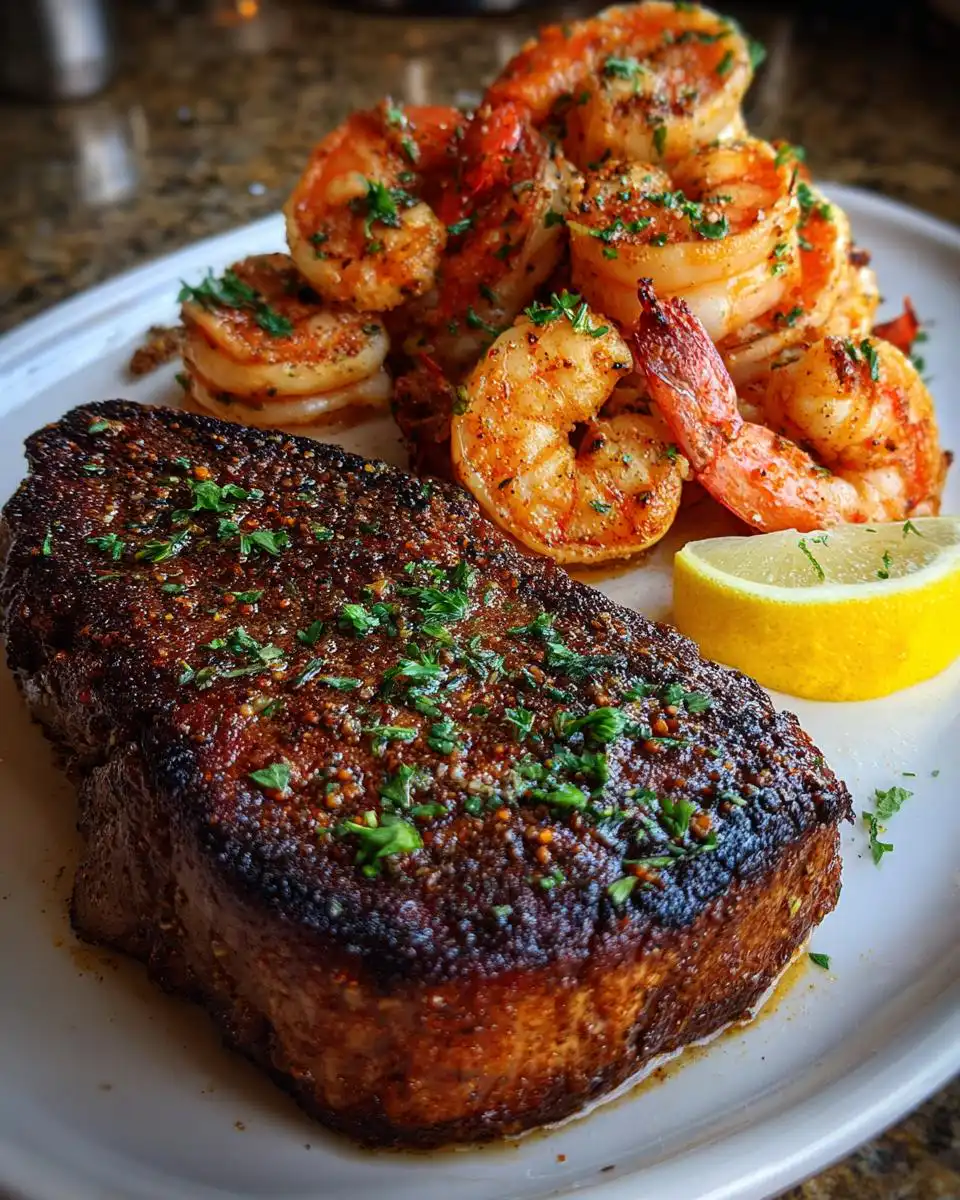
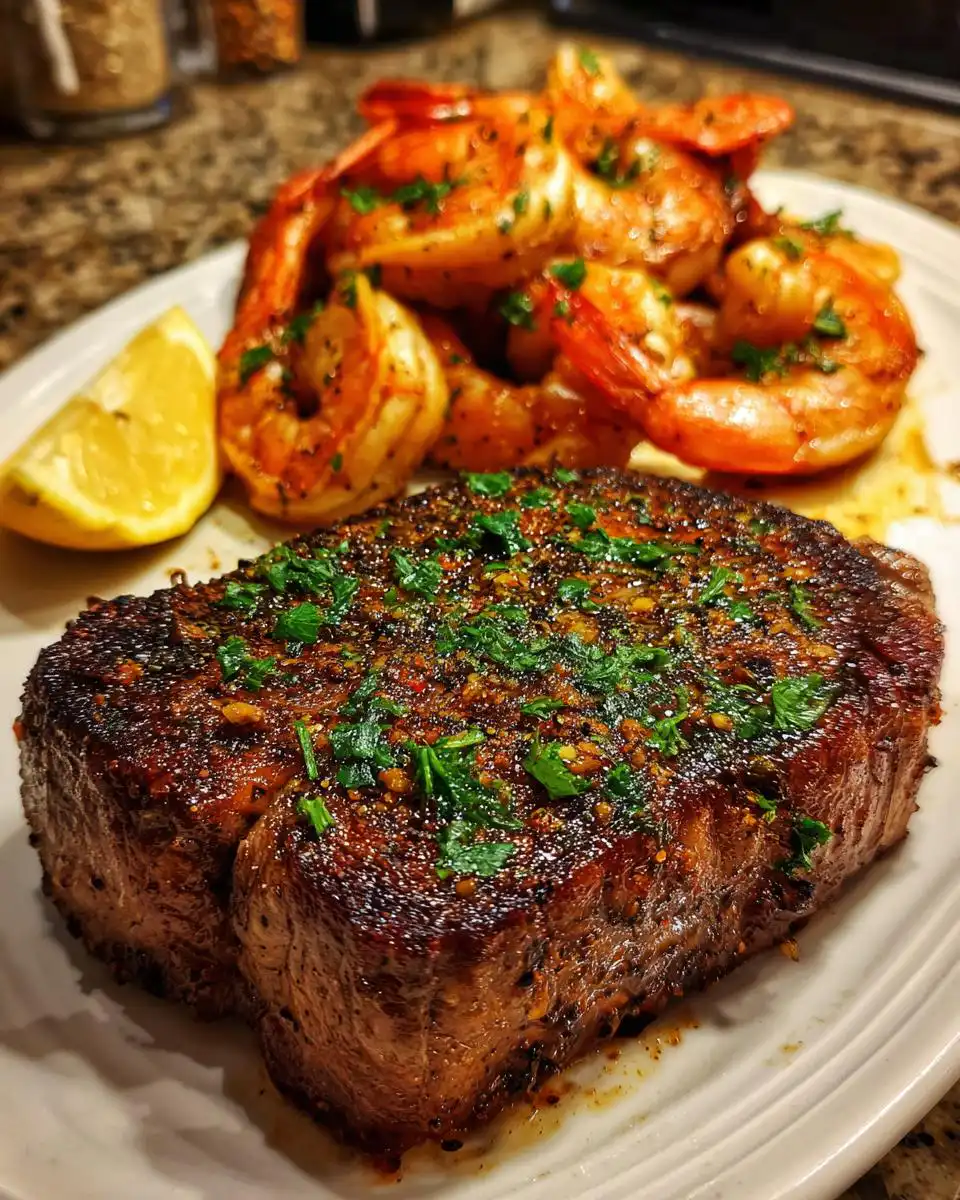
Time for fire! Get that cast-iron skillet screaming hot over high heat—you want it smoking a little. Add your vegetable oil. Carefully place the seasoned ribeyes in the hot pan. Don’t touch them! Let them sear undisturbed for 4 to 5 minutes to build that deep crust. Flip them over and cook for another 3 to 4 minutes. Now, reduce the heat to medium-high, toss in your 2 tablespoons of butter, and tilt the pan slightly. Use a spoon to continuously baste that melted butter right over the top of the steaks for the final minute. For a perfect medium, pull them off the heat when the internal temperature hits 140°F. And here’s another crucial step from Grandma: let those steaks rest for 5 to 10 minutes before you even think about cutting them!
Cooking the Lemon-Herb Shrimp
While the steak rests, wipe out that skillet—you want a clean surface for the shrimp. Put the pan back over medium-high heat. Lay the marinated shrimp in a single layer. They cook super fast! Cook them for about 2 to 3 minutes on the first side until they start turning pink, then flip and cook for another 2 to 3 minutes until they are opaque all the way through. Always confirm your seafood is done; the safety check says shrimp should hit 145°F.
Final Plating and Presentation
Once the steak has rested, slice it against the grain if you like, or serve it whole. Arrange the perfectly cooked, zesty shrimp right next to that juicy steak. I like to finish the shrimp by sprinkling on the fresh chopped parsley for color. Grab those lemon wedges and put them on the plate—a little extra squeeze right before eating really brightens everything up. Dinner is served!
Tips for Success with Your Homemade Steak and Shrimp Dinner
Getting the restaurant quality in this Texas Roadhouse Ribeye & Shrimp Recipe really comes down to a couple of simple tricks that make a massive difference between an okay steak and a showstopper. These little details are what elevate this from weeknight cooking to steakhouse quality.
Building the Best Crust
I can’t stress this enough: the steak surface must be dry before the rub goes on, and the pan must be ripping hot before the steak goes in. If you put a wet steak into lukewarm oil? You get steamed, grey meat, not a crust. Pat, pat, pat those ribeyes dry! That high heat flash-searing is what locks in the juices and creates that amazing exterior texture we crave.
Managing Steak Rest Time
I know you’re hungry, but you absolutely must resist cutting into that steak right off the heat. When the meat is cooking, all those juices rush to the center. If you slice it right away, all that flavor and moisture just spills out onto your cutting board. Letting it rest allows those juices to redistribute throughout the muscle fibers. Five minutes is the minimum, ten is better!
Ingredient Notes and Flavor Swaps
Part of the fun of cooking at home is making the recipe truly yours, right? This recipe is flexible, even though the original spice rub is fantastic. If you’re missing an ingredient or just want to try something new, we have options that keep the flavor profile strong.
Adjusting the Steak Cut
If your butcher is out of ribeye—or maybe you just prefer a leaner cut—don’t panic! The recipe notes mention you can easily swap in a New York Strip or a Sirloin fillet. They both take that savory rub beautifully. Just remember, leaner cuts might cook a little faster than a well-marbled ribeye, so keep an eye on your thermometer.
Modifying Spice Levels
If you’re like me and enjoy a little fire with your comfort food, boosting the heat is simple. You can easily increase that chili powder to a full teaspoon in the rub. Or, if you really want to feel the burn, add a pinch of cayenne pepper right into that spice mix. It blends right in and gives you a wonderful kick without changing the overall flavor profile.
Storing and Reheating Leftovers
If you manage to have any leftovers of this amazing steak and shrimp dinner—which is rare in my house—you need to store them correctly to keep that steak tender. Store the steak and shrimp in separate airtight containers in the refrigerator. They should be good for up to three days.
Reheating Steak and Shrimp Safely
The biggest danger when reheating steak is drying it out completely. To avoid this, reheat the steak gently. I like to put the slices in a small pan with just a teaspoon of water or broth, cover it loosely, and warm it over low heat until just warmed through. For the shrimp, just a quick toss in a hot pan for about 60 seconds is all they need to wake up!
| Storage Item | Refrigeration Time |
|---|---|
| Steak and Shrimp | Up to 3 days |
Frequently Asked Questions About Copycat Ribeye and Scallops
I always get questions when I post this dinner because people think it’s too complicated for a weeknight. It’s not! Here are some quick answers to the things I hear most often about nailing this Texas Roadhouse Ribeye & Shrimp Recipe at home.
Can I cook this recipe indoors without smoke?
You can, but you must manage the heat! The smoke comes from the high heat needed for the sear. If you’re worried about your smoke alarm, use a heavy-bottomed stainless steel pan over high heat instead of cast iron, and make sure your ventilation fan is cranked up. It won’t get quite the same crust, but it’s manageable.
What internal temperature should my ribeye be?
For that perfect medium steak, pull it off the heat at 140°F. Remember, it will keep climbing a few degrees while it rests. If you like it rare, aim for 130°F, and if you want medium-well, pull it around 150°F. Always use a meat thermometer for accuracy!
Can I use scallops instead of shrimp?
Yes, absolutely! The notes mention this swap. If you use sea scallops, you just have to adjust your cooking time slightly. Sear them for about 2 minutes per side in that same flavorful marinade mixture. They cook even quicker than shrimp, so watch them closely!
Share Your Texas Roadhouse Ribeye & Shrimp Recipe Experience
I’m so excited for you to try this easy, high-impact dinner. It’s proof that you can eat like you’re at a fancy steakhouse while keeping your clean eating goals on track. I really want to know how it turned out for you!
Rate and Comment Below
Did you nail that butter baste? Did the turmeric in the rub give you the right color? Please leave your rating below and tell me in the comments how you enjoyed your homemade steak and shrimp dinner!
Tips for Success with Your Homemade Steak and Shrimp Dinner
Getting the restaurant quality in this Texas Roadhouse Ribeye & Shrimp Recipe really comes down to a couple of simple tricks that make a massive difference between an okay steak and a showstopper. These little details are what elevate this from weeknight cooking to steakhouse quality.
Building the Best Crust
I can’t stress this enough: the steak surface must be dry before the rub goes on, and the pan must be ripping hot before the steak goes in. If you put a wet steak into lukewarm oil? You get steamed, grey meat, not a crust. Pat, pat, pat those ribeyes dry! This pro tip is essential because that high heat flash-searing is what locks in the juices and creates that amazing exterior texture we crave.
Managing Steak Rest Time
I know you’re hungry, but you absolutely must resist cutting into that steak right off the heat. When the meat is cooking, all those juices rush to the center. If you slice it right away, all that flavor and moisture just spills out onto your cutting board. Letting it rest allows those juices to redistribute throughout the muscle fibers. Five minutes is the minimum, ten is better! It’s hard, but it pays off big time.
Ingredient Notes and Flavor Swaps
Part of the fun of cooking at home is making the recipe truly yours, right? This recipe is flexible, even though the original spice rub is fantastic for our Texas Roadhouse Ribeye & Shrimp Recipe. If you’re missing an ingredient or just want to try something new, we have options that keep the flavor profile strong and satisfying.
Adjusting the Steak Cut
If your butcher is out of ribeye—or maybe you just prefer a leaner cut—don’t panic! The recipe notes mention you can easily swap in a New York Strip or a Sirloin fillet. They both take that savory rub beautifully. Just remember, leaner cuts might cook a little faster than a well-marbled ribeye, so keep a close eye on your thermometer when you’re searing.
Modifying Spice Levels
If you’re like me and enjoy a little fire with your comfort food, boosting the heat is super simple, even when trying to keep things cleaner. You can easily increase that chili powder to a full teaspoon in the rub. Or, if you really want to feel the burn, add a pinch of cayenne pepper right into that spice mix when you’re preparing the steak. It blends right in and gives you a wonderful kick without changing the overall flavor profile.
Storing and Reheating Leftovers
If you manage to have any leftovers of this amazing steak and shrimp dinner—which is rare in my house!—you need to store them correctly to keep that steak tender and the shrimp tasting fresh tomorrow. Store the steak and shrimp in separate airtight containers in the refrigerator. They should be good for up to three days, but honestly, they never last that long around here.
Reheating Steak and Shrimp Safely
The biggest danger when reheating steak is drying it out completely. To avoid turning your beautiful ribeye into shoe leather, reheat the steak gently. I like to put the slices in a small pan with just a teaspoon of water or broth, cover it loosely, and warm it over low heat until just warmed through—think 60 seconds, not five minutes! For the shrimp, they are so delicate they just need a quick toss in a hot pan for about 60 seconds to wake up their zesty flavor again. Don’t microwave them unless you absolutely have to, as they get rubbery fast!
| Storage Item | Refrigeration Time |
|---|---|
| Steak and Shrimp | Up to 3 days |
Frequently Asked Questions About Copycat Ribeye and Scallops
I always get questions when I post this dinner because people think it’s too complicated for a weeknight. It’s not! We’re making a true copycat ribeye experience here, and it’s easy cleanup, too. Here are some quick answers to the things I hear most often about nailing this Texas Roadhouse Ribeye & Shrimp Recipe at home.
Can I cook this recipe indoors without smoke?
You can, but you must manage the heat! The smoke comes from the high heat needed for that perfect sear we talked about. If you’re worried about your smoke alarm, use a heavy-bottomed stainless steel pan over high heat instead of cast iron, and make sure your ventilation fan is cranked up, maybe even open a window. It won’t get quite the same crust, but it’s manageable if the smoke detector starts chirping!
What internal temperature should my ribeye be?
For that perfect medium steak—the way I love it—pull it off the heat at 140°F. Remember, it will keep climbing a few degrees while it rests, so don’t overcook it on the stove! If you like it rare, aim for 130°F, and if you want medium-well, pull it around 150°F. Always use a meat thermometer for accuracy; that’s the only way to guarantee it!
Can I use scallops instead of shrimp?
Yes, absolutely! The notes mention this swap, and it makes for a fantastic meal. If you use sea scallops, you just have to adjust your cooking time slightly since they are denser than shrimp. Sear them for about 2 minutes per side in that same flavorful marinade mixture. They cook even quicker than shrimp, so watch them closely!
Share Your Texas Roadhouse Ribeye & Shrimp Recipe Experience
I’m so excited for you to try this easy, high-impact dinner. It’s proof that you can eat like you’re at a fancy steakhouse while keeping your clean eating goals on track. I really want to know how it turned out for you! You can see more of my journey and tips on Medium.
Rate and Comment Below
Did you nail that butter baste? Did the turmeric in the rub give you the right color? Please leave your rating below and tell me in the comments how you enjoyed your homemade steak and shrimp dinner! Feel free to save this recipe on Pinterest!
Tips for Success with Your Homemade Steak and Shrimp Dinner
Getting the restaurant quality in this Texas Roadhouse Ribeye & Shrimp Recipe really comes down to a couple of simple tricks that make a massive difference between an okay steak and a showstopper. These little details are what elevate this from weeknight cooking to steakhouse quality.
Building the Best Crust
I can’t stress this enough: the steak surface must be dry before the rub goes on, and the pan must be ripping hot before the steak goes in. If you put a wet steak into lukewarm oil? You get steamed, grey meat, not a crust. Pat, pat, pat those ribeyes dry! This pro tip is essential because that high heat flash-searing is what locks in the juices and creates that amazing exterior texture we crave.
Managing Steak Rest Time
I know you’re hungry, but you absolutely must resist cutting into that steak right off the heat. When the meat is cooking, all those juices rush to the center. If you slice it right away, all that flavor and moisture just spills out onto your cutting board. Letting it rest allows those juices to redistribute throughout the muscle fibers. Five minutes is the minimum, ten is better! It’s hard, but it pays off big time.
Ingredient Notes and Flavor Swaps
Part of the fun of cooking at home is making the recipe truly yours, right? This recipe is flexible, even though the original spice rub is fantastic for our Texas Roadhouse Ribeye & Shrimp Recipe. If you’re missing an ingredient or just want to try something new, we have options that keep the flavor profile strong and satisfying.
Adjusting the Steak Cut
If your butcher is out of ribeye—or maybe you just prefer a leaner cut—don’t panic! The recipe notes mention you can easily swap in a New York Strip or a Sirloin fillet. They both take that savory rub beautifully. Just remember, leaner cuts might cook a little faster than a well-marbled ribeye, so keep a close eye on your thermometer when you’re searing.
Modifying Spice Levels
If you’re like me and enjoy a little fire with your comfort food, boosting the heat is super simple, even when trying to keep things cleaner. You can easily increase that chili powder to a full teaspoon in the rub. Or, if you really want to feel the burn, add a pinch of cayenne pepper right into that spice mix when you’re preparing the steak. It blends right in and gives you a wonderful kick without changing the overall flavor profile.
Storing and Reheating Leftovers
If you manage to have any leftovers of this amazing steak and shrimp dinner—which is rare in my house!—you need to store them correctly to keep that steak tender and the shrimp tasting fresh tomorrow. Store the steak and shrimp in separate airtight containers in the refrigerator. They should be good for up to three days, but honestly, they never last that long around here.
Reheating Steak and Shrimp Safely
The biggest danger when reheating steak is drying it out completely. To avoid turning your beautiful ribeye into shoe leather, reheat the steak gently. I like to put the slices in a small pan with just a teaspoon of water or broth, cover it loosely, and warm it over low heat until just warmed through—think 60 seconds, not five minutes! For the shrimp, they are so delicate they just need a quick toss in a hot pan for about 60 seconds to wake up their zesty flavor again. Don’t microwave them unless you absolutely have to, as they get rubbery fast!
Frequently Asked Questions About Copycat Ribeye and Scallops
I always get questions when I post this dinner because people think it’s too complicated for a weeknight. It’s not! We’re making a true copycat ribeye experience here, and it’s easy cleanup, too. Here are some quick answers to the things I hear most often about nailing this Texas Roadhouse Ribeye & Shrimp Recipe at home.
Can I cook this recipe indoors without smoke?
You can, but you must manage the heat! The smoke comes from the high heat needed for that perfect sear we talked about. If you’re worried about your smoke alarm, use a heavy-bottomed stainless steel pan over high heat instead of cast iron, and make sure your ventilation fan is cranked up, maybe even open a window. It won’t get quite the same crust, but it’s manageable if the smoke detector starts chirping!
What internal temperature should my ribeye be?
For that perfect medium steak—the way I love it—pull it off the heat at 140°F. Remember, it will keep climbing a few degrees while it rests, so don’t overcook it on the stove! If you like it rare, aim for 130°F, and if you want medium-well, pull it around 150°F. Always use a meat thermometer for accuracy; that’s the only way to guarantee it!
Can I use scallops instead of shrimp?
Yes, absolutely! The notes mention this swap, and it makes for a fantastic meal. If you use sea scallops, you just have to adjust your cooking time slightly since they are denser than shrimp. Sear them for about 2 minutes per side in that same flavorful marinade mixture. They cook even quicker than shrimp, so watch them closely!
Share Your Texas Roadhouse Ribeye & Shrimp Recipe Experience
I’m so excited for you to try this easy, high-impact dinner. It’s proof that you can eat like you’re at a fancy steakhouse while keeping your clean eating goals on track. I really want to know how it turned out for you!
Rate and Comment Below
Did you nail that butter baste? Did the turmeric in the rub give you the right color? Please leave your rating below and tell me in the comments how you enjoyed your homemade steak and shrimp dinner!
Tips for Success with Your Homemade Steak and Shrimp Dinner
Getting the restaurant quality in this Texas Roadhouse Ribeye & Shrimp Recipe really comes down to a couple of simple tricks that make a massive difference between an okay steak and a showstopper. These little details are what elevate this from weeknight cooking to steakhouse quality.
Building the Best Crust
I can’t stress this enough: the steak surface must be dry before the rub goes on, and the pan must be ripping hot before the steak goes in. If you put a wet steak into lukewarm oil? You get steamed, grey meat, not a crust. Pat, pat, pat those ribeyes dry! This pro tip is essential because that high heat flash-searing is what locks in the juices and creates that amazing exterior texture we crave.
Managing Steak Rest Time
I know you’re hungry, but you absolutely must resist cutting into that steak right off the heat. When the meat is cooking, all those juices rush to the center. If you slice it right away, all that flavor and moisture just spills out onto your cutting board. Letting it rest allows those juices to redistribute throughout the muscle fibers. Five minutes is the minimum, ten is better! It’s hard, but it pays off big time.
Ingredient Notes and Flavor Swaps
Part of the fun of cooking at home is making the recipe truly yours, right? This recipe is flexible, even though the original spice rub is fantastic for our Texas Roadhouse Ribeye & Shrimp Recipe. If you’re missing an ingredient or just want to try something new, we have options that keep the flavor profile strong and satisfying.
Adjusting the Steak Cut
If your butcher is out of ribeye—or maybe you just prefer a leaner cut—don’t panic! The recipe notes mention you can easily swap in a New York Strip or a Sirloin fillet. They both take that savory rub beautifully. Just remember, leaner cuts might cook a little faster than a well-marbled ribeye, so keep a close eye on your thermometer when you’re searing.
Modifying Spice Levels
If you’re like me and enjoy a little fire with your comfort food, boosting the heat is super simple, even when trying to keep things cleaner. You can easily increase that chili powder to a full teaspoon in the rub. Or, if you really want to feel the burn, add a pinch of cayenne pepper right into that spice mix when you’re preparing the steak. It blends right in and gives you a wonderful kick without changing the overall flavor profile.
Storing and Reheating Leftovers
If you manage to have any leftovers of this amazing steak and shrimp dinner—which is rare in my house!—you need to store them correctly to keep that steak tender and the shrimp tasting fresh tomorrow. Store the steak and shrimp in separate airtight containers in the refrigerator. They should be good for up to three days, but honestly, they never last that long around here.
Reheating Steak and Shrimp Safely
The biggest danger when reheating steak is drying it out completely. To avoid turning your beautiful ribeye into shoe leather, reheat the steak gently. I like to put the slices in a small pan with just a teaspoon of water or broth, cover it loosely, and warm it over low heat until just warmed through—think 60 seconds, not five minutes! For the shrimp, they are so delicate they just need a quick toss in a hot pan for about 60 seconds to wake up their zesty flavor again. Don’t microwave them unless you absolutely have to, as they get rubbery fast!
Frequently Asked Questions About Copycat Ribeye and Scallops
I always get questions when I post this dinner because people think it’s too complicated for a weeknight. It’s not! We’re making a true copycat ribeye experience here, and it’s easy cleanup, too. Here are some quick answers to the things I hear most often about nailing this Texas Roadhouse Ribeye & Shrimp Recipe at home.
Can I cook this recipe indoors without smoke?
You can, but you must manage the heat! The smoke comes from the high heat needed for that perfect sear we talked about. If you’re worried about your smoke alarm, use a heavy-bottomed stainless steel pan over high heat instead of cast iron, and make sure your ventilation fan is cranked up, maybe even open a window. It won’t get quite the same crust, but it’s manageable if the smoke detector starts chirping!
What internal temperature should my ribeye be?
For that perfect medium steak—the way I love it—pull it off the heat at 140°F. Remember, it will keep climbing a few degrees while it rests, so don’t overcook it on the stove! If you like it rare, aim for 130°F, and if you want medium-well, pull it around 150°F. Always use a meat thermometer for accuracy; that’s the only way to guarantee it!
Can I use scallops instead of shrimp?
Yes, absolutely! The notes mention this swap, and it makes for a fantastic meal. If you use sea scallops, you just have to adjust your cooking time slightly since they are denser than shrimp. Sear them for about 2 minutes per side in that same flavorful marinade mixture. They cook even quicker than shrimp, so watch them closely!
Share Your Texas Roadhouse Ribeye & Shrimp Recipe Experience
I’m so excited for you to try this easy, high-impact dinner. It’s proof that you can eat like you’re at a fancy steakhouse while keeping your clean eating goals on track. I really want to know how it turned out for you!
Rate and Comment Below
Did you nail that butter baste? Did the turmeric in the rub give you the right color? Please leave your rating below and tell me in the comments how you enjoyed your homemade steak and shrimp dinner!
Print
Incredible 30-Min Texas Roadhouse Ribeye Recipe
- Total Time: 30 minutes
- Yield: 2 servings
Description
Make this easy Texas Roadhouse Ribeye & Grilled Shrimp at home! Juicy 12oz steak with savory spice rub and zesty lemon-herb shrimp. This hearty 30-minute dinner brings bold steakhouse flavors to your kitchen.
Ingredients
- 2 teaspoons kosher salt
- 1 teaspoon brown sugar
- 1/2 teaspoon garlic powder
- 1/2 teaspoon onion powder
- 1/2 teaspoon turmeric
- 1/2 teaspoon paprika
- 1/2 teaspoon chili powder
- 1/2 teaspoon freshly ground black pepper
- 2 (12-ounce) boneless ribeye steaks, about 1-inch thick
- 2 tablespoons vegetable oil or avocado oil
- 2 tablespoons unsalted butter
- 1/2 pound large shrimp, peeled and deveined
- 2 tablespoons olive oil
- 1 tablespoon fresh lemon juice
- 2 cloves garlic, minced
- 1/2 teaspoon dried oregano
- 1/2 teaspoon dried basil
- 1/4 teaspoon paprika
- Salt and black pepper to taste
- 1 tablespoon fresh parsley, chopped
- Lemon wedges
Instructions
- Prepare the Steak Rub: Mix the kosher salt, brown sugar, garlic powder, onion powder, turmeric, paprika, chili powder, and black pepper in a small bowl.
- Season the Steaks: Pat the ribeye steaks dry. Coat all sides with the rub, pressing it in. Let them sit at room temperature for 20–30 minutes.
- Marinate the Shrimp: Whisk together olive oil, lemon juice, minced garlic, oregano, basil, paprika, salt, and pepper. Add shrimp and toss. Marinate for 15 minutes.
- Sear the Steaks: Heat a cast-iron skillet over high heat until smoking hot. Add vegetable oil. Place steaks in the skillet. Sear undisturbed for 4–5 minutes for a deep crust.
- Flip and Butter Baste: Flip the steaks and cook 3–4 minutes more. Reduce heat to medium-high. Add butter and spoon it over the steaks for the final minute. Remove when internal temperature reaches 140°F (60°C) for medium. Rest steaks for 5–10 minutes.
- Cook the Shrimp: Wipe the skillet clean or use a grill pan over medium-high heat. Add shrimp in a single layer. Cook 2–3 minutes per side until pink and opaque.
- Safety Check: Confirm shrimp is 145°F (63°C) and steak is at your desired doneness.
- Serve: Plate the ribeye with the shrimp. Garnish shrimp with fresh parsley and serve with lemon wedges.
Notes
- Steak Swap: Use New York Strip or Sirloin fillets instead of ribeye.
- Seafood Swap: Replace shrimp with sea scallops; sear for 2 minutes per side in the marinade mixture.
- Sugar-Free: Swap brown sugar for coconut sugar or golden monk fruit sweetener in the rub.
- Spicy Kick: Increase chili powder to 1 teaspoon or add cayenne pepper to the steak rub.
- Garlic Lovers: Double the minced garlic in the shrimp marinade and add smashed garlic to the pan when basting the steak.
- Pro Tip: Pat steaks completely dry before seasoning to build a good crust.
- Pro Tip: Rest the steak after cooking so juices redistribute before cutting.
- Storage: Store leftovers in airtight containers in the refrigerator for up to 3 days.
- Prep Time: 15 minutes
- Cook Time: 15 minutes